
Florence Summer Heat Survival Tips 2026: Stay Cool & Beat the Heat
Practical ways to handle Florence’s 35°C+ summer days in 2026: timing, shade routes, water fountains and cooler alternatives.
In this guide
Understanding Florence Heat in July 2026
Florence in July 2026 continues to battle intense summer heat, with lingering effects from the recent heat dome and ongoing high temperatures. Independent travellers on X are sharing stories of midday exhaustion, long queues in direct sun, and the need to completely rethink daily plans. The good news? With smart adjustments, you can still experience the Duomo, the Uffizi, Ponte Vecchio, and the magic of the Arno River without heat exhaustion derailing your trip.
One official tool worth knowing (added to this guide August 2026): Italy’s Ministry of Health publishes a daily summer heat-warning bulletin for major cities, Florence included, using a colour scale that peaks at the level-3 “bollino rosso” (red sticker) — the state’s highest heat-health alert, issued repeatedly across Italian cities this summer. Check the current colour for Florence on the ministry’s heat pages when planning demanding days: a red-alert day is the day to run this article’s indoor-first playbook in full.
July is traditionally Florence’s hottest month. Daytime highs regularly reach 35–38°C (95–100°F), with peaks approaching or exceeding 40°C during active heat domes. Perceived temperatures often feel 3–5°C higher due to humidity and the city’s stone-paved historic centre, which traps heat like a natural bowl. Overnight lows hover around 20–25°C, creating “tropical nights” that offer little relief.
According to Italy’s Ministry of Health, red-alert days (bollino rosso) signal health risks for everyone — not just vulnerable groups — and authorities advise limiting outdoor exposure between 11 a.m. and 5 p.m. The urban layout, combined with the persistence of high-pressure systems, makes Florence hotter than many coastal Tuscan areas. Planning around these realities is essential for independent visitors who prefer exploring on foot.
Daily Schedule Hacks — Early Mornings & Evening Magic
The most effective strategy is a complete schedule reset. Shift major outdoor sightseeing to the cooler windows: 7–11 a.m. and after 6 p.m.
- Morning golden hours (7–11 a.m.): Arrive at the Duomo complex, climb the dome, or photograph Ponte Vecchio before crowds and heat build. Book timed-entry tickets for the Uffizi or Galleria dell’Accademia through their official ticketing to beat both queues and rising temperatures — resellers add a margin for the same slot.
- Midday reset (11 a.m.–5 p.m.): Retreat indoors or rest. Enjoy a long, shaded lunch, visit air-conditioned museums, or take a genuine Italian siesta in your accommodation. Choose accommodation with reliable air conditioning and, ideally, a pool — and confirm the cooling with the hotel rather than trusting an amenity tick-box.
- Evening magic (after 6 p.m.): The city transforms. Golden light bathes the piazzas, temperatures drop noticeably, and locals reappear for aperitivo along the Lungarno or at Piazzale Michelangelo. Sunset walks here or in quieter Oltrarno neighbourhoods feel almost cool by comparison.
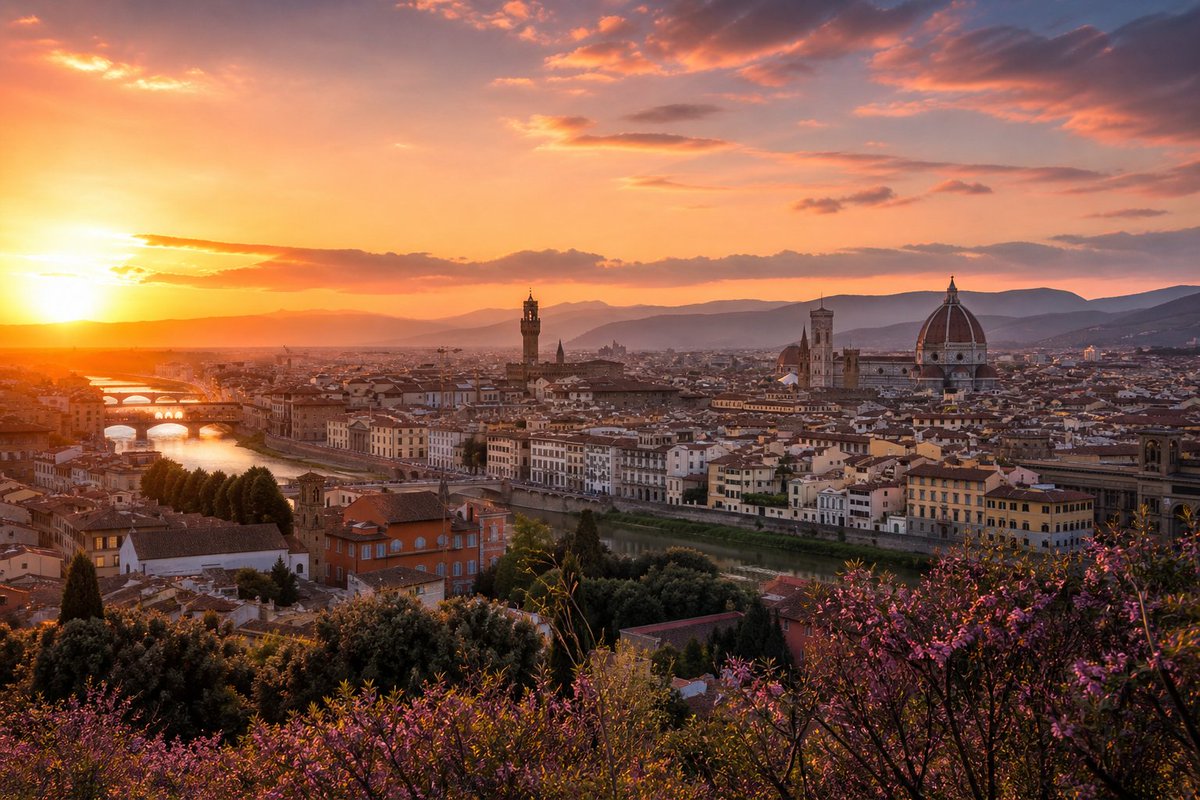
*Explore during the morning golden hours to beat the midday heat and the crowds.*
This rhythm not only keeps you comfortable but also delivers better photos, shorter lines, and a more authentic feel of Florentine summer life. These same timing strategies work well in nearby Siena and other hill towns across Tuscany, where stone streets trap heat in a similar way.
What to Wear, Drink & Carry for Extreme Heat
Choose clothing and gear that work with — not against — the conditions:
- Clothing: Loose, light-colored linen or cotton pieces that breathe and reflect sunlight. Wide-brimmed hats, sunglasses, and a light scarf or shawl (essential for entering churches where shoulders and knees must be covered).
- Footwear: Broken-in, breathable walking shoes or sandals with good grip for cobblestones — avoid anything new that could cause blisters in the heat.
- Hydration essentials: Carry a reusable bottle at all times. Florence’s public fontanelli (drinking fountains) provide free, chilled, safe tap water throughout the city — look for them near major squares like Piazza della Signoria, the Duomo, and along the Arno. Aim for 3–4 litres daily; consider electrolyte tablets if you sweat heavily.
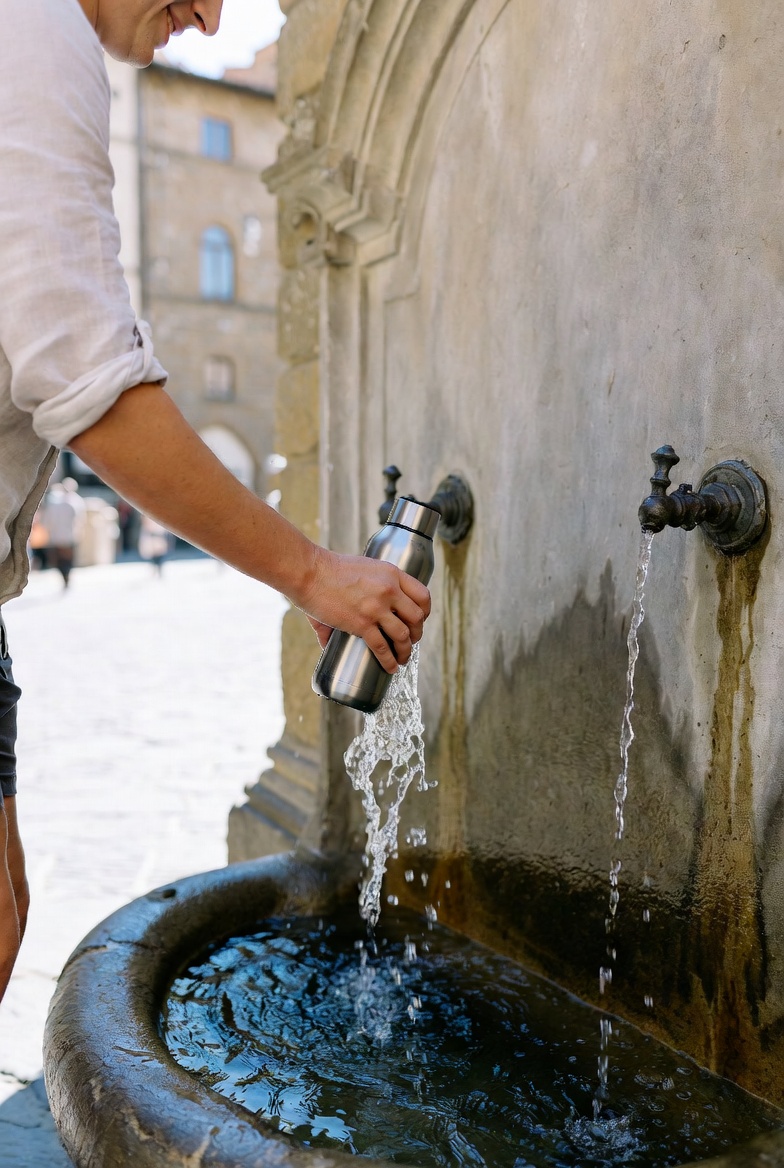
*Stay hydrated by refilling at public drinking fountains (fontanelli) scattered across the city.*
- Sun protection and extras: SPF 50+ sunscreen (reapply every two hours), a portable neck fan or small umbrella for shade, and a lightweight daypack. Light meals and fresh gelato also help regulate body temperature.
These simple choices, drawn from both local habits and recent traveller reports, make a measurable difference on red-alert days.
Cool Indoor Attractions & Shaded Walks
When the sun is at its strongest, head to naturally cool or shaded spaces:
- Indoor highlights: The Uffizi Gallery and Galleria dell’Accademia (home of Michelangelo’s David) stay several degrees cooler inside their thick stone walls — book timed tickets in advance. Palazzo Pitti and its attached museums, along with smaller sites like the Bargello or Orsanmichele, offer similar relief.
- Shaded outdoor escapes: Boboli Gardens behind Palazzo Pitti and the nearby Bardini Garden provide tree-lined paths, fountains, and panoramic views with far more shade than open piazzas. Parco delle Cascine (Florence’s largest park) and the Rose Garden offer peaceful green retreats. Riverside walks along the Arno, especially in early evening, catch breezes off the water.
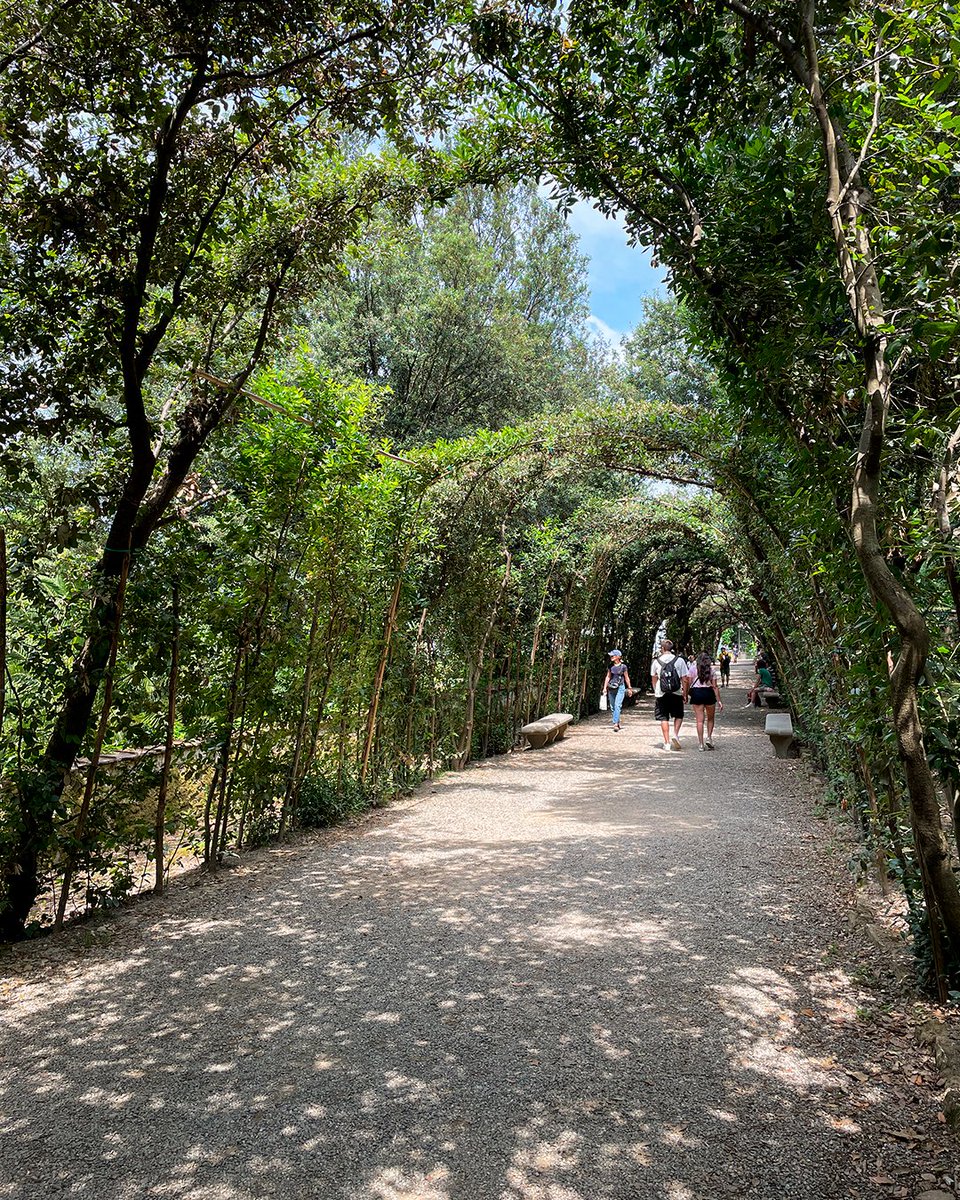
*Escape the sun in the shaded paths of the Boboli Gardens.*
- Additional refuges: Florence has mapped 53 climate refuges for 2026 (according to the official Comune di Firenze map), including municipal libraries and additional parks — useful backups if you need a quiet, cool spot.
These locations let you keep exploring without constant sun exposure.
Enjoying Florence Despite the Heat
By adapting your schedule, staying hydrated, and choosing the right refuges, July in Florence becomes manageable — even enjoyable. The city’s Renaissance treasures, riverside charm, and evening energy reward those who travel smart. The same smart strategies apply across Tuscany, making your entire trip smoother.
Explore more Florence guides at /florence, discover broader Tuscany inspiration at /tuscany, or browse additional travel insights on our /blog. Safe travels!
Helpful summary
The short version
Practical ways to handle Florence’s 35°C+ summer days in 2026: timing, shade routes, water fountains and cooler alternatives.
Frequently asked
FAQ
Keep reading
Avoid Crowds in Florence July 2026: Smart Strategies for Independent Travellers
Proven ways to dodge Florence’s July 2026 crowds: skip the Uffizi and Duomo queues, explore quieter Oltrarno, and time your day right.
6 min read · Updated 2026-07-17
Accademia Sold Out? The Box Office Still Sells Tickets on the Day
Accademia calendar empty for your dates? The gallery itself says the box office still sells on the day. The queue, the price, the free days, the Plan B.
17 min read · Updated 2026-09-03
Uffizi Tickets Sold Out? What Actually Works, and What Wastes Your Money
Uffizi sold out for your dates? The honest options — the same-day afternoon ticket, the phone line, real Plan B museums — and the traps to avoid.
14 min read · Updated 2026-09-01