Florence Airport to Siena: Every Option, With Real 2026 Fares
How to get from Florence Airport to Siena in 2026 — the two-stage bus route, real official fares, the ticket trap that gets travellers fined, and timings.
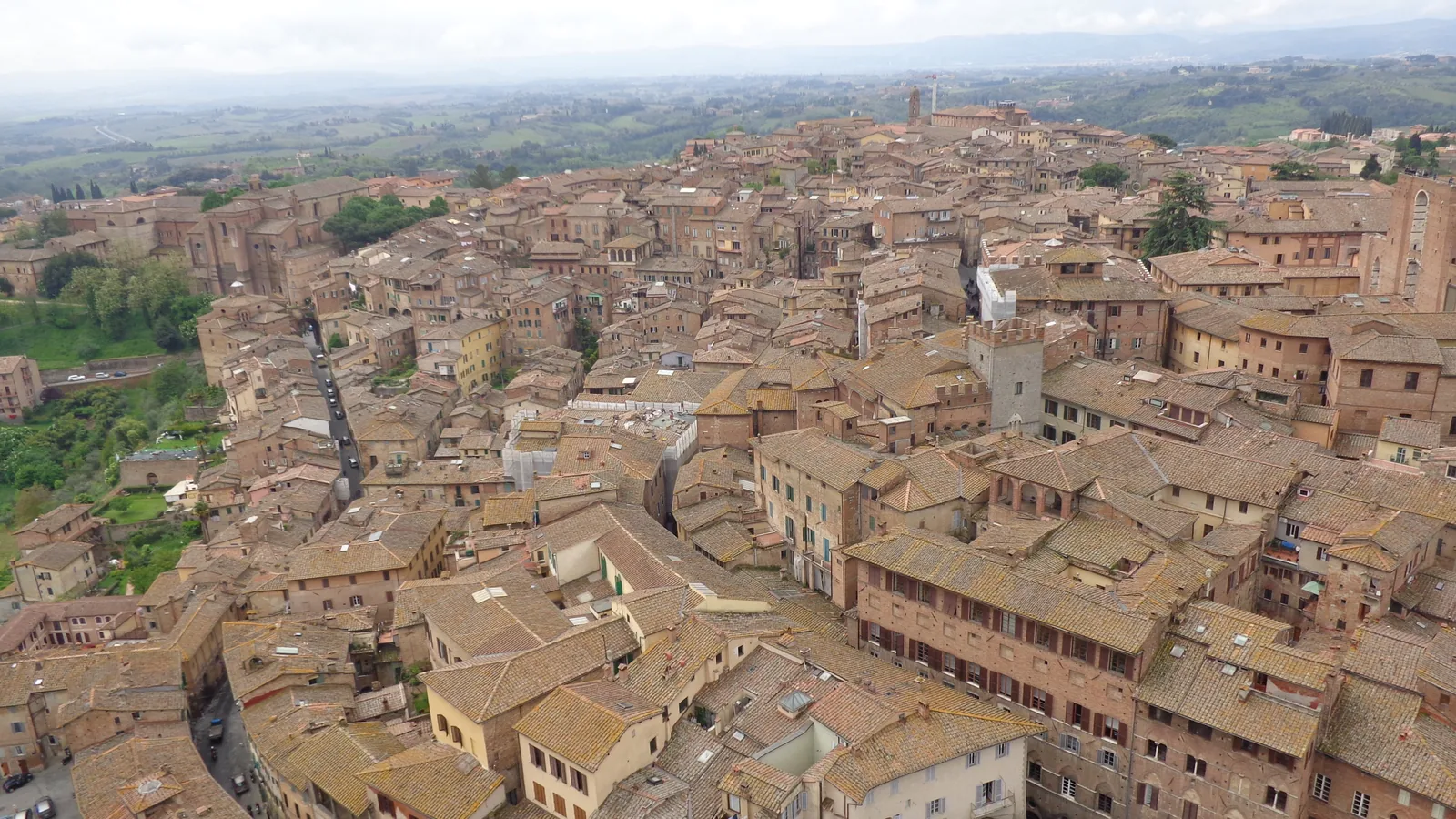
Photo: Superchilum, CC BY-SA 4.0. Cropped to 16:9, resized, and converted to WebP.
In this guide
- Overview
- Quick answer
- Why there is no direct connection
- Stage 1: Airport to central Florence
- Stage 2: Florence to Siena
- The full cost breakdown
- The ticket trap that gets travellers fined
- Timing: first and last services, and how long to allow
- Luggage and accessibility
- Strikes and disruptions
- Private transfers and taxis, honestly
- Practical checklist
- Next steps
- FAQ
Overview
There is no direct bus and no direct train from Florence Airport to Siena. Every route is a two-stage journey: first from the airport into central Florence, then from Florence to Siena. Most guides skip that fact and quote a single fare that does not exist, which is why travellers arrive expecting one bus and find they need two.
This guide covers each stage, what it actually costs from the operator's own fare table, how long it really takes door to door, and the one ticket rule that quietly gets visitors fined even when they have paid. Everything here was checked against Autolinee Toscane's published fares on 20 July 2026. Fares and timetables change; the official links are given so you can confirm before you travel.
If you are collecting a rental car at the airport instead of using public transport, the journey is different and the main hazard is Siena's camera-enforced ZTL — see our Siena parking and ZTL guide for that. This article is for travellers arriving without a car.
Quick answer
The cheapest reliable route is the tram plus the 131R bus, and it costs about €11.90 if you buy both tickets at machines or online rather than from a driver — both fares checked 3 August 2026.
- Stage 1 — Airport to central Florence: Tram line T2 from the Peretola Aeroporto stop outside arrivals to the Santa Maria Novella area. €2.00, about 20 minutes.
- Stage 2 — Florence to Siena: The 131R fast bus from Firenze Autostazione to Siena. €9.90 bought at the counter or online (€16.00 if you buy on board), about 75 minutes.
Realistic door-to-door time, including the transfer and a typical wait for the bus, is two and a quarter to two and three-quarter hours. Budget more if you land at a busy time or your bags are slow.
The single most important thing to get right is not the route but the ticket: validate your bus ticket the moment you board. More on that below, because getting it wrong means a fine even though you paid.
Why there is no direct connection
Siena has no airport of its own that takes scheduled flights, so "Florence Airport to Siena" always means reaching Florence first. This trips people up because booking sites and route planners often show a single line and a single price, blurring two separate journeys into one.
The 131R — the fast bus that most independent travellers use for the second leg — runs between Firenze Autostazione, the main bus station in central Florence, and Siena. It does not call at the airport. To reach it you first have to get from the airport into the centre of Florence, which is a short, cheap, well-signed hop but a separate ticket and a separate operator's service.
Once you understand it as two stages, the choices at each stage are simple.
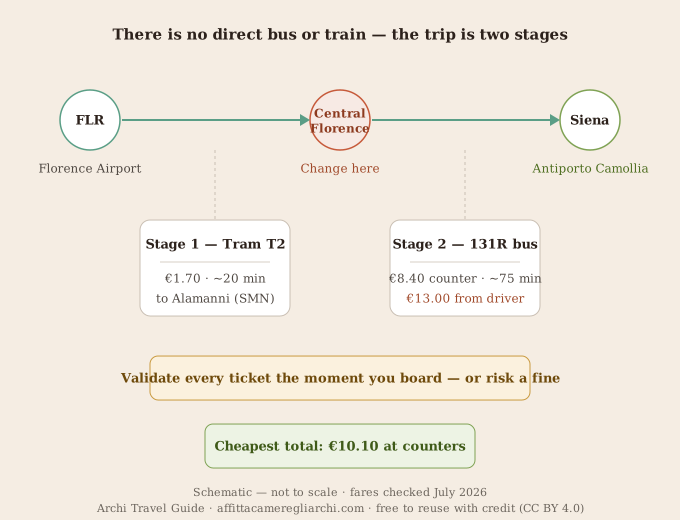
Schematic — not to scale. Fares checked July 2026. Free to reuse with credit.
Stage 1: Airport to central Florence
Florence Airport (Amerigo Vespucci, sometimes called Peretola, code FLR) sits about a 20-minute ride from the city centre. You have three ways in.
Tram line T2 — the recommended option
This is the cheapest and usually the fastest way into Florence, and it is the one to plan around. The stop, "Peretola Aeroporto", is a two-minute walk from the arrivals hall and clearly signed. Buy a ticket from the machine at the stop before boarding.
- Fare: €1.70. This is the standard Florence urban ticket ("Urbano capoluogo").
- Journey time: about 20 minutes to the Santa Maria Novella area.
- Validity: the urban ticket is valid for 90 minutes in Florence — longer than the 70-minute standard elsewhere in Tuscany, a small but useful margin if your connection is tight.
- Frequency and hours: trams run roughly every 4–6 minutes at peak, every 8–10 off-peak, from around 05:00 to 00:30 daily and until about 02:00 on Friday and Saturday nights.
- Get off at: "Alamanni" for Santa Maria Novella station, which is right beside Firenze Autostazione where the Siena bus leaves.
The tram has wide doors, dedicated luggage space and level boarding, which matters if you are travelling with a suitcase.
Volainbus airport shuttle — the traditional alternative
Before the tram opened, the Volainbus shuttle was the standard airport link, and it still runs to Santa Maria Novella. It is worth knowing about as a fallback, but the tram is cheaper and generally quicker, so treat the shuttle as a backup rather than a first choice. Its fare and frequency have historically been higher than the tram's, and since the tram now carries most airport traffic, confirm the current shuttle timetable at the airport information desk on the day rather than relying on older figures.
Taxi — when time matters more than money
A taxi from the airport to central Florence takes about 15 minutes and costs substantially more than either the tram or the shuttle — expect a fare in the region of €20 or more, higher with luggage or at night. It makes sense only if you are short on time, arriving very late, or splitting the cost across a group.
Stage 2: Florence to Siena
From central Florence you again have two realistic choices: the fast bus, which most people take, or the regional train, which is usually slower and drops you further from the centre.
The 131R fast bus — the recommended option
The 131R ("Rapida") is operated by Autolinee Toscane and runs from Firenze Autostazione to Siena along the Florence–Siena superstrada. It is the option most independent travellers choose, and for good reason: it arrives closer to Siena's historic centre than the train does.
The fare, from the official table. Autolinee Toscane prices its suburban and fast-route tickets by distance band, not as a single flat fare. Florence to Siena falls in the 60.1–70.0 km band, which as checked on 3 August 2026 sets the fare at:
- €9.90 bought at a ticket counter or online.
- €16.00 bought on board from the driver.
That gap is not a rounding difference — buying on board costs more than half again as much. Buy before you board wherever possible. The Via Tozzi ticket office in Siena is underground in the piazza; in Florence you can buy at the Autostazione or online through the at bus app.
The figure quoted on many travel sites — €10, or sometimes €7 — is out of date or simply wrong. €9.90 at the counter is the current official fare for a single journey as checked on 3 August 2026 — and it moved between our own July and August checks, so treat any undated figure as suspect.
Journey time. About 75 minutes on the fast service, per the summer timetable valid from 27 July 2026 (checked 3 August 2026). As a concrete example, the 08:10 from Firenze Autostazione arrives at Siena Via Tozzi at 09:25. First weekday departures are 06:45 from Firenze Autostazione and 06:15 from Siena.
Where it drops you in Siena. This is a genuine advantage over the train. The 131R stops at Antiporto Camollia, just outside Porta Camollia — the northern gate — before terminating at the Via Tozzi bus station. If you get off at Antiporto Camollia you can walk straight in through the gate and down Via Camollia into the centre, a gentle 10–15 minute downhill walk. If you stay to the Via Tozzi terminus, you are still close to the centre with escalators and buses to carry you up. Either way you arrive near the old town, not below it.
The regional train — usually the weaker choice
There is no direct train from Florence Airport to Siena, and no direct train worth the name from central Florence either: you travel from Firenze Santa Maria Novella and the journey takes around an hour and a half, longer than the bus. Tickets cost roughly €10; check Trenitalia for the current timetable and fare.
The bigger drawback is where the train leaves you. Siena's railway station sits in the valley below the town, not within the walls. To reach the centre you then take a series of escalators or a city bus up the hill — an extra step with luggage that the bus largely avoids. For most visitors heading into the historic centre, the bus is the better arrival.
The train comes into its own only in specific cases: if you are staying near Siena's station rather than the centre, if a strike has disrupted the buses, or if you simply prefer rail and do not mind the climb at the far end. For the full city-centre comparison, see our guide to Florence to Siena by train or bus.
The full cost breakdown
| Leg | Option | Fare | Notes |
|---|---|---|---|
| Airport → Florence | Tram T2 | €2.00 | ~20 min, valid 90 min |
| Airport → Florence | Volainbus shuttle | Higher than tram | Confirm current fare on the day |
| Airport → Florence | Taxi | ~€20+ | ~15 min |
| Florence → Siena | 131R bus (counter) | €9.90 | ~75 min, 60–70 km band |
| Florence → Siena | 131R bus (on board) | €16.00 | Same journey, bought from driver |
| Florence → Siena | Regional train | No published flat fare — check the Trenitalia app | ~1h30, arrives below the town |
Cheapest reliable total: €11.90 — tram at €2.00 plus the 131R bought at the counter at €9.90, both checked 3 August 2026. Buying both from a driver, or taking a taxi for the first leg, raises it considerably.
The ticket trap that gets travellers fined
This is the part no major guide warns about, and it is the one most likely to cost you money.
An Autolinee Toscane ticket must be validated at the start of your journey, and the responsibility is yours, not the driver's. Buying the ticket is not the same as validating it. A ticket bought at the counter or in the app carries a note to the effect that it must be validated at the beginning of the trip and shown on request.
The problem is that the driver will not necessarily prompt you. Travellers have boarded the 131R, watched the driver take no interest in their tickets as everyone got on, assumed the ticket would be checked later, and then been fined by an inspector — despite having paid the correct fare at the official ticket office minutes earlier. The operator's own fare notes confirm that onboard sales are suspended during inspections, which tells you inspections do happen and are taken seriously.
So, the rule to follow without exception:
- Validate or activate your ticket the moment you board, using the reader on board for a paper or QR ticket, or by activating it in the at bus app if you bought it there.
- Do not wait for the driver to ask. They may not.
- Keep the ticket for the whole journey and show it if an inspector boards.
A validated ticket is a non-event. An unvalidated one is a fine, even when you have paid the fare in full. This single habit is worth more than any fare saving in this guide.
Timing: first and last services, and how long to allow
The tram runs from around 05:00 to 00:30 daily, later on weekend nights, and frequently enough that you rarely wait more than a few minutes. The 131R starts from around 06:15, with the fast run taking about 74 minutes.
For planning, do not simply add the two segment times together. A realistic door-to-door estimate is two and a quarter to two and three-quarter hours, because you also need to allow for:
- Walking from arrivals to the tram stop and buying a ticket.
- The transfer in Florence from the tram stop to the bus station.
- A wait for the next 131R departure, which is the least predictable part.
If you have an onward commitment in Siena — a check-in time, a booked tour — build in a comfortable margin. If you are arriving late in the evening, check the last 131R departure carefully, as evening service thins out and you do not want to be stranded in Florence with the last bus gone.
Luggage and accessibility
The tram is the easiest leg with bags: wide doors, dedicated luggage areas, level boarding for wheelchairs and pushchairs, and clear announcements at each stop.
The 131R is a coach with luggage capacity, but it is a longer ride and a busier boarding, so a compact case you can manage yourself is easier than a large one. If you are travelling with reduced mobility, the bus arriving near the town's northern gate spares you the escalator climb that the train's valley-level station would otherwise require.
Siena's historic centre is built across hills on cobbled streets, so whichever way you arrive, the final stretch to your accommodation is likely to involve inclines and uneven surfaces. Comfortable shoes are not optional, and if your hotel is deep in the centre, ask them in advance about the nearest point a taxi or bus can reach.
Strikes and disruptions
Italian public transport strikes ("sciopero") are a real and recurring feature, and they can affect both the tram and the 131R. On the day this guide was checked, a strike was in effect in Florence, Prato and Empoli.
Two things make them manageable. First, strikes are announced in advance by law, so you can usually find out before you travel. Second, they operate with protected time bands ("fasce di garanzia") during which a minimum service still runs, typically covering the busiest commuting hours.
Before you travel, check Autolinee Toscane's service status and strike pages so a strike day does not catch you unprepared. If one falls on your arrival date, the protected bands and the train alternative give you a way through, but you will want to know in advance rather than discover it at the bus station.
Private transfers and taxis, honestly
A private transfer or a long-distance taxi will take you door to door from the airport to your Siena accommodation in a little over an hour, with no changes and no ticket to validate. It is by far the most expensive option — many times the cost of the tram-and-bus route — but for a group splitting the fare, for late-night arrivals when public transport has thinned out, or for travellers with heavy luggage or mobility needs, the convenience can be worth it.
We do not book transfers or earn anything from recommending one; this is simply an honest note that the option exists and, for some travellers, makes sense. If you use one, agree the fare in advance for a taxi, or book a fixed-price transfer, so there are no surprises at the far end.
Practical checklist
- Plan two stages, not one: airport to Florence, then Florence to Siena.
- Take the tram (€2.00) from Peretola Aeroporto to the Santa Maria Novella area; get off at Alamanni.
- Take the 131R (€9.90 at the counter, not €16.00 on board) from Firenze Autostazione to Siena.
- Validate your bus ticket the instant you board. This is the one rule that saves you a fine.
- Get off at Antiporto Camollia for the shortest walk into the northern end of the centre, or ride to the Via Tozzi terminus.
- Allow 2¼–2¾ hours door to door, more at busy times or late at night.
- Check for strikes on the operator's status page before you set out.
- Buy before boarding wherever you can — machines, the app, or a ticket office.
Arrive knowing the route is two legs, that the cheaper fare is at the counter, and that the ticket must be validated, and the journey from Florence Airport to Siena is straightforward and inexpensive. The travellers who struggle are the ones who expected a single direct service and did not validate their ticket — and now you are not one of them.
Next steps
Once you have reached Siena, if you are continuing to explore Tuscany by public transport, our guide to Siena day trips without a car covers onward routes to San Gimignano, Monteriggioni and the Val d'Orcia. If you would rather drive, read our Siena parking and ZTL guide first — the ZTL cameras are the single biggest hazard for drivers, and a fine reaches you months later through the rental company.
*Fares, times and rules were checked against Autolinee Toscane's official fare tables and route data on 20 July 2026. Fares and timetables change — confirm with the operator before you travel.*
Helpful summary
The short version
How to get from Florence Airport to Siena in 2026 — the two-stage bus route, real official fares, the ticket trap that gets travellers fined, and timings.
Frequently asked
FAQ
Keep reading
Should You Rent a Car in Florence or Siena? The Decision, Honestly Argued
Rent the car in Florence or Siena? Where the offices are, how ZTL exposure differs, what one-way drops cost you, and the answer by trip shape.
12 min read · Updated 2026-08-22

Florence to Siena by Train or Bus: Complete Travel Guide
Compare train, bus, and guided tour options from Florence to Siena, including travel times, ticket rules, arrival points, and practical tips.
4 min read · Updated 2026-08-05T12:00:00+07:00
Tuscany Without a Car: The Complete Siena-Based Guide
Tuscany without a car works — from the right base. The bus and rail system from Siena: lines, times, tickets, the Sunday rule and what truly needs wheels.
12 min read · Updated 2026-08-25