Siena 3-Day Itinerary: City Highlights and a Tuscany Day Trip
Three days in Siena at a Tuscan pace: two unhurried city days, one countryside day, and the trade-offs behind each choice.
In this guide
- Three days in Siena at a glance
- Where to base yourself for three days
- Day 1: Piazza del Campo and the Duomo
- Day 2: Santa Maria della Scala, contrade, and local Siena
- Day 3: Choose one Tuscany experience
- Guided tour or independent day trip?
- A practical three-day budget
- What to reserve before the trip
- Seasonal adjustments
- Final thoughts
- FAQ
Three days in Siena at a glance
| Day | Main focus | Best moments |
|---|---|---|
| Day 1 | Siena essentials | Campo, Palazzo Pubblico, tower or museum, Duomo complex, evening walk |
| Day 2 | Deeper Siena | Santa Maria della Scala, Saint Catherine sites, contrade, local food, green space |
| Day 3 | Choose your Tuscany | Chianti wine tour, San Gimignano and Monteriggioni, Val d’Orcia and Montalcino, or slow Siena |
Compare duration, group size, free time, meeting point, and cancellation conditions before booking.
Where to base yourself for three days
For three days, accommodation choice matters more than it does on a quick day trip. A central room makes the first two days easy, but Porta Camollia, La Lizza, or the Viale Tozzi side may be more practical when your day-three tour departs by bus. Arriving from Florence Airport is itself a two-stage journey — the tram into Florence, then the coach on to Siena — set out in Florence Airport to Siena.
Travelers with a rental car should choose accommodation with confirmed parking outside the restricted traffic zone. Do not assume a central Siena hotel can be reached directly by private vehicle.
Read Where to stay in Siena before booking.
Day 1: Piazza del Campo and the Duomo
Morning: Meet Siena at Piazza del Campo
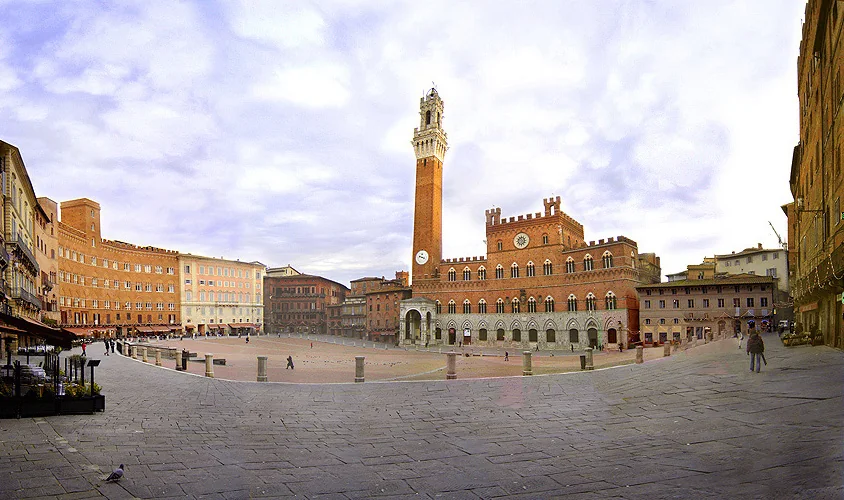
Begin at Piazza del Campo before the busiest part of the day. Walk the full curve of the square, look toward Palazzo Pubblico and Torre del Mangia, and notice how the brick paving slopes toward the civic palace.
If climbing Torre del Mangia is a priority, check same-day availability early. Official July 2026 information states that tower tickets cannot be reserved in advance, ascents are limited to 25 people at 45-minute intervals, and tickets can sell out.
Choose between:
- Torre del Mangia for a physically demanding panorama;
- Museo Civico for major frescoes and civic history;
- both only when your assigned tower time and energy allow a comfortable visit.
The standard tower ticket is listed at €10, while the combined Museo Civico and tower ticket is €15. The tower has roughly 400 steps and no elevator; it is not suitable for every visitor.
Lunch: Keep the first meal simple
Eat near the historic centre, but avoid choosing only by the view. A quick lunch with pici, ribollita, crostini, or a seasonal dish leaves energy for the cathedral complex.
Piazza del Campo terraces are appropriate when the setting is the priority. For value and a more focused menu, compare the side streets toward Via di Città, Piazza del Mercato, and Via Banchi di Sopra.
Afternoon: Explore the Siena Cathedral complex
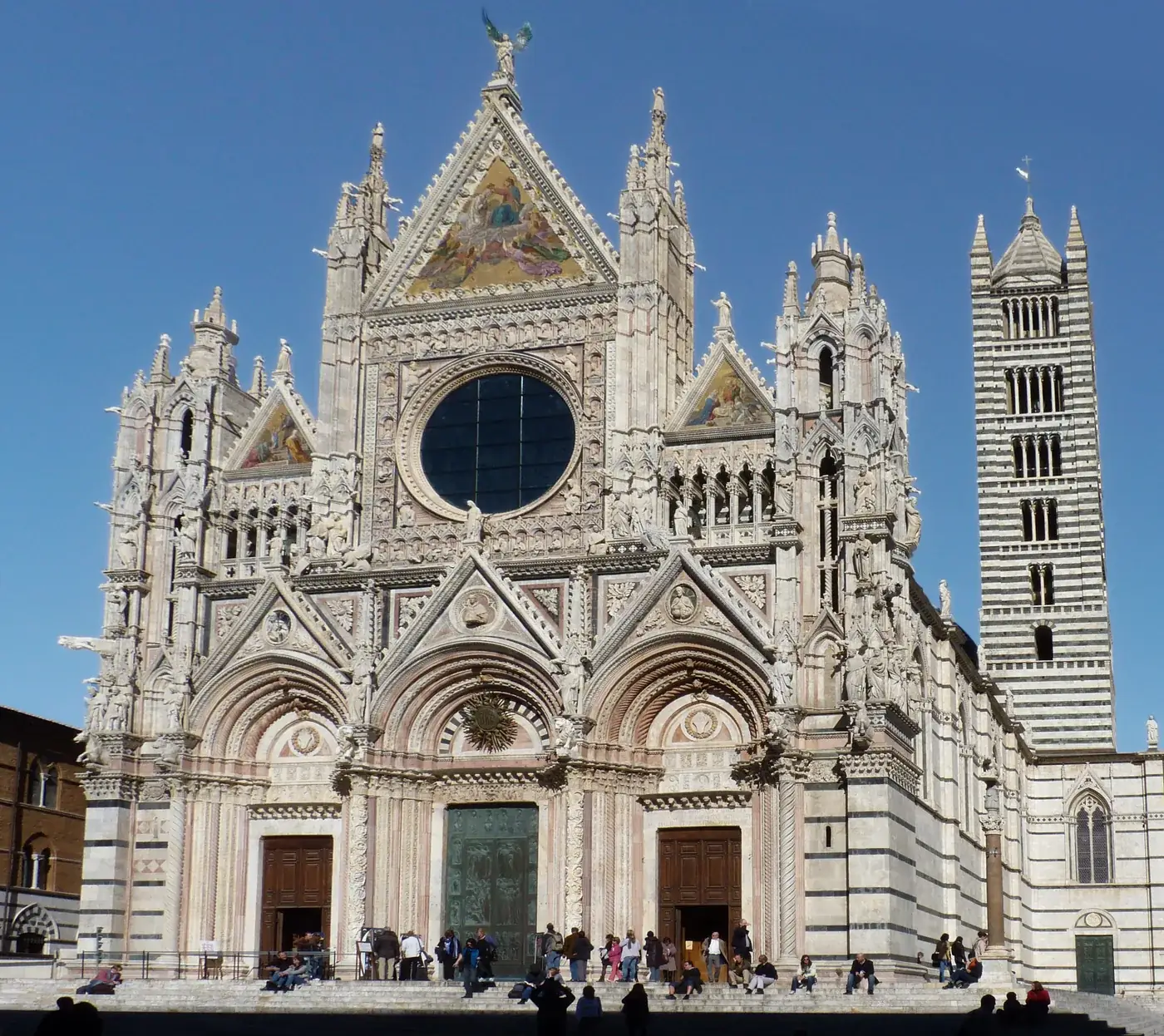
Allow two to three hours for the cathedral, Piccolomini Library, Museo dell’Opera, Facciatone viewpoint, Crypt, and Baptistery. You do not need to force every space into one visit because the OPA SI Pass is valid for three consecutive days.
As re-checked on 16 August 2026, the pass is €13 during normal periods and €15 during the marble-floor uncovering from June 27 to July 31 and August 18 to November 15. Opening hours vary by season, Sunday, public holiday, and religious service.
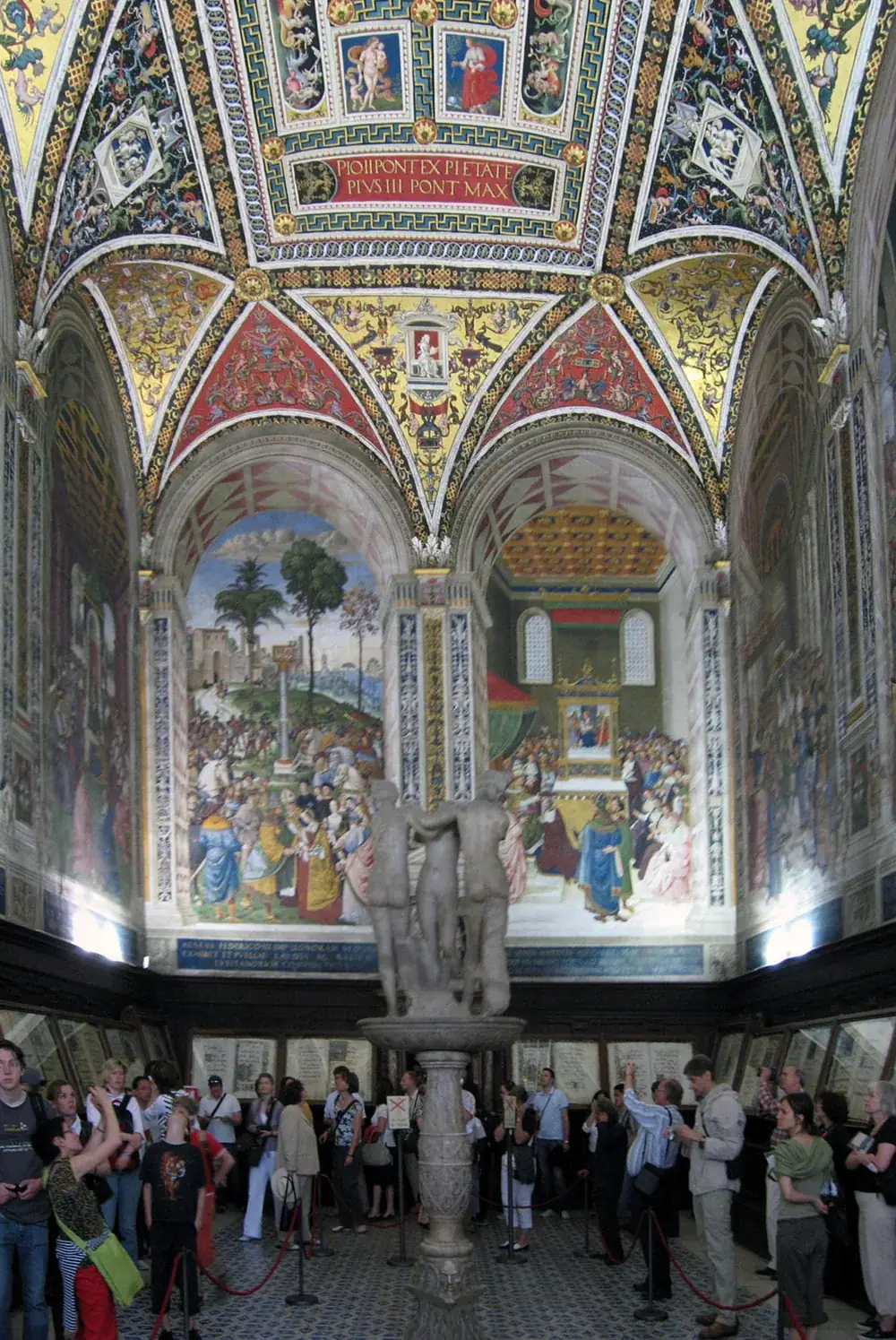
The Piccolomini Library deserves a deliberate pause. Its frescoes and painted ceiling provide a vivid contrast to the striped cathedral interior.
Evening: Stay in the centre after the crowds thin
Have aperitivo, dinner, and a slow walk through the Campo. This is the first reward of staying overnight: you can see the same streets after many day visitors have returned to Florence.
Do not schedule a late museum. Let the evening create space for Siena to feel like a place rather than a list.
Day 2: Santa Maria della Scala, contrade, and local Siena
Morning: Santa Maria della Scala
Start with the former hospital complex opposite the Duomo. Santa Maria della Scala combines frescoed rooms, social history, archaeology, temporary exhibitions, and a building whose scale is difficult to understand from outside.
From March 15 to October 31, the official 2026 schedule lists daily opening from 10:00 to 19:00, with last admission at 18:15. The full-price ticket is listed at €9, or €8 with reservation. The museum closes earlier on July 2 and August 16.
Allow around two hours. Families and visitors with mobility concerns may appreciate the listed elevators, seating, accessible restrooms, museum app, and wheelchairs available on request.
Late morning: San Domenico and Saint Catherine’s Siena
Walk toward Basilica di San Domenico and the Sanctuary of Saint Catherine. This route moves away from the two most famous squares and reveals the city’s religious history, steep geography, and views toward the cathedral.
Continue toward Fontebranda only when the descent and return suit your mobility. The fountain is historically important, but the route is steep.
Lunch: Make the meal part of the itinerary
Use the second day for a more relaxed meal. Look for pici all’aglione, pici with breadcrumbs, wild-boar ragù, Cinta Senese products, pecorino, seasonal vegetables, and local wine.
Finish with ricciarelli or panforte, or buy them later from a bakery. A food-focused walking tour can be useful when it includes real tastings and local context rather than using “food tour” as a label for a standard city walk.
Afternoon: Contrade and one quieter space
Choose a route through a few contrade. Look for district emblems, fountains, flags, plaques, and small oratories, remembering that these are living communities rather than tourist themes.
Then choose one quieter stop:
- Orto de’ Pecci for green space below Piazza del Mercato;
- Fortezza Medicea for broad paths near the northern side of the centre;
- Pinacoteca Nazionale for a deeper study of Sienese painting;
- another section of the Duomo complex if your three-day pass is still active.
Evening: Choose a neighbourhood dinner
Eat away from the most obvious Campo frontage. After two days, you will understand the city’s walking routes well enough to choose a quieter street and return without constantly checking a map.
Day 3: Choose one Tuscany experience
Day three should not attempt to cover all of Tuscany. Choose one geographic direction and one travel style.
Option A: Chianti wine-country day
Best for: wine lovers, couples, and visitors who want countryside without the longest transfer.
A guided Chianti excursion from Siena can combine vineyard scenery, cellar visits, tastings, and one or more villages. Read the product details carefully because “Chianti tour” can describe anything from a half-day tasting to a full day with several stops.
Check:
- exact departure point in Siena;
- total duration and return time;
- number and size of tastings;
- whether lunch is included;
- group size and vehicle type;
- time spent at each estate;
- whether the guide is a wine specialist or tour escort;
- accessibility and dietary accommodation.
A tour makes sense when wine is central, because nobody in your group needs to drive after tastings. Independent driving gives more freedom but requires a designated driver and confirmed appointments at wineries.
Option B: San Gimignano and Monteriggioni
Best for: first-time Tuscany visitors who want famous medieval hill towns.
San Gimignano is known for its towered skyline, while Monteriggioni offers a compact walled-village stop. A guided excursion can make the combination much easier than coordinating regional buses in one day.
The main risk is insufficient time. Some tours advertise several destinations but provide only a brief walk at each. Before booking, check the actual free time in San Gimignano and whether Siena is merely the departure point or also included as a rushed sightseeing stop you do not need.
Independent public transport can work for a single destination, but connections may require planning around Poggibonsi and current regional schedules. Do not rely on old blog timetables.
Option C: Val d’Orcia and Montalcino
Best for: landscape, wine, photography, and a longer full-day excursion.
Val d’Orcia delivers the rolling hills and cypress-lined views many travellers associate with Tuscany. Montalcino adds a hill town and the wine culture surrounding Brunello.
This is usually a longer and more logistics-heavy day than a nearby Chianti excursion. A guided tour is often the practical choice for visitors without a car, but compare the route closely. Some products prioritise wine tastings, while others focus on Pienza, Montalcino, viewpoints, or multiple villages.
Avoid a tour whose itinerary looks attractive only because it lists many names. The best version gives enough time to experience two or three places rather than photographing five from the vehicle.
Option D: A third slow day in Siena
Best for: art lovers, families, limited-mobility travellers, repeat visitors, and anyone who dislikes group excursions.
Stay in Siena and choose from:
- Pinacoteca Nazionale;
- another section of Santa Maria della Scala;
- Museo Civico if you climbed the tower on day one;
- Basilica di Santa Maria dei Servi and its viewpoint;
- quieter contrade and medieval fountains;
- a cooking class or city food experience;
- shopping, cafés, and a long lunch;
- a gentle afternoon at the fortress.
There is no obligation to leave Siena simply because you have three days. A slow third day often creates a richer trip than an overpacked countryside circuit.
Guided tour or independent day trip?
| Consideration | Guided tour | Independent travel |
|---|---|---|
| Planning | Low effort | Requires current route research |
| Wine tastings | No designated driver needed | Driver must avoid alcohol |
| Flexibility | Fixed schedule | Greater control |
| Number of stops | Easy to combine | Better for one destination |
| Time in each place | Can be limited | You choose, subject to transport |
| Cost | Higher | Often lower |
| Commentary | Guide or tour leader | Self-guided research |
| Accessibility | Varies by vehicle and itinerary | You control pace, but routes can be difficult |
Choose a tour for a wine-focused day, multiple rural stops, or low-stress logistics. Choose independent travel for one destination, longer free time, and flexible meals.
A practical three-day budget
Three days in Siena can range from a moderate city break to a high-cost wine-and-hotel experience. Accommodation and the day-three excursion are the largest variables.
Use How much does a trip to Siena cost? for detailed planning bands. When comparing tours, look beyond the headline price to included transport, lunch, tastings, admission, and pickup location.
What to reserve before the trip
Reserve early
- accommodation for weekends, Palio periods, or family rooms;
- a specific small-group or private day-three tour;
- cathedral tickets during peak periods and floor uncovering;
- a special dinner or winery experience;
- parking when your property offers limited spaces.
Confirm closer to travel
- train and bus schedules;
- tour meeting point and return time;
- attraction opening hours;
- weather and heat conditions;
- Palio-related changes;
- religious-service access at churches.
Do not falsely prebook
Torre del Mangia tickets are officially sold on the day and cannot be reserved in advance. Be skeptical of any third-party wording that implies guaranteed tower admission without explaining the limitation.
Seasonal adjustments
Spring
Comfortable walking weather and green countryside make spring strong for both city and day-trip plans. Carry a light rain layer.
Summer
Start city days early, protect the midday hours, and check vehicle air conditioning on tours. Palio periods around July 2 and August 16 require a completely different crowd and access strategy.
Autumn
Autumn suits food and wine travel, but daylight becomes shorter. Do not assume every winery or rural stop accepts walk-ins.
Winter
Siena is quieter, while some attractions and tours operate reduced hours or fewer departures. A museum-rich city plan may be more reliable than a complex multi-stop excursion.
Final thoughts
Three days let Siena become the beginning of a Tuscany trip rather than a rushed stop inside one. The first day gives you the skyline and masterpieces; the second gives you the living city; the third opens the landscape beyond the walls.
Whether that final day leads to a Chianti cellar, the towers of San Gimignano, the long curves of Val d’Orcia, or simply another quiet Siena street, keep the pace generous. Tuscany is most persuasive when there is enough time to look out of the window, finish lunch slowly, and arrive somewhere without already thinking about the next departure.
Helpful summary
The short version
Three days in Siena at a Tuscan pace: two unhurried city days, one countryside day, and the trade-offs behind each choice.
Frequently asked
FAQ
Keep reading
Siena 2-Day Itinerary: A Relaxed Weekend in the City
Follow a realistic Siena 2-day itinerary covering Piazza del Campo, the Duomo, museums, contrade, local food, views, and practical planning tips.
10 min read · Updated 2026-07-11
Romantic Weekend in Siena: 2-Night Couples Itinerary
Plan a romantic weekend in Siena with a two-night couples itinerary covering sunset views, the Duomo, Piazza del Campo, local food and a slow Sunday.
9 min read · Updated 2026-07-12
7-Day Tuscany Itinerary for Independent Travellers 2026: Florence Base + Self-Drive (Siena, Chianti, Val d’Orcia)
Seven days in Tuscany from one Florence base: Siena by train, Chianti by car, Val d’Orcia in a day â and not one hotel change.
7 min read · Updated 2026-07-17