Where to Stay in Siena: Best Areas for Every Trip
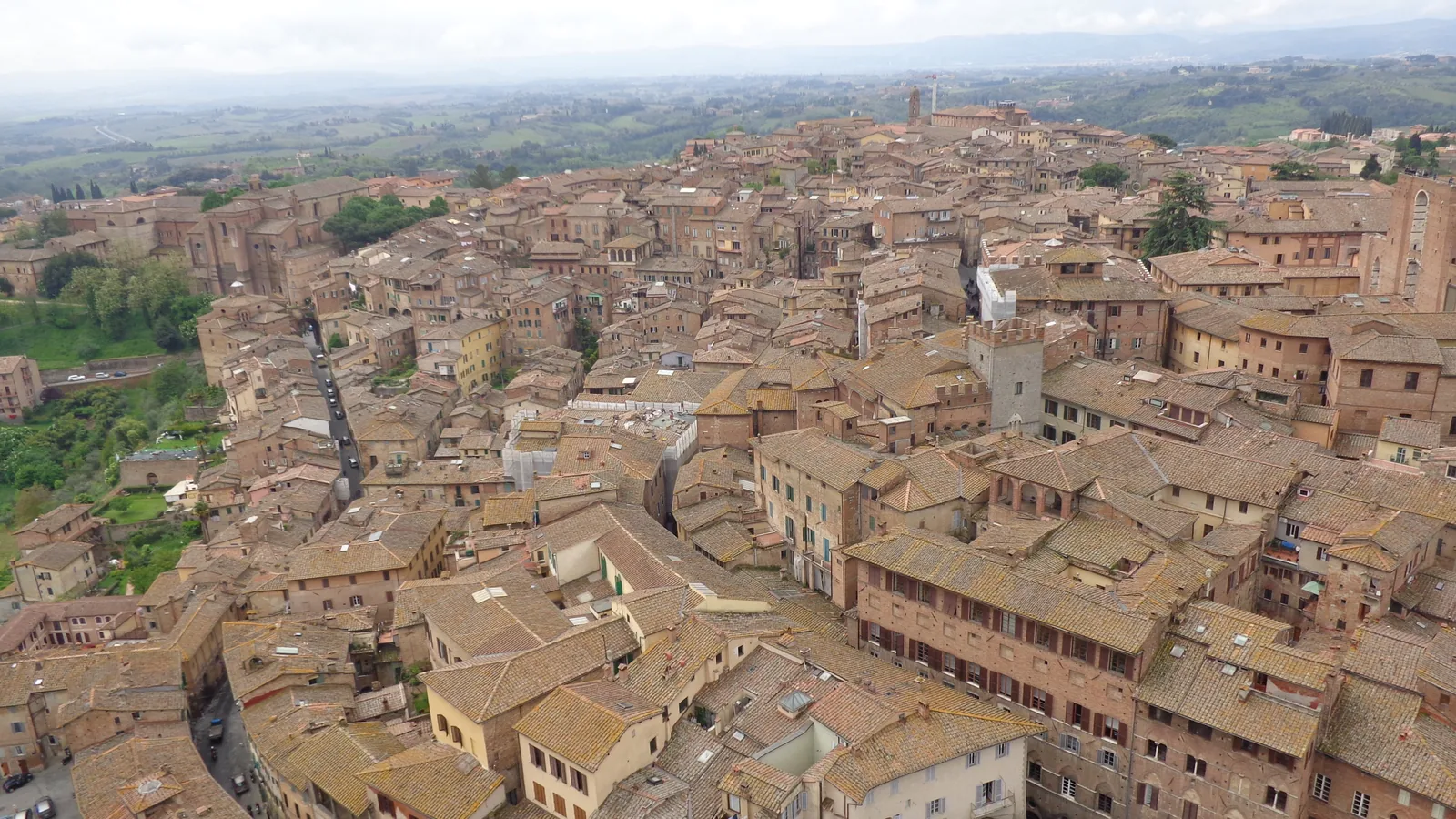
Six Siena areas compared — starting with the question most travellers actually mean: sleep inside the walls, or outside them?
In this guide
- Best Siena areas at a glance
- 1. Piazza del Campo and the central historic centre
- 2. The Duomo and Terzo di Città side
- 3. San Domenico, Fontebranda, and the western historic centre
- 4. Porta Camollia, La Lizza, Piazza Gramsci, and Viale Tozzi
- 5. Siena train station and Antiporto
- 6. Outside the walls and in the Siena countryside
- Inside or outside the walls: the short answer
- Best area to stay in Siena by traveller type
- How many nights should you stay in Siena?
- Booking checklist before you pay
- Final recommendation
- FAQ
Best Siena areas at a glance
| Area | Best for | Main advantage | Main trade-off |
|---|---|---|---|
| Piazza del Campo and central historic centre | First-time visitors and short stays | Walk to major sights | Higher prices, possible noise, difficult luggage access |
| Duomo and Terzo di Città | Couples, architecture, quieter atmosphere | Characterful streets near the cathedral | Hills, steps, fewer easy vehicle drop-offs |
| San Domenico, Fontebranda, and western centre | Views and a quieter local feel | Near Saint Catherine sites and panoramic routes | Steep changes in elevation |
| Porta Camollia, La Lizza, and Viale Tozzi | Bus travellers, value, easier arrival | Practical connection to the centre | Less postcard-like than the Campo |
| Train station and Antiporto | Rail travellers and some drivers | Transport convenience and larger properties | Outside the old-town atmosphere; uphill connection |
| Countryside and agriturismi | Drivers, longer stays, rural calm | Tuscan scenery, parking, space | Usually unsuitable for car-free evening access |
1. Piazza del Campo and the central historic centre
Best for first-time visitors and one-night stays
Staying close to Piazza del Campo places Siena’s most famous square, Palazzo Pubblico, Torre del Mangia, the Duomo, and the central restaurant streets within a short walk.
This is the most atmospheric choice for travellers who want to step outside early in the morning or return after dinner without managing transport. It is particularly attractive for a one- or two-night trip because little sightseeing time is lost moving between accommodation and attractions.
The trade-offs are real. Rooms can cost more, streets around restaurants and bars may remain lively, and vehicle access is restricted. Medieval buildings may have narrow staircases, small lifts, or no lift. A property described as “central” can still require dragging luggage over cobbles and slopes.
Choose this area when:
- the setting is part of the reason you are visiting;
- you plan to walk almost everywhere;
- you are staying only one or two nights;
- you can travel with manageable luggage;
- you want Siena after day-trippers leave.
Think twice when:
- you have a car and have not arranged parking;
- steps or steep streets are difficult;
- light sleeping is a concern;
- you are carrying several large bags.
When comparing properties, read recent reviews specifically for noise, stairs, elevator size, air conditioning, and the distance from the nearest legal taxi or vehicle drop-off—not just the distance from Piazza del Campo.
2. The Duomo and Terzo di Città side
Best for couples, historic character, and cathedral-focused visits
The streets around the Duomo, Via di Città, Via di Stalloreggi, and the southern-western part of the centre feel deeply historic without placing every room directly beside the busiest part of the Campo.
This area works well for couples and travellers who value architecture, evening walks, and proximity to the cathedral complex. It also makes early access to the Duomo easier during busy periods.
Some lanes become quiet after sightseeing hours, although individual streets vary. The main disadvantage is topography: Siena’s central plateau is not flat, and accommodation on a picturesque side street may involve a steep final approach.
This is also a practical base for a two-day city itinerary. Day one can focus on the Campo and Duomo, while day two moves toward Santa Maria della Scala, San Domenico, Fontebranda, and quieter contrade.
3. San Domenico, Fontebranda, and the western historic centre
Best for views, Saint Catherine sites, and a quieter atmosphere
The western side of the centre around Basilica di San Domenico, the Sanctuary of Saint Catherine, and Fontebranda offers strong views toward the Duomo and a more residential feeling on certain streets.
It suits travellers who want to remain inside or beside the historic centre without staying at the Campo. San Domenico is close to the central walking route, while the Fontebranda side gives access to medieval fountains and dramatic changes in elevation.
Those changes in elevation are the main caution. Two points that appear close on a map may be separated by steep streets or stairways. This area can be rewarding for active travellers and frustrating for guests with limited mobility or heavy luggage.
Before booking, ask the property:
- whether the final approach is uphill or includes stairs;
- where a taxi can legally stop;
- whether reception is staffed when you arrive;
- whether rooms are accessible by lift;
- whether breakfast is on-site or at another address.
Travelers who appreciate views and quieter mornings often find this part of Siena especially memorable. It is less suitable for anyone seeking flat, effortless movement.
4. Porta Camollia, La Lizza, Piazza Gramsci, and Viale Tozzi
Best for bus arrivals, value, and practical access
The northern side of the historic centre is one of Siena’s most useful compromises. Porta Camollia leads into the old city, while La Lizza, Piazza Gramsci, and Viale Tozzi are close to important bus arrival and departure points.
For travellers coming from Florence by the 131R bus, this side can be much easier than crossing the city with luggage. You can often reach a hotel or guesthouse before entering the steepest central lanes, then walk to the Campo once you have checked in.
The atmosphere becomes more historic as you pass through Porta Camollia and continue along Via Camollia. Around the outer edge, buildings and roads may feel more practical than romantic, but prices can be better and vehicle access clearer.
This is often the strongest choice for:
- a short car-free stay arriving by bus;
- travellers who want to avoid carrying luggage through the Campo;
- visitors taking early transport the next morning;
- guests looking for a balance between price and walkability;
- travellers using Siena as a base for regional excursions.
Read Florence to Siena by train or bus before choosing between this area and the railway-station side.
5. Siena train station and Antiporto
Best for rail travellers, onward connections, and some drivers
Siena railway station sits outside and below the historic centre. Properties near the station can be practical for travellers making rail connections, carrying heavy luggage, or staying in larger modern accommodation.
The official city map shows the station, local bus links, taxi points, parking, and escalator routes. However, “near the station” does not mean “inside the old town.” Reaching Piazza del Campo still requires an uphill connection, local bus, taxi, or a longer walk.
The station area may offer:
- easier road access;
- larger rooms or modern facilities;
- supermarkets and everyday services;
- less expensive accommodation on some dates;
- a simpler departure with luggage.
It usually does not offer the same evening atmosphere as the historic centre. Guests who imagine stepping from their hotel directly into medieval Siena may be disappointed.
Choose this area when transport convenience is more important than staying among the monuments. It can also work for a family with luggage, but compare the full door-to-door route rather than judging only the room price.
6. Outside the walls and in the Siena countryside
Best for drivers, space, parking, and a rural Tuscany experience
A countryside hotel, villa, or agriturismo can provide vineyard views, gardens, pools, parking, and a quieter pace. This is the right choice for travellers who see Siena as one part of a wider road trip through Chianti, Val d’Orcia, Montalcino, or San Gimignano.
It is not automatically the best “authentic” experience. Staying outside the city can make spontaneous evening walks and dinners difficult, especially when local public transport is limited. Driving into Siena also means understanding the restricted traffic zone and using legal parking outside the central streets.
Before booking a rural property, check:
- whether a car is effectively required;
- the real driving time to a practical Siena car park;
- restaurant opening days and dinner options;
- whether breakfast is included;
- pool opening dates;
- check-in hours;
- road conditions after dark;
- taxi availability and likely cost.
For a three-day itinerary with one countryside day, this option can work beautifully. For a first-time visitor without a car, a central or Camollia-side stay is usually simpler.
Compare city and countryside options in our Siena 3-day itinerary.
Inside or outside the walls: the short answer
Inside, if the evenings matter to you — outside, if the car does. That is the whole decision, and everything else is refinement.
Sleeping inside the walls buys the two hours no day visitor gets: the Campo after the coaches leave and the lamp-lit walk back through quiet streets after dinner. The costs are real but knowable — luggage hauled over cobbles and gradients, rooms that sell out earliest, and no useful parking, since the entire historic centre sits inside the camera-enforced ZTL.
Sleeping outside the walls — the station quarter, Antiporto, or the countryside — trades that evening magic for easy parking, easier prices and step-free logistics. With a rental car it is usually the saner choice: park free or cheap at the property, ride or walk up, and never once worry about the ZTL fine that reaches you months later.
The hybrid worth knowing: areas 4 and 5 below — Camollia and the station side — sit minutes from the walls and split the difference. The area-by-area detail follows; this section exists because most travellers are really asking this one question — and if the question underneath it is whether to stay the night at all, that decision has its own guide.
Best area to stay in Siena by traveller type
For a first visit
Choose the historic centre between the Campo and Duomo. You will pay more for the location, but the ability to walk out early and return after dinner is valuable on a short trip.
For a romantic stay
Look around the Duomo, Via di Città, or quieter streets on the San Domenico side. Prioritise a room with a view, terrace, or historic character only after confirming stairs, air conditioning, and noise.
For families
A spacious property near Porta Camollia, La Lizza, or just outside the most crowded lanes can be easier than a tiny room beside the Campo. Check lift access, family-room configuration, breakfast, refrigerator availability, and stroller storage.
Read Siena with kids before choosing the exact location.
For nightlife and late dinners
The central streets around the Campo, Banchi di Sopra, Pantaneto, and San Martino provide easier access to evening restaurants and bars. “Nightlife” in Siena is generally smaller-scale than in major Italian cities, but central rooms can still hear late activity.
For budget travellers
Compare Porta Camollia, the station side, guesthouses outside the most famous streets, and rooms without landmark views. A lower nightly rate is not a saving if it creates repeated taxi costs or difficult transport.
Use our Siena trip-cost guide to build a complete daily budget.
For travellers with a car
Choose accommodation with confirmed parking or clear instructions to a legal car park. Do not assume a central property can be reached by private car; much of the historic centre is within a restricted traffic zone.
For limited mobility
Contact the property directly. Ask for the exact number of steps, lift-door width, bathroom access, entrance gradient, and nearest vehicle drop-off. “Accessible room” can describe the room while ignoring the medieval street outside.
How many nights should you stay in Siena?
One night
One night allows the main attractions plus the quieter evening atmosphere. Stay central or near Camollia to minimise transfer time.
Two nights
Two nights are ideal for most first-time visitors. You can spend two full days in the city without turning museums, meals, and views into a race.
Three or more nights
A longer stay makes Siena a possible base for a countryside tour or a nearby town. It also creates time for museums and neighbourhoods that day visitors miss.
Booking checklist before you pay
A beautiful room photo does not answer the most important Siena questions. Verify:
- Exact location: Is the room in the listed building, or is check-in elsewhere?
- Stairs and lift: Which floor is the room on, and is the lift large enough for luggage or a stroller?
- Arrival: Where can a taxi or car legally stop?
- Parking: Is it on-site, reserved, public, or simply “nearby”?
- Noise: Does the room face a busy street, bar, or internal courtyard?
- Climate control: Is air conditioning available in the room and during your travel dates?
- Breakfast: Is it included, served on-site, or provided at a café?
- Cancellation: Are taxes, city charges, and cancellation terms clearly shown?
- Palio dates: Does access change around July 2 or August 16?
- Recent reviews: Do recent guests mention construction, access problems, or changed management?
Final recommendation
For the most memorable first stay, choose a room inside the historic centre and arrive with light luggage. For the most practical stay, choose Porta Camollia or the Viale Tozzi side. For rail convenience, stay near the station. For a road trip, use the countryside—but only when you are comfortable trading spontaneous city evenings for space and scenery.
The right Siena room does more than shorten a walk. It changes the rhythm of the trip. When the last day-tour groups leave, shutters close above the lanes and the Campo settles into evening, staying overnight gives you a version of the city that cannot be experienced on a timetable. Choose the area that lets you be there for it.
Helpful summary
The short version
Six Siena areas compared — starting with the question most travellers actually mean: sleep inside the walls, or outside them?
Frequently asked
FAQ
Keep reading
Best Hotels in Siena: Five Central Stays for Travellers on Foot
Five central Siena hotels compared for travellers on foot, with verified addresses and what each hotel does and does not publish.
17 min read · Updated 2026-07-28
Is Siena Worth Staying Overnight? The Day-Trip Question, Answered Honestly
Is Siena worth staying overnight? What day-trippers miss after 16:00, what the tourism numbers say, and how to decide between a day trip and a night.
12 min read · Updated 2026-08-23
Siena Hotel vs Apartment: Which Is Better for Your Trip?
Hotel or apartment in Siena? The honest split: breakfast and service against kitchens and space, with luggage and parking factored in.
9 min read · Updated 2026-07-12