Siena with Kids: The Hills, the Stroller Problem and What Works
Siena with children, honestly: where strollers struggle, which sights hold young attention, and a gentle one-day route that works.
In this guide
- Is Siena family-friendly?
- Family planning by age
- Best things to do in Siena with kids
- A gentle one-day Siena itinerary with kids
- A two-day family plan
- Stroller or baby carrier?
- Where to stay in Siena with children
- Getting to Siena as a family
- Summer, rain, and Palio planning
- Family budget notes
- Common family-planning mistakes
- Final thoughts
- FAQ
Is Siena family-friendly?
Siena works best for families who enjoy walking and are comfortable adapting the day. Many central streets have limited vehicle traffic, and major sights sit relatively close together. However, “close” on a map can still mean an uphill route, steps, uneven paving, and no easy place to push a stroller.
Families often enjoy Siena because it offers:
- a dramatic main square where children can observe the city without entering a museum;
- animal emblems and flags connected with the 17 contrade;
- striped cathedral architecture and colourful frescoes;
- open areas at Orto de’ Pecci and the fortress;
- familiar foods such as pasta, bread, pastries, and gelato;
- a historic centre small enough to understand after one day.
The main challenges are:
- steep streets and cobbles;
- midday heat in summer;
- limited changing facilities in small cafés;
- historic buildings with stairs and small lifts;
- crowd pressure during weekends and Palio periods;
- long adult-focused tours;
- difficult car access inside the restricted traffic zone.
Family planning by age
Babies and toddlers
Keep the route compact and avoid multiple ticketed interiors. A carrier is often useful for steps and crowded lanes, while a lightweight stroller helps during naps and longer flat sections.
Plan around shade, changing, feeding, and the return climb from lower areas. Do not descend to every fountain or garden simply because the route looks short.
Ages 4–7
Turn the city into a visual hunt: find the she-wolf symbol, different contrada animals, striped marble, fountains, towers, and flags. Alternate one indoor visit with one outdoor stop.
Children in this age group may enjoy the Piccolomini Library more than a long museum because the colours and ceiling have an immediate visual effect.
Ages 8–12
Older children can engage with the Palio, medieval city government, contrade, architecture, and the idea of an unfinished cathedral expansion. A short guided walk may work when the guide is experienced with families.
Tower climbing depends on the individual child, the adult’s confidence, crowd conditions, and official rules. The physical challenge should never become an obligation.
Teenagers
Teenagers may appreciate viewpoints, photography, food, independent browsing, and the city’s evening atmosphere. Give them a role in choosing between a museum, tower, food experience, or countryside excursion.
Best things to do in Siena with kids
1. Use Piazza del Campo as the family base
Piazza del Campo gives children space to look around while adults appreciate Siena’s most famous urban setting. The sloping brick surface, Torre del Mangia, Palazzo Pubblico, fountain, and surrounding façades make the square visually easy to understand.
Use the Campo as a reset point. Visit in the morning, stop again for a snack, and return near evening. Families do not need to buy anything to enjoy the square.
Keep young children close. The piazza is an active public space with crowds, events, café service, and changing access conditions.
2. Create a contrada animal hunt
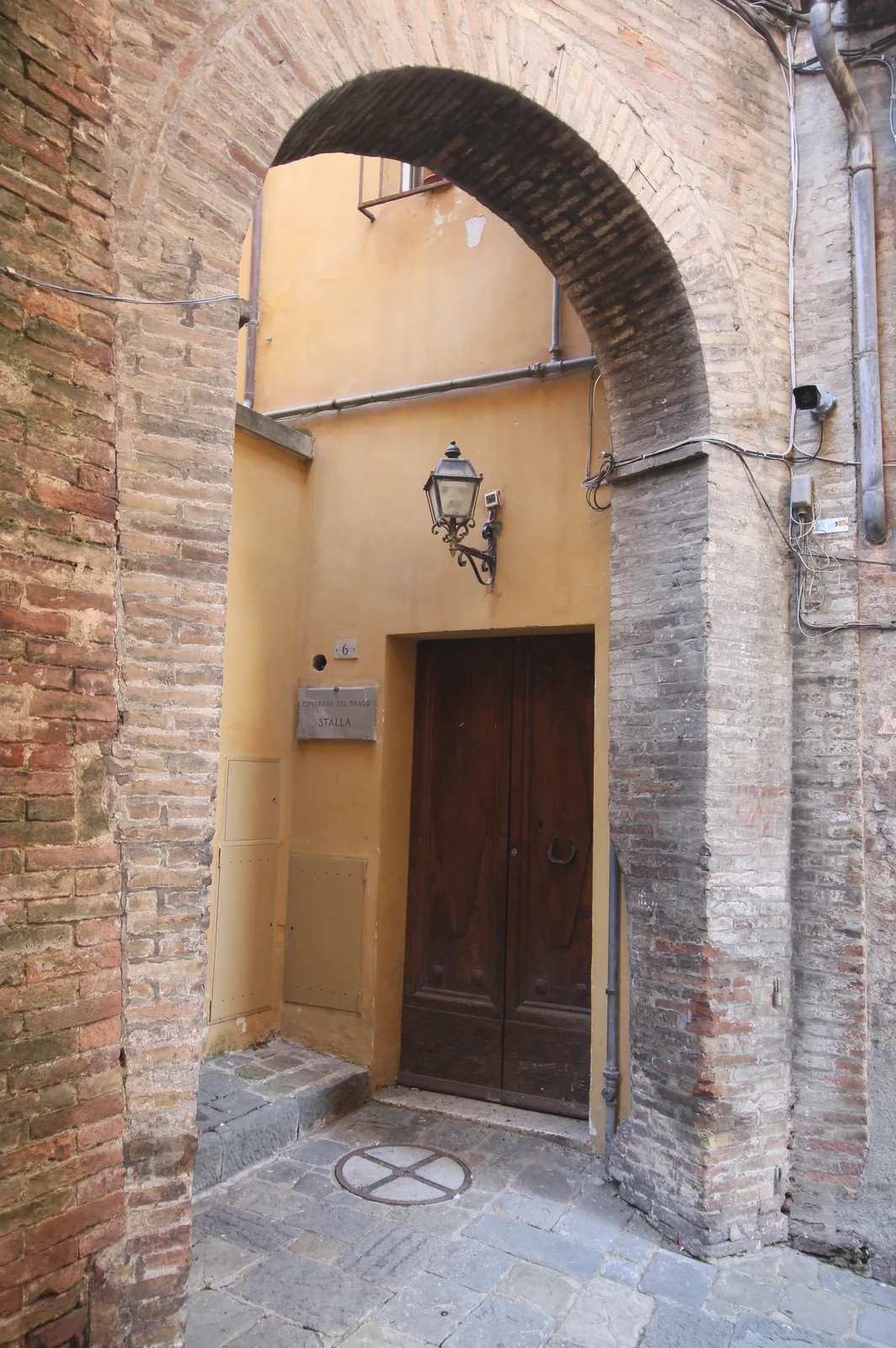
Siena’s 17 contrade have distinct emblems, including animals and symbolic figures. Children can look for flags, plaques, fountains, and signs as the family walks.
This works better than asking young children to absorb a long explanation of Palio politics. Introduce the basic idea: each neighbourhood has its own identity and supports its horse and jockey during the Palio.
The contrade are living communities. Do not enter private spaces, interrupt gatherings, or treat residents and ceremonies as performances.
3. Visit the Siena Cathedral selectively
The cathedral exterior can hold a child’s attention before the family enters: look for black-and-white stripes, carved figures, the rose window, and the tall bell tower.
Inside, prioritise the most visual features. The Piccolomini Library’s frescoes and ceiling are often easier for children to appreciate than a long sequence of chapels.
The official OPA SI Pass is valid for three days, so families staying overnight can divide the complex rather than forcing every section into one visit. As re-checked on 16 August 2026, the pass is €13 during normal periods and €15 during the floor uncovering. Child rates changed with the March 2026 restructure and we could not confirm the current figures; children up to age 6 were free under the published conditions.
The museum, Crypt, and Baptistery have accessibility limitations listed by the operator. Families using a stroller should check current access and be prepared to leave it where instructed.
4. Try Santa Maria della Scala
Santa Maria della Scala can be a better family museum than adults expect. The former hospital complex offers varied spaces, historical stories, frescoes, archaeological collections, and changing exhibitions rather than one continuous gallery of similar objects.
The official site lists elevators, accessible restrooms, seating, a museum app, and iPads available on request. It also lists a family ticket and free admission for children under 11 under the stated rules.
In 2026, the family ticket is listed at €20 without reservation or €18 with reservation for two adults plus eligible minors over 11. Families should check the exact definition and current conditions before purchase.
Do not plan to see the entire complex. Choose a few sections and leave while children are still interested.
5. Visit Museo Civico instead of climbing the tower
Museo Civico provides a way to enter Palazzo Pubblico without the physical challenge of Torre del Mangia. The official visitor information lists an elevator on request, seating along the route, and a changing table in one first-floor restroom.
Children under 11 are listed as free for the museum under the official conditions, while the family ticket for two adults plus eligible minors over 11 is listed separately.
Use the frescoes to discuss a simple question: what did medieval people think made a city work well or badly? That idea can make the art more relevant to school-age children.
6. Treat Torre del Mangia as optional
The tower involves roughly 400 steps, narrow passages, no elevator, limited groups, and a controlled time at the top. Official guidance strongly discourages the climb for people with several health conditions and mobility limitations.
A confident older child may love it. A young child, anxious climber, tired parent, or family carrying equipment may not. The tower is not a measure of whether the family “did Siena properly.”
Tickets including the tower cannot be reserved in advance and are sold on the day, subject to availability. Do not promise children the climb before checking conditions.
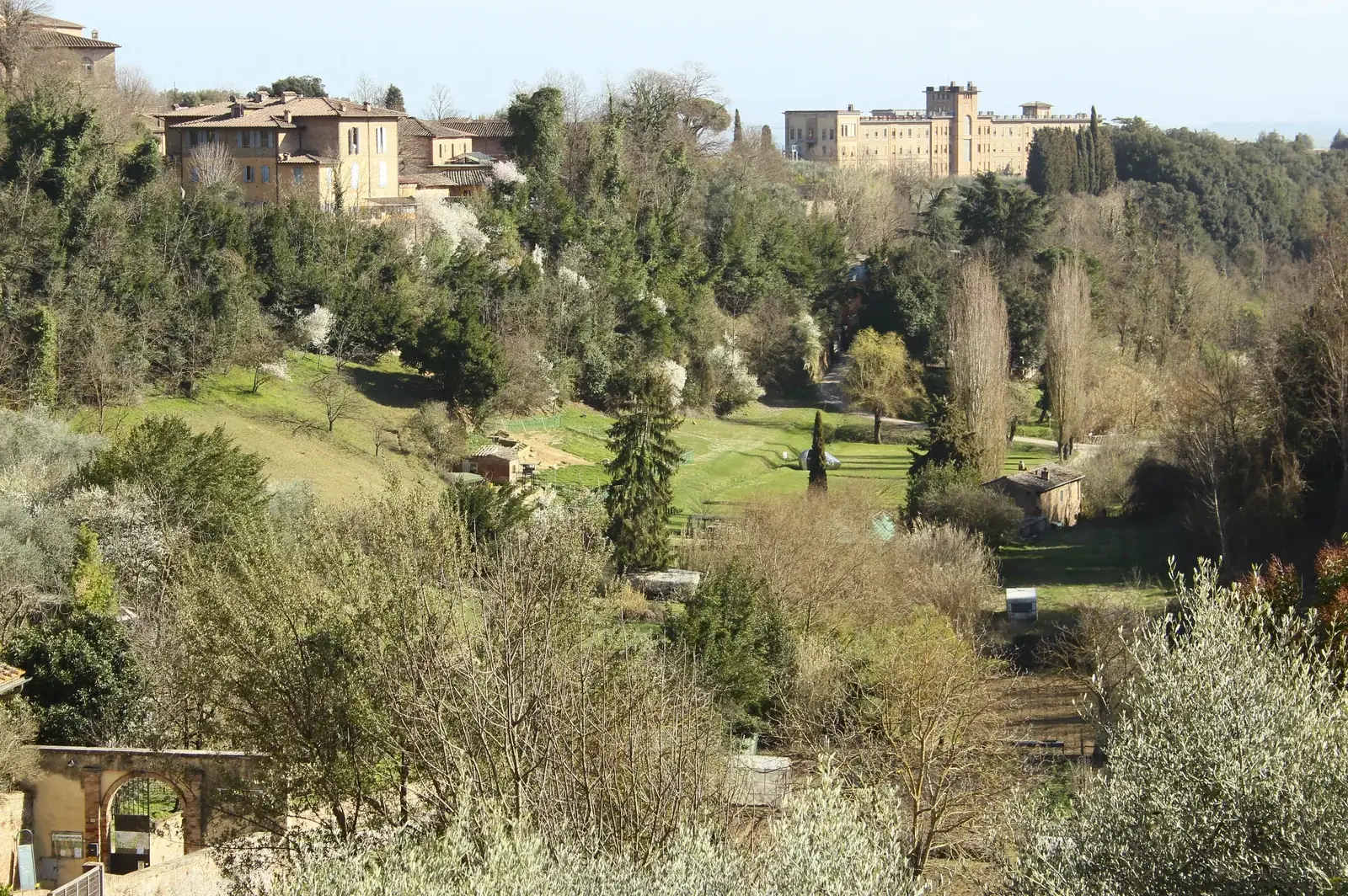
7. Take a green break at Orto de’ Pecci
Orto de’ Pecci provides open space below the centre and a view back toward medieval Siena. It is useful after a museum or long lunch when children need room to move.
The caution is elevation. The walk down feels easy; the return uphill may not. Check the route, weather, footwear, and energy before committing, especially with a stroller.
8. Walk around the Fortezza Medicea
The fortress area offers broad paths and green space near the northern side of the centre. It can be easier to combine with accommodation near Porta Camollia, La Lizza, or Viale Tozzi.
Use it for an early-evening walk, a lower-pressure reset, or a place for older children to move after indoor sightseeing.
9. Make food part of the fun
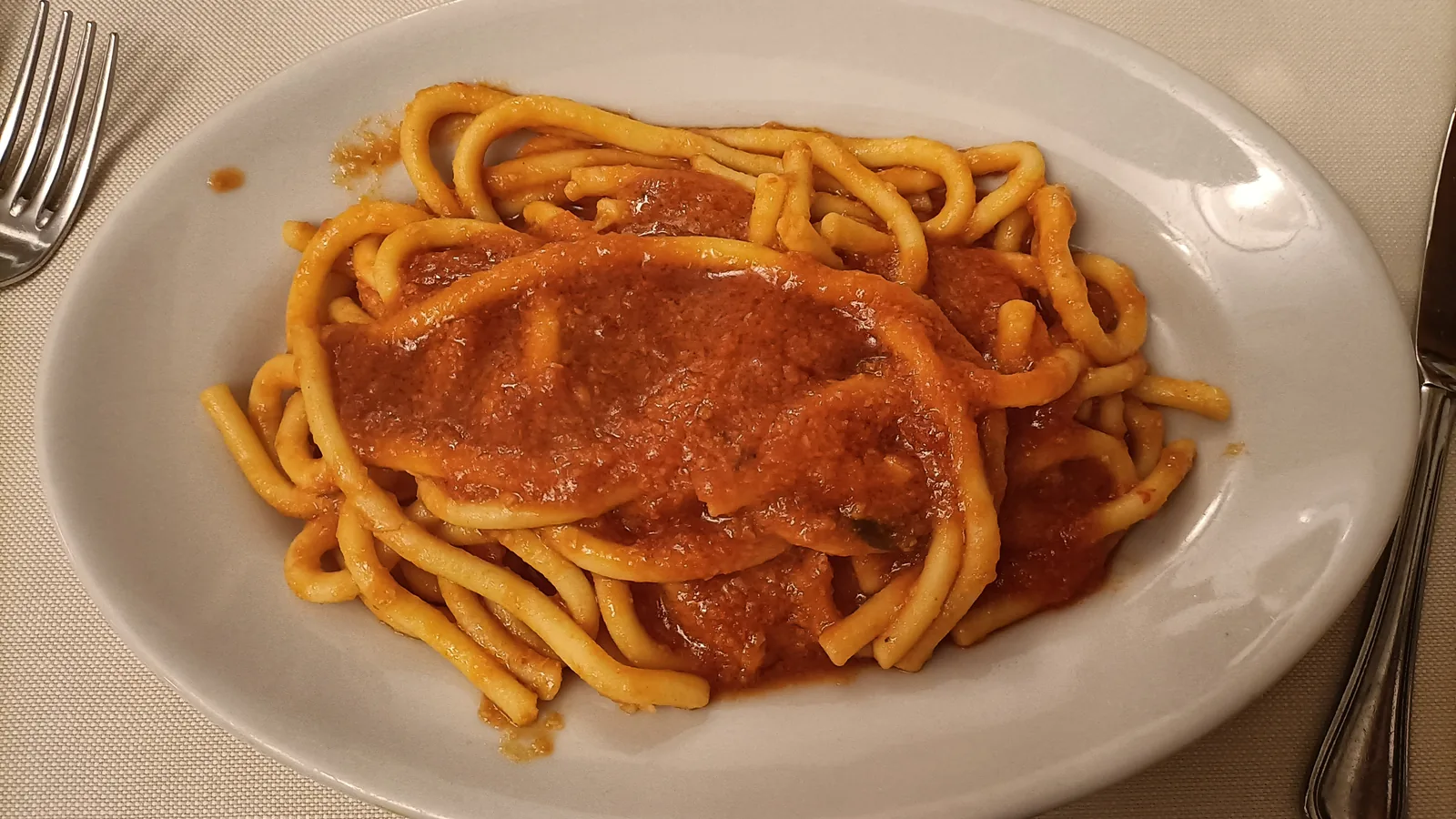
Pici’s thick shape can be appealing to children, although sauces vary. Bread, simple pasta, soups, pecorino, pastries, and gelato provide familiar entry points into local food.
Adults can try pici all’aglione, crostini neri, wild-boar ragù, Cinta Senese products, ricciarelli, and panforte. Ask about ingredients when allergies, spice, alcohol, nuts, or dietary restrictions matter.
Italian restaurant meal times may be later than some children prefer. Book an early table where available, have a substantial snack, or choose lunch as the main meal.
A gentle one-day Siena itinerary with kids
9:00: Arrive and have breakfast
Begin near your accommodation or arrival point rather than crossing the entire city immediately. Use the restroom, refill water, and confirm the route before entering the busiest streets.
9:45: Piazza del Campo
Walk the square, identify the tower and fountain, and begin the contrada-symbol hunt. Avoid starting with a long formal explanation.
10:30: Choose one Palazzo Pubblico experience
Visit the Museo Civico, or check the tower only for a suitable older child and adult. Do not try to fit both automatically.
12:00: Early lunch
Eat before the main rush when possible. Choose a restaurant where the family can sit comfortably rather than chasing a famous address across the city.
13:30: Cathedral and Piccolomini Library
Focus on the façade, stripes, library, and one or two highlights. Skip lower-priority spaces if attention is fading.
15:00: Gelato or quiet break
Use this break before choosing another ticketed attraction. In summer, avoid the most exposed uphill walking during the hottest period.
15:30: Santa Maria della Scala or outdoor time
Choose the museum during rain or intense heat. Choose Orto de’ Pecci or a contrada walk when children need movement.
17:30: Return to the Campo or fortress
Finish somewhere open rather than adding a final church. A successful family day should end before everyone is exhausted.
A two-day family plan
With two days, divide the city:
Day one: Campo, Museo Civico or tower choice, lunch, Duomo highlights, early dinner.
Day two: Santa Maria della Scala, Saint Catherine area, contrada walk, Orto de’ Pecci or fortress, food stop.
Use the full Siena 2-day itinerary and remove at least one adult-focused stop from each day.
Stroller or baby carrier?
Use a lightweight stroller when
- your child naps during walks;
- the stroller folds quickly;
- you can lift it over occasional steps;
- your accommodation has practical storage;
- you plan central routes rather than repeated steep descents.
Use a carrier when
- your child is small enough for safe carrying;
- the route includes stairs, museums, or dense crowds;
- you want freedom in narrow lanes;
- the adult carrying is comfortable on hills.
Many families benefit from both: a compact stroller for longer sections and a carrier for stairs or interiors.
A large travel system can be difficult on cobbles, in small lifts, and in historic buildings. Contact museums and accommodation directly when stroller access is essential.
Where to stay in Siena with children
Families should prioritise space, lift access, quiet sleeping, breakfast, refrigerator access, and a manageable arrival route over being a few metres closer to the Campo.
Useful areas include:
- Porta Camollia and La Lizza: practical for bus arrival and broader paths;
- quieter central streets: atmosphere without the busiest frontage;
- station side: larger modern rooms on some dates, with an uphill connection to the old town;
- countryside: space and parking, but usually car-dependent.
Ask the property about stairs, cot availability, family-room layout, air conditioning, check-in time, and the nearest legal taxi drop-off.
Read Where to stay in Siena for a full area comparison.
Getting to Siena as a family
The bus from Florence often arrives closer to the historic centre, which can be useful with children and luggage. The train offers a familiar station-to-station journey but arrives outside and below the old town.
Neither option is automatically best. Compare departure point, luggage, stroller handling, toilet needs, transfer time, and the route to your accommodation.
See Florence to Siena by train or bus. If you are landing at Florence Airport, the airport-to-Siena route is a two-stage journey worth timing around naps and meals.
Summer, rain, and Palio planning
Summer heat
Start early, carry water, use hats and sun protection, and protect the middle of the day with lunch or an indoor attraction. Stone and brick spaces can feel hot, while narrow shaded streets may feel cooler.
Rain
Cobbles become slippery. Reduce steep routes and prioritise Santa Maria della Scala, Museo Civico, and the Duomo complex.
Palio periods
The Palio races take place on July 2 and August 16, with preparations and ceremonies before race day. Crowds, barriers, loud activity, transport changes, and earlier attraction closures can make the city exciting but much harder with young children.
Do not assume the centre is a normal open square on those dates. Read official notices and decide whether the intensity suits your family.
Family budget notes
Children may receive free or reduced attraction admission, but family costs still rise through larger rooms, snacks, taxis, and flexible cancellations.
Do not choose a distant room solely because it is cheaper. Repeated transport or difficult uphill walks can make a small saving poor value.
Use How much does a trip to Siena cost? to build a family budget.
Common family-planning mistakes
Packing too many museums into one day
One major interior plus one shorter visit is usually enough for young children.
Promising the tower before checking
The climb is same-day, limited, physically demanding, and unsuitable for some visitors.
Ignoring the return uphill
A downhill garden or fountain route can become a difficult final climb with tired children.
Booking a beautiful room without checking access
Historic stairs, tiny lifts, distant parking, and no stroller storage can matter more than décor.
Waiting too long for food
Carry snacks and plan around children’s meal times rather than assuming every restaurant serves continuously.
Treating the Palio as an ordinary sightseeing day
The city’s operations and crowd behaviour change around the event.
Final thoughts
Siena does not need a children’s attraction on every corner to work as a family destination. Its towers, animal symbols, striped marble, sloping square, garden views, and food already provide a strong sense of discovery.
The family version of Siena is often better when it is smaller: one cathedral room that makes everyone look up, one contrada animal found above a doorway, one bowl of pici shared at lunch, and enough time to sit on the Campo without asking what comes next. Children may not remember every fresco, but they can remember how the city felt—and that feeling is often what makes a family want to return to Italy together.
Helpful summary
The short version
Siena with children, honestly: where strollers struggle, which sights hold young attention, and a gentle one-day route that works.
Frequently asked
FAQ
Keep reading
Siena with Kids in One Day: Easy Family Itinerary
Follow a realistic one-day Siena itinerary with kids, including Piazza del Campo, the Duomo, lunch, Orto de’ Pecci, stroller advice and rain backups.
8 min read · Updated 2026-07-12
How Eating Out Works in Siena: The Rules Nobody Explains
Why your Siena bill is higher than the menu prices, when the kitchen is actually open, and the counter-vs-table rule that quietly changes what you pay.
9 min read · Updated 2026-07-25T12:00:00+07:00
Catherine of Siena: The Dyer’s Daughter Who Moved the Papacy
A dyer’s daughter from Siena talked the papacy into leaving Avignon. Her house, her church and her head are all still here — and all free to visit.
10 min read · Updated 2026-09-06