Is Siena Worth Staying Overnight? The Day-Trip Question, Answered Honestly
Is Siena worth staying overnight? What day-trippers miss after 16:00, what the tourism numbers say, and how to decide between a day trip and a night.
In this guide
- Quick answer
- What the day visitor actually gets
- The evening argument: what 16:00 takes away
- The morning argument: the city before 8:30
- The honest counter-case for the day trip
- What the numbers say
- How to do the overnight well
- Where the Siena night fits in a bigger Tuscan trip
- How we checked these details
- Final thoughts
- FAQ
Quick answer
Yes — one night in Siena changes the city more than any other single upgrade you can make to a Tuscan itinerary. But the reason is not what most articles imply, so let us be precise about it.
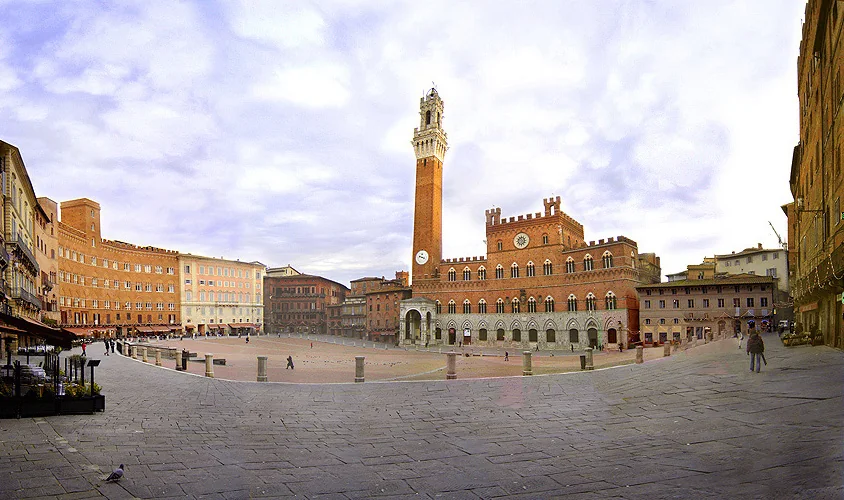
Staying overnight does not buy you more sightseeing: every ticketed sight in Siena — the cathedral complex, the Torre del Mangia — is shut by 19:00 even in high season. What the night buys is the other Siena: the passeggiata filling Via di Città from late afternoon, aperitivo on the Campo as the Torre del Mangia's floodlights come on, a dinner that starts at 19:30 because that is when Sienese dinners start, and — next morning — a nearly empty Piazza del Campo before 8:30, hours before the first coach parties arrive.
The day-trip counter-case is real and we make it below: Siena's headline sights genuinely fit into a well-planned day, and travel forums contain plenty of people who came for the day and left satisfied. The honest framing: a day trip shows you Siena's monuments; a night shows you Siena. Which one you need depends on what you came to Tuscany for — and this guide gives you the evidence for both sides, then shows you how to do whichever you choose properly.
What the day visitor actually gets
Start with the mechanics, because they decide everything. Siena's visitor day runs on a narrow spine: most day visitors are in the city between roughly 10:00 and 16:00. Coach tours from Florence — the standard way non-independent visitors arrive — typically depart around 8:30 and bundle Siena with San Gimignano and sometimes Pisa or a Chianti stop into an eleven-to-twelve-hour day, which gives Siena a two-to-three-hour morning or midday slot — some itineraries with free time for lunch, many moving on to a winery lunch elsewhere — in the fullest hours the city has.
The opening hours conspire in the same direction. Siena's cathedral does not open before 10:00 on any weekday — and on Sundays and religious holidays it opens only in the early afternoon, which means a Sunday day-tripper on a morning schedule can miss the interior entirely. The Torre del Mangia runs 10:00–19:00 in season with last admission 18:15 (and closes at 16:00 from November to February, weather permitting — the tower shuts without notice in rain or high wind). Everything ticketed, in other words, lives inside the same 10:00-to-early-evening window the crowds do.
Within that window, a disciplined independent day-tripper does genuinely well: the Campo, the cathedral complex on the OPA SI Pass, the tower climb if the queue cooperates, lunch off the main streets, and the bus back. Our Florence-to-Siena day-trip playbook is built around exactly that plan. The point of this article is not that the day trip fails — it is that the day trip sees precisely the slice of Siena that every other visitor sees, and none of the slice that follows.
The evening argument: what 16:00 takes away
Through the middle of the afternoon, the tide turns. The last coaches and the bus-timetable day-trippers drain away toward the escalators and car parks, and by late afternoon Siena begins its own evening — the part of the city its residents actually inhabit.
The passeggiata starts from about 16:30: the slow, social evening walk along Via di Città and Banchi di Sopra and Banchi di Sotto, locals window-shopping and greeting each other along the stone spine of the city. It is not an event; it is a habit generations deep, and joining it with a gelato or an aperitivo is the single most Sienese thing a visitor can do.
Then the light goes. The Campo's brick pavement holds the warmth of the day, the Palazzo Pubblico and Torre del Mangia are floodlit, café tables face the glowing square, and sitting directly on the bricks with a drink — locals do it, visitors learn to — turns the piazza into Tuscany's most beautiful living room. Travel-forum threads on this subject repeat one observation with striking consistency: Siena in the evening, after the tour groups leave, feels like a different and better city, its narrow streets returned to normal life.
Dinner completes the case. Sienese restaurants open around 19:30 and fill later; the early-evening dinner a coach schedule would require barely exists here — and the rules that govern a Sienese bill, from coperto to the counter-versus-table price, are worth reading before your first one. A day-tripper eats lunch in Siena; only an overnighter eats dinner. And in the summer weeks around the Palio — run on 2 July and 16 August, each with days of trials and ceremony around it — the contrade hold their outdoor evening dinners in their own streets, a slice of the city's real life that daytime visitors never learn is happening.
The morning argument: the city before 8:30
The overnight's second dividend arrives at dawn. Before about 8:30 the Piazza del Campo is close to empty — joggers, café staff setting out tables, delivery trolleys, and whoever was wise enough to sleep inside the walls. Photographers chase the 7:00–8:30 window for good reason: warm, low light raking across the brick, the fan-shaped piazza legible in a way it never is at noon, and the streets around it quiet enough to hear footsteps.
The practical version of the morning bonus: you walk the city's spine before the day's heat, hold the best viewpoint positions without negotiation, and stand at the cathedral doors as they open mid-morning — 10:00 or 10:30 depending on season — having already had the two most atmospheric hours of the day, hours that do not appear in any ticket price. By the time the first coaches unload, you have seen a Siena the day's other visitors will not know existed, and you can spend the crowded midday hours in interiors, at lunch, or already on a bus to a hill town.
There is also a quieter, less marketable benefit worth naming: breakfast. Taking coffee and a pastry standing at a bar counter among people on their way to work is a small thing, but it is the difference between visiting a city and briefly living in one — and it is only on the menu for those who woke up inside the walls.
The honest counter-case for the day trip
Fairness requires the other side, and the forums supply it: plenty of travellers report that one well-planned day was enough — that they saw the Campo, the Duomo and the tower without feeling rushed, some even folding in San Gimignano, and left content. For them the evening argument bought nothing they wanted.
That view is coherent when one or more of these is true: your trip is short and Florence-based, with museum reservations anchoring your evenings there; your interest in Siena is primarily its monuments rather than its atmosphere; you are day-tripping in low season, when evenings are cold and early-dark and the passeggiata thins; or your budget prioritises fewer, better bases over one-night stops — a legitimate philosophy we defend elsewhere ourselves.
The trade-offs to accept with open eyes: your Siena will be the 10:00–16:00 city at its most crowded; a Sunday visit risks the cathedral entirely; dinner in Siena is off the menu; and the empty-Campo morning belongs to someone else. If those are acceptable losses, take the day trip without guilt — but take it early and independently, not by coach, and give it the full day rather than a two-town split.
What the numbers say
The statistics, for what they can and cannot tell us. The province of Siena recorded 2.44 million arrivals and 6.37 million overnight stays in 2025 per the provincial tourism observatory — an average stay of about 2.6 days across the whole province (2.49 excluding holiday lets). The city itself logged just over 1.08 million overnight stays in 2024, about a fifth of the provincial total — and across the province, roughly two-thirds of overnight guests came from abroad. (The two years' figures are compiled on different bases, so we resist computing trends from them — and we found no reliable figure for day visitors, who by definition go uncounted in overnight statistics.)
What the numbers support saying: overnighting in Siena is common but far from universal — the province's stays concentrate heavily outside the city, in the countryside and hill towns, and a large share of the people in the Campo at noon on any given day sleep somewhere else. Which is, of course, the overnighter's entire opportunity: it implies — though no statistic counts it directly — that the evening city holds a fraction of its midday population, and the difference is the experience this article is about.
How to do the overnight well
Arrive in the afternoon, not the morning. The overnight's value is concentrated at the edges of the day — arrive by 16:00, drop the bags, and walk straight into the passeggiata. Save the ticketed sights for tomorrow's opening hours.
Sleep inside the walls if the evening is the point — our where-to-stay guide's inside-or-outside answer covers the decision in full, but the short version: inside for the lamp-lit walk home from dinner, outside (station side or countryside) if you are travelling with a car and its parking. The hotel shortlist is here, and a like-for-like search on Booking.com for your dates settles availability quickly.
Book with the calendar in mind. Central Siena's historic-centre hotels are small and fill first: for July and August stays, traveller guidance converges on booking roughly three to six months ahead — and for the Palio weeks around 2 July and 16 August, six months to a year, with rates to match. Shoulder-season overnights are dramatically easier and cheaper, which is one more argument for September and October.
Give it one night minimum, two if Siena is your base. One night delivers the evening-morning cycle this article describes. Two turns Siena into a base for the hill towns with the evening ritual repeating — the format our two-day itinerary is built around. And if your dates brush a Palio, read the Palio guide first: those days play by their own rules, in cost, crowds and magic alike.
Where the Siena night fits in a bigger Tuscan trip
Zoom out, because the overnight question rarely arrives alone — it usually hides inside a larger itinerary decision, and the answer changes with the shape of the trip.
The Florence-based week. If Florence holds your accommodation for the whole stay, the Siena overnight becomes a one-night interruption: entirely doable — pack light, leave the main luggage in Florence, ride down by bus in the afternoon and return the next midday — but it must earn its packing friction. Our view: it does, once per trip. The evening-and-morning cycle described above is precisely the thing a Florence base cannot otherwise give you, and one travel-light night costs less effort than most travellers fear.
The split base. Two or three nights in each city, moving once, remains our standard advice for first-time couples — and inside that format the question answers itself: Siena is not an excursion but a home, the passeggiata becomes routine rather than event, and the day trips radiate outward by bus to the hill towns instead of inward to Siena itself.
The southern-Tuscany trip. For itineraries centred on the Val d'Orcia, Montalcino and Montepulciano, Siena is the natural gateway night at either end — arrive, sleep, collect the rental car on the valley floor next morning, and the city's evening costs your itinerary nothing at all.
The one-day-only trip. If a single day is genuinely all Tuscany allows you beyond Florence, spend it here rather than splitting towns — and then read the day-trip section above twice, because execution is everything when there is no second chance.
How we checked these details
Checked 9 August 2026, via web research: Duomo and Torre del Mangia opening patterns against the official Opera della Metropolitana and Visit Siena information as reflected in current ticketing pages (sources conflict on whether the summer cathedral opening is 10:00 or 10:30, so we state only what all agree on — never before 10:00, Sunday openings from early afternoon, tower last admission 18:15 in season, 16:00 winter closing, weather closures possible); day-tripper window and coach-tour structures from current operator listings for the 2026 season; passeggiata, evening-atmosphere and one-day-was-enough perspectives from traveller reports across the major travel forums, presented as the consensus and counter-consensus they are rather than as facts; tourism statistics from the provincial tourism observatory's published 2024 and 2025 figures as reported by Italian press, with their differing compilation bases flagged in the text; and booking-window guidance from accommodation guides, with one widely repeated but unofficial Palio price-rise percentage deliberately omitted. Opening hours change seasonally and around the Palio — verify on the official sites for your dates. We have no affiliate relationship with any platform linked on this page; the Booking.com link points to the platform's official site through our internal /go/ shortcut and earns us nothing.
Final thoughts
There is a version of Siena that exists between 16:00 and 10:00, and it is the version the city's reputation was built on: the passeggiata, the floodlit tower over a warm brick square, dinner at the hour dinner is meant to happen, and a dawn piazza that belongs briefly to you. No day trip, however well run, can include it — not because day trips are done badly, but because that Siena only opens when the buses have gone. If your Tuscan itinerary can spare one night, this is where it earns the most. And if it truly cannot, come early, stay late, and promise the evening city you will be back.
If the decision is really about money rather than time, this page is the wrong half of the argument: what a day in Siena costs and what a night adds puts the same choice in euros, and how much a trip to Siena costs covers the whole budget.
Helpful summary
The short version
Is Siena worth staying overnight? What day-trippers miss after 16:00, what the tourism numbers say, and how to decide between a day trip and a night.
Frequently asked
FAQ
Keep reading
Best Hotels in Siena: Five Central Stays for Travellers on Foot
Five central Siena hotels compared for travellers on foot, with verified addresses and what each hotel does and does not publish.
17 min read · Updated 2026-07-28
Siena Hotel vs Apartment: Which Is Better for Your Trip?
Hotel or apartment in Siena? The honest split: breakfast and service against kitchens and space, with luggage and parking factored in.
9 min read · Updated 2026-07-12
Where to Stay in Siena: Best Areas for Every Trip
Six Siena areas compared — starting with the question most travellers actually mean: sleep inside the walls, or outside them?
11 min read · Updated 2026-07-11