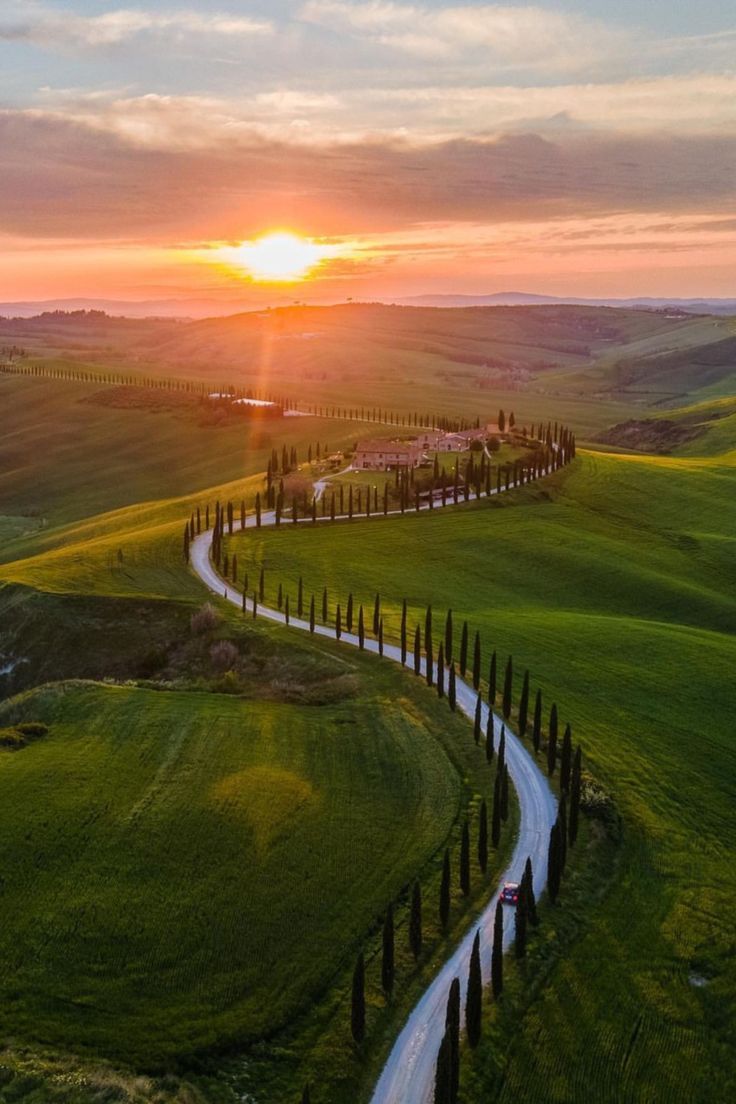
Volterra: Etruscan Urns, Alabaster Dust, a Working Prison, and No Vampires
Volterra in full: Etruscan urns, the 1208 Palazzo dei Priori, Roman theatre, alabaster workshops, the Balze, the €23 card and the Twilight truth.
In this guide
Quick answer
Volterra is the hill town that was old when Siena was new. An Etruscan city first — one of the twelve of the Etruscan league — then a Roman one, then a medieval commune whose Palazzo dei Priori of 1208 is the oldest town hall in Tuscany, the model for Florence's Palazzo Vecchio; and, for the last few centuries, the city of alabaster, whose workshops still fill the lanes with white dust. It stands on its own high plateau west of Siena, with an eroding cliff on one side and a Medici fortress that is still a working prison on the other, and it is the most serious, least pretty of the great Tuscan hill towns — which is its appeal.
The essentials: the Guarnacci Museum's Etruscan urns and the *Ombra della Sera* (open daily: 9:00–19:00 from 14 March to 1 November, 10:00–16:30 in winter at our check); the Roman theatre of the first century BC; the Volterra Card at €23 for 72 hours covering seven civic sites, or the €7 summer combined ticket for the Pinacoteca, Alabaster Ecomuseum, Priori, acropolis and theatre; the Balze cliffs at the plateau's edge; and one correction to make before anything else — **the *Twilight* vampires were filmed in Montepulciano, not here**.
Give it a full day. There is no direct bus from Siena — the change is at Colle di Val d'Elsa, around two and a quarter hours in all — so Volterra is a car day or a committed one. This guide covers the Etruscans, the town, the alabaster, the cliffs, the tickets and the logistics.
The Etruscans: the Guarnacci and the Shadow of the Evening
Volterra's depth is under its museum roof. The Museo Etrusco Guarnacci holds one of the oldest and most important Etruscan collections in the world — assembled from the eighteenth century onward from the tombs of the plateau and its slopes — and its heart is the funerary urns: hundreds of small carved chests, in alabaster and terracotta, on whose lids the dead recline as if at a banquet, and on whose fronts their journeys, battles and myths are carved in relief. Volterra's alabaster industry begins here: the Etruscans quarried the local stone for their dead two and a half thousand years before the workshops sold it to tourists.
Two pieces are the ones to find. The Urn of the Spouses, a terracotta lid on which an elderly couple lie together, faces worn and individual, the least idealised portrait in Etruscan art. And the *Ombra della Sera* — the Shadow of the Evening — a small, impossibly elongated bronze votive figure of a boy, named (the story goes) by a poet who saw in it the long shadow a body throws at dusk, and which has become the town's emblem.
Hours at our check: daily 9:00–19:00 from 14 March to 1 November, 10:00–16:30 from 2 November to 13 March — confirm on the museums' site. Give it two hours; the urns repay slowness. Then walk the town with the knowledge that everything below the medieval street level is theirs: the gate, the walls, the acropolis on the hill.
The town: Priori, the theatre, the acropolis
Piazza dei Priori is the medieval heart, and its palace is a first in Tuscany. The Palazzo dei Priori, begun in 1208 and finished by the 1250s, is the oldest surviving town hall in the region — the Gothic civic building on which Florence's Palazzo Vecchio and most other Tuscan communal palaces were modelled — built, pointedly, right beside the cathedral to assert the commune's power against the bishop's. It still houses the town's offices; the visitor sees the council hall and, on the first floor, models of the town's Etruscan growth and a pair of urns. Climb it if the tower is open; the view covers the plateau to the sea.
The Roman theatre of Vallebona, below the northern walls, is among the best preserved in Italy — columns and seating cut into the hillside in the first century BC, with the baths beside it — and the classic view is from the road above, where the whole ensemble reads at once; the ticketed descent puts you in it.
The Etruscan acropolis and the Porta all'Arco complete the ancient town: the arch-gate with its three worn Etruscan heads is the oldest thing you will walk through in Tuscany, and the archaeological park on the hill above the town holds the temple foundations and the Medici-era cisterns. All of it is on the combined tickets below.
The Pinacoteca, and the painting worth the detour. The civic art gallery occupies the Palazzo Minucci-Solaini, a late-fifteenth-century palace attributed to Antonio da Sangallo the Elder, and it holds one picture that alone justifies the ticket: **Rosso Fiorentino's *Deposition from the Cross* of 1521**, painted for the chapel of the Croce di Giorno beside the church of San Francesco and moved here from the cathedral. It is the founding masterpiece of Florentine Mannerism — a ladder-tangle of figures against a cold sky, the colours acid, the grief angular — and finding it in a small hill-town gallery, rather than in the Uffizi where it would be mobbed, is one of Tuscany's great quiet pleasures. Twenty minutes in front of it; the rest of the gallery is context.
The medieval lanes between are Volterra's texture — grey stone, austere towers, none of Siena's brick warmth — and they are lined with the reason most visitors come without knowing it: the alabaster workshops.
Alabaster: the workshops and the ecomuseum
Volterra's stone is a translucent gypsum alabaster, quarried in the hills around the town, soft enough to carve and turn, and worked here continuously since the Etruscans. The workshops are the living version — small studios in the lanes where the lathes run and the dust settles on everything, selling lamps, bowls, chess sets and the cut-and-polished pieces that have been the town's export for three hundred years. The etiquette is simple: watch, ask, and buy from the bench where it was made. Our shopping guide's rules for craft towns apply exactly.
The Alabaster Ecomuseum — on the combined ticket — is the context: the quarries, the tools, the trade's rise and its twentieth-century industry, with pieces from the Etruscan urns to the Art Deco lamps that made Volterra alabaster a household object across Europe. Between the workshops and the museum, a visitor understands why the town's two great ages — Etruscan and modern — are made of the same stone.
A note on the fortress. The Fortezza Medicea, the great fortification at the town's high point, is a working prison and cannot be visited, beyond occasional special events in which inmates cook for guests. It is one of Volterra's genuine curiosities — a Renaissance fortress in continuous institutional use — and the reason the town's skyline has a shape no other hill town's has. Admire it from the park below.
The Balze, and the vampires who were never here
On the town's north-western edge the plateau simply ends. Le Balze are a dramatic amphitheatre of eroded ochre cliffs where landslides have been eating the hill for centuries — swallowing, as they advance, Etruscan necropolises and medieval churches whose remains still stand at the edge. The walk out to the viewpoint is twenty minutes from the centre, and it explains the town's austerity better than any museum: Volterra has always been a place on the brink, literally.
And the vampires. In *Twilight: New Moon*, the Volturi's ancient seat is "Volterra" — and the town gets the pilgrims. But the film was shot in [Montepulciano](/blog/montepulciano-guide/), whose Piazza Grande, Palazzo Comunale and cellars played the part; not one frame was filmed here. Our set-jetting guide records the substitution and the way the real Volterra fields the confusion — graciously, with a gentle line in merchandise — and this page's advice is the same: come for the Etruscans, the alabaster and the cliffs, and leave the fountain-hunting to Montepulciano.
Tickets, getting there, and the day
Tickets, as published at our check. Each civic museum sells a single ticket at €10. The Volterra Card — €23, valid 72 hours — covers seven sites: the Guarnacci, the Pinacoteca and civic museum, the Alabaster Ecomuseum, the Palazzo dei Priori, the Etruscan acropolis, the Roman cistern and the Roman theatre; a reduced card at €15 applies to guests of Volterra's hotels and to ages 10–18, and under-10s go free. On single-ticket arithmetic the card pays for itself at the third site. A cheaper combined ticket at €7, valid seven days and sold from 1 May to 30 September, covers the Pinacoteca, the Alabaster Ecomuseum, the Palazzo dei Priori, the Etruscan acropolis and the Roman theatre — everything except the Guarnacci, with under-18s free — which, for a one-day summer visitor, is the better buy plus a €10 Guarnacci ticket. Confirm all three on the museums' site; we found an older €20 figure for the card still circulating on third-party pages, and the price and contents are the kind of fact that changes each season.
Getting there. Volterra is the awkward one. No direct bus from Siena: the journey is via [Colle di Val d'Elsa](/blog/colle-di-val-delsa-guide/) with a change, about two and a quarter hours in all on the planners, on frequencies that reward checking the night before; our car-free guide is honest that the western towns are the network's weak side. By car it is an hour and a bit from Siena on the road through Colle, and the drive up the plateau is part of the arrival. Park below the walls; the centre is steep and pedestrian.
The day. Guarnacci first, while the mind is fresh; Priori and the square; the Rosso in the Pinacoteca; lunch two streets off it; the workshops and the ecomuseum; the theatre from above and then below; the Balze at the light's end. It fills a day without hurry, and San Gimignano or Colle fit the drive home.
Eating. Volterra is a serious-food town in the Pisan hills — game, the local *cinghiale*, the pecorino and the truffles of the Volterrano's own autumn — and the restaurants guide's method is the only advice that survives the season: the room with locals in it, two streets from the piazza.
How we checked these details
Checked 21 September 2026, by web research; direct page fetches are blocked in our environment, so this rests on search-surfaced material — the town's tourism site, the civic museums' pages, the regional tourism board and reference works — rather than pages we opened.
Verified: the Palazzo dei Priori's construction from 1208 (completed in the 1250s) as Tuscany's oldest town hall and the model for later communal palaces, sited beside the cathedral to assert the commune's autonomy; the Guarnacci's standing as one of the oldest and most important Etruscan collections, its alabaster and terracotta urns, the Urn of the Spouses and the *Ombra della Sera*, and its published hours (9:00–19:00 from 14 March to 1 November; 10:00–16:30 from 2 November to 13 March); the Roman theatre of Vallebona as first-century BC and among Italy's best preserved; the Fortezza Medicea as a working prison closed to visitors except for occasional events; the Balze's eroding cliffs and their swallowing of Etruscan and medieval remains; the Volterra Card at €23 for 72 hours covering seven sites (Guarnacci, Pinacoteca, Alabaster Ecomuseum, Priori, acropolis, Roman cistern, Roman theatre), the €15 reduced card for hotel guests and ages 10–18, free entry under 10, the €10 single museum ticket, and the €7 seven-day combined ticket (1 May–30 September) covering the Pinacoteca, Alabaster Ecomuseum, Palazzo dei Priori, Etruscan acropolis and Roman theatre with under-18s free; the Pinacoteca's home in the Palazzo Minucci-Solaini and **Rosso Fiorentino's 1521 *Deposition***, painted for the Croce di Giorno chapel at San Francesco; the alabaster workshops and the Alabaster Ecomuseum; the absence of a direct Siena bus and the ~2h15 journey via Colle; and the *Twilight* substitution from our set-jetting guide's verification.
Stated with care: the Porta all'Arco and the acropolis description, which follow standard accounts; the Guarnacci's seasonal boundary dates, which one source gives as April–October rather than 14 March–1 November — the hours are the same, the switchover date is what to confirm; the drive time from Siena, an estimate; and the Priori's tower access. Confirm on the museums' site for your date.
We have no commercial relationship with any museum, workshop or operator named. Nothing on this page is bookable through us.
Final thoughts
Volterra is what a Tuscan hill town looks like with the charm turned down and the history turned up: grey stone instead of warm brick, a prison instead of a viewpoint café, a cliff eating the edge of town, and a museum full of the faces of people who lived here before Rome existed. It is not the town for a postcard. It is the town for a day that changes how you see the postcards.
Start with the urns, end with the cliff, buy the alabaster from the bench, and don't ask about the vampires.
Helpful summary
The short version
Volterra in full: Etruscan urns, the 1208 Palazzo dei Priori, Roman theatre, alabaster workshops, the Balze, the €23 card and the Twilight truth.
Frequently asked
FAQ
Keep reading
The Chianti Classico Towns: Greve, Castellina, Radda and Gaiole, Compared Honestly
Greve, Castellina, Radda and Gaiole compared: the square and expo, the vaulted street, the hilltop, the castles and Brolio, plus bus 125 from Siena.
11 min read · Updated 2026-09-25
Colle di Val d’Elsa: The Crystal Town Between San Gimignano and Siena That Everyone Skips
Colle di Val d’Elsa: the town that makes most of Italy’s crystal, its €6 museum in the old furnaces, Arnolfo’s birthplace, the upper town and the lift.
11 min read · Updated 2026-09-24
Montalcino: The Fortress Town Where Every Doorway Pours Brunello
Montalcino in full: the 1361 Fortezza and its enoteca, the Sant’Agostino museums, the early 2026 Brunello harvest, Sant’Antimo and the 114 bus.
11 min read · Updated 2026-09-21