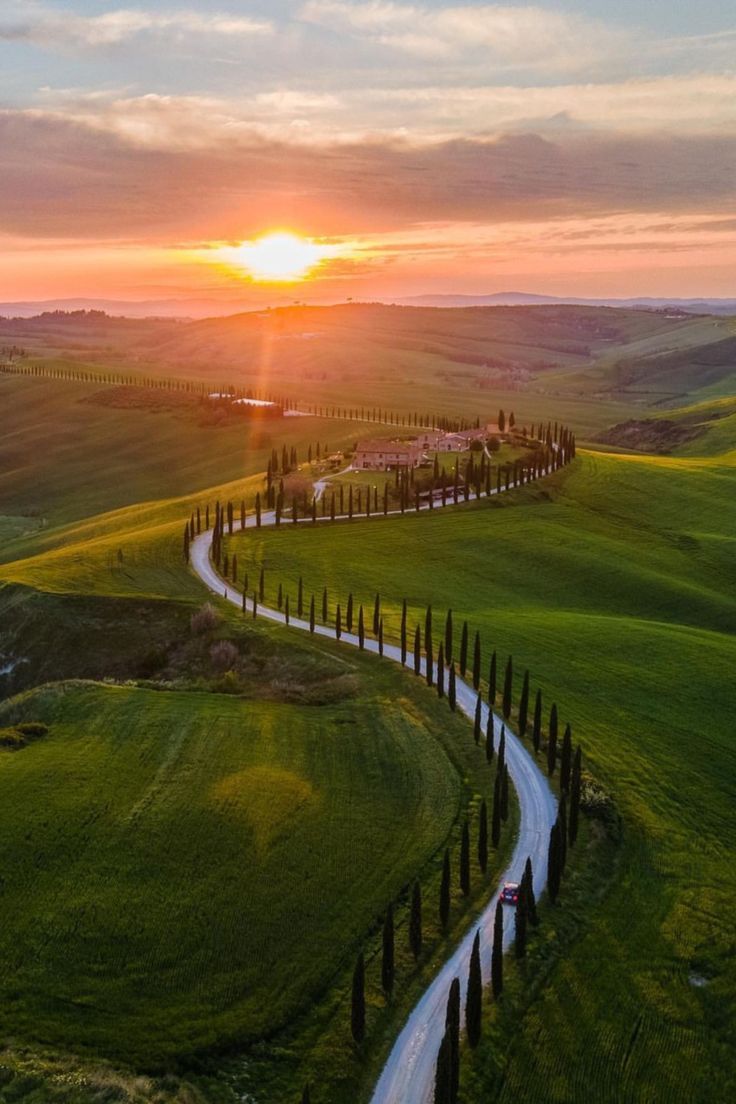
Montalcino: The Fortress Town Where Every Doorway Pours Brunello
Montalcino in full: the 1361 Fortezza and its enoteca, the Sant’Agostino museums, the early 2026 Brunello harvest, Sant’Antimo and the 114 bus.
In this guide
- Quick answer
- The Fortezza: 1361, and the last stand of the Republic
- Sant’Agostino: the town’s museums and the Tempio del Brunello
- The town between: Piazza del Popolo and the walk downhill
- Brunello: how to taste it here, and what 2026 is doing
- Sant’Antimo, the Sagra del Tordo, and the road home
- How we checked these details
- Final thoughts
- FAQ
Quick answer
Montalcino is a small, high, walled town that produces one of the world's great red wines, and the two facts are the whole visit: the Fortezza — the pentagonal fortress raised in 1361 at the top of town, whose courtyard is free and whose ramparts give the Val d'Orcia panorama — and Brunello, poured by the glass in the enoteca inside those same walls and in every second doorway below them. Our Montalcino-or-Montepulciano comparison settles the choice between the two wine towns; this page is Montalcino on its own terms.
What is new for autumn 2026: the Brunello harvest began on 7 September, at least a week earlier than 2025, after a hot summer — with the consortium reporting high quality, healthy vines and volumes in line with or slightly below last year. That makes the coming weeks the town at its most alive, and the vendemmia guide the companion to this page.
Practically: the town is a half-day (fortress, museums, a tasting, lunch), a full day with the Abbey of Sant'Antimo nine kilometres south — which has its own article — and reachable car-free by the 114 bus from Siena or the train-to-Buonconvento trick. This guide covers the fortress, the museum complex in Sant'Agostino, how to taste Brunello without a car or a booking, the harvest, and the logistics.
The Fortezza: 1361, and the last stand of the Republic
Montalcino's fortress is the town's anchor and its origin story. Built in 1361 by the Sienese — the comparison guide credits the master builders Mino Foresi and Domenico di Feo — as a pentagonal stronghold at the town's highest point, later extended under the Medici, it was the Republic of Siena's southern bastion. When Siena itself fell in 1555, a body of Sienese exiles held out here for four more years as the "Republic of Siena at Montalcino" — the last free Sienese government anywhere — until the peace of 1559 handed the town to Florence too. Montalcino's Sienese identity has never quite faded since; the town still marches at the head of the Palio's historic procession in honour of that loyalty.
Visiting. The courtyard is free to wander. Walking the ramparts — the reason to come, with the whole Val d'Orcia and the Vallombrone on show — carries a small charge, bought at the Enoteca La Fortezza inside the walls; recent seasons have also seen restoration work limit access to parts of the circuit, so check what is open when you arrive rather than promising yourself the full walk. Published hours at our check ran daily 9:00–20:00 from April to October and 10:00–18:00 from November to March — confirm at the enoteca desk.
The enoteca itself is the fortress's second function and, for a car-free visitor, its best: a wine shop trading inside the walls since 1980 that pours Brunello flights on the spot — guest reports cite figures around €25 for a three-glass tasting with accompaniments — making it the one place in the valley where the region's most famous wine is tasted seriously without a cellar visit, a booking or a designated driver.
Sant’Agostino: the town’s museums and the Tempio del Brunello
Below the fortress, the former convent of Sant'Agostino holds Montalcino's museum complex — and since the 2020s the town has turned it into a two-sided visit: art on one hand, wine on the other.
The Civic and Diocesan Museum gathers the sacred art of the town and its territory — a small, rich collection strong in Sienese painting and wooden sculpture, of the kind that these hill towns commissioned from Siena's workshops for six centuries — together with the archaeological collection in the complex's underground rooms.
The Tempio del Brunello is the newer half: a multimedia museum of the wine itself, housed in the same complex under the "Oro di Montalcino" banner, which walks through the Sangiovese, the territory, the consortium's rules and the vintages, and pairs — on the combined tickets sold by the platforms — with a tasting.
Hours, with the caveat. The complex published, for the period 31 August to 1 November 2026, opening 11:30–13:00 and 14:15–17:30 daily except Tuesday and Wednesday. Those are short, split and seasonal hours — the lunch-and-early-afternoon window is the one to aim for, and a Tuesday or Wednesday visit finds the doors shut. Prices we leave to the ticket desk, which publishes several combinations.
Between the two halves, the honest advice: the art museum is the quieter, better-value hour; the wine museum is the one to add if you are not doing a cellar visit and want the theory before the glass.
The town between: Piazza del Popolo and the walk downhill
Between the fortress at the top and the convent below, Montalcino is a small, steep, well-kept town that takes forty minutes to walk end to end and rewards doing so slowly. Its centre is Piazza del Popolo, the narrow main square under the Palazzo dei Priori — the medieval town hall with its slender tower and clock, hung with the arms of the podestàs who governed for Siena — and the loggia and café terraces opposite, where the town takes its coffee and the visitor takes the measure of the place.
The main street runs on from the square, lined with enotecas, the shops that will ship a case home, and the food shops of a town that eats as seriously as it drinks: pici, wild boar, the Cinta Senese pork and, in season, the honey and the new oil that the same hills produce. The lanes off it drop steeply to the lower gates and the views over the vineyards; the whole circuit — fortress, square, street, lanes, convent — is the town, and it needs no map.
The Sienese memory. Montalcino's identity as the last free Sienese town — the exiles' Republic of 1555 to 1559 — is not a footnote here; it is the reason the town's flags and its fortress mean what they do, and our Siena history articles explain what those four years were the end of. Ask in any enoteca and you will get the story with the pour.
When to come. The vendemmia weeks from early September are the town at full pitch this year; October brings the Sagra del Tordo and the golden light; November the new oil and the truffle fairs an hour away; winter the emptiest ramparts and the warmest enotecas. High summer is hot on the climb and busy on the square — go early, taste at midday, leave before the coaches.
Brunello: how to taste it here, and what 2026 is doing
The wine, in one paragraph. Brunello di Montalcino is 100% Sangiovese, released in its fifth year after at least two years in oak, and was in the first cohort of DOCG wines in July 1980 — the comparison guide has the full rulebook against Vino Nobile. It is the region's most expensive bottle and its most serious, and the town treats it accordingly: this is a wine town first and a hill town second.
Tasting without a car. The fortress enoteca (above) is the answer, and the town's other enotecas pour by the glass all along the main street — Osticcio, half restaurant and half wine bar with a valley window, is the named recommendation in our restaurants guide. Cellar visits at the estates in the countryside need a car and a booking; in season, book them weeks ahead.
The 2026 harvest. As reported in early September by the Consorzio del Brunello di Montalcino: picking began for most estates on Monday 7 September, at least a week ahead of 2025, after a hot summer in which the Sangiovese nonetheless had water at the critical stages; the consortium's monitoring showed very positive plant health and regular ripening, with quality expected high and volumes in line with or slightly below 2025. For a visitor that means the harvest weeks run from early September into October — the cellars busy, the tractors on the roads, the *vendemmia* smell in the air — and our vendemmia guide explains how to be usefully present without being in the way.
Buying. Buy in town, from a shop that will ship, and buy the vintage you tasted. The comparison guide's price framing stands: Brunello is a considered purchase, Rosso di Montalcino is the same estates' younger, kinder-priced wine, and the enoteca will pour both if you ask.
Sant’Antimo, the Sagra del Tordo, and the road home
Sant'Antimo. Nine kilometres south, in a valley of olives and cypresses, stands the Abbey of Sant'Antimo — one of the finest Romanesque churches in Italy, rebuilt around 1118–1130 in travertine, with a community of Olivetan monks singing the hours in Gregorian chant, and free to enter. It is the natural second half of a Montalcino day and it has its own full guide; the short version is: go, time it for an office, and drive.
The Sagra del Tordo. Montalcino's autumn festival, on the last weekend of October, pits the town's four quarters — Borghetto, Pianello, Travaglio and Ruga — in an archery tournament after a historic procession, with the quarters' gardens serving the season's food. The 2025 edition ran 24–26 October; at our check the 2026 dates had not been published — the October guide will carry them when they are. It is the town's one weekend of crowds outside the harvest.
Getting there and away. Car-free from Siena: the direct line 114 (Siena–Buonconvento–Torrenieri–Montalcino, weekdays), or the smoother train to [Buonconvento](/blog/buonconvento-guide/) on the Siena–Grosseto line and the 114 for the short climb — the "rail trick" our car-free guide recommends; allow roughly 1.5 to 2 hours end to end and plan the return times before committing. By car, the town is closed to visitor traffic and the car parks ring the walls; the fortress is at the top, the museums below it, and the walk between them is the town. The driving guide covers the region's rules and the harvest-season tractors.
The day that works. Morning bus or drive, fortress first while the light is on the valley, the Sant'Agostino complex in its lunchtime window, a flight at the enoteca or Osticcio, lunch, then Sant'Antimo for the afternoon office and the drive home through the Val d'Orcia's golden hour.
How we checked these details
Checked 21 September 2026, by web research; direct page fetches are blocked in our environment, so this rests on search-surfaced material — the Consorzio del Brunello's harvest statements as reported by the wine and regional press, the museum complex's published hours, the Fondazione Musei Senesi, and visitor guides for the fortress — rather than pages we opened.
Verified: the Fortezza's 1361 construction, pentagonal plan and Medici extension, free courtyard, charged rampart walk with recent restoration limits, the Enoteca La Fortezza selling the tickets and pouring flights (guest-reported ~€25 for three glasses), and the published seasonal hours (9:00–20:00 April–October, 10:00–18:00 November–March); the Sant'Agostino complex with the Civic and Diocesan Museum, the underground archaeological collection and the Tempio del Brunello, and its published 31 August–1 November hours of 11:30–13:00 and 14:15–17:30, closed Tuesday and Wednesday; the 2026 harvest report — start on 7 September, a week or more ahead of 2025, high expected quality, healthy vineyards, volumes in line with or slightly below 2025; the line 114 route and the Buonconvento rail alternative from our car-free guide; the wine rules and the 1555–1559 Sienese exile from the comparison guide's verification; Sant'Antimo's essentials from its own article's verification; and the Sagra del Tordo's four quarters, archery format and 2025 dates, with 2026 unpublished.
Stated with care: the rampart fee, which we give as "a small charge" because guest reports vary and the enoteca sets it; museum prices, left to the desk; and the fortress hours, which come from visitor guides rather than the site's own page. Confirm all on arrival.
We have no commercial relationship with the enoteca, the museums, the consortium, any estate or any body named. Nothing on this page is bookable through us.
Final thoughts
Montalcino asks less of your legs than Montepulciano and more of your palate. It is a fortress with a wine shop inside it, a convent with a wine museum inside it, and a main street where the question is never *whether* to taste Brunello but *where* — and in autumn 2026, with an early harvest under way and the consortium calling the year a good one, the answer is anywhere with a glass and a view.
Walk the ramparts first, so you know what the wine is made from. Then let the town do the rest, and save the afternoon for the abbey that sings.
Helpful summary
The short version
Montalcino in full: the 1361 Fortezza and its enoteca, the Sant’Agostino museums, the early 2026 Brunello harvest, Sant’Antimo and the 114 bus.
Frequently asked
FAQ
Keep reading
Colle di Val d’Elsa: The Crystal Town Between San Gimignano and Siena That Everyone Skips
Colle di Val d’Elsa: the town that makes most of Italy’s crystal, its €6 museum in the old furnaces, Arnolfo’s birthplace, the upper town and the lift.
11 min read · Updated 2026-09-24
Montepulciano: The Steep Town, the Underground Cellars, and the Temple in the Field Below
Montepulciano in full: Piazza Grande and the tower climb, the Duomo’s Taddeo di Bartolo, the walk-in cellars, Sangallo’s San Biagio and the barrel race.
11 min read · Updated 2026-09-20
Radicofani: The Brigand’s Fortress at the End of Tuscany
The fifth UNESCO Val d’Orcia town nobody visits: Ghino di Tacco’s fortress on its volcanic crag, the Medici post-house, and the Francigena’s hardest climb.
12 min read · Updated 2026-09-17