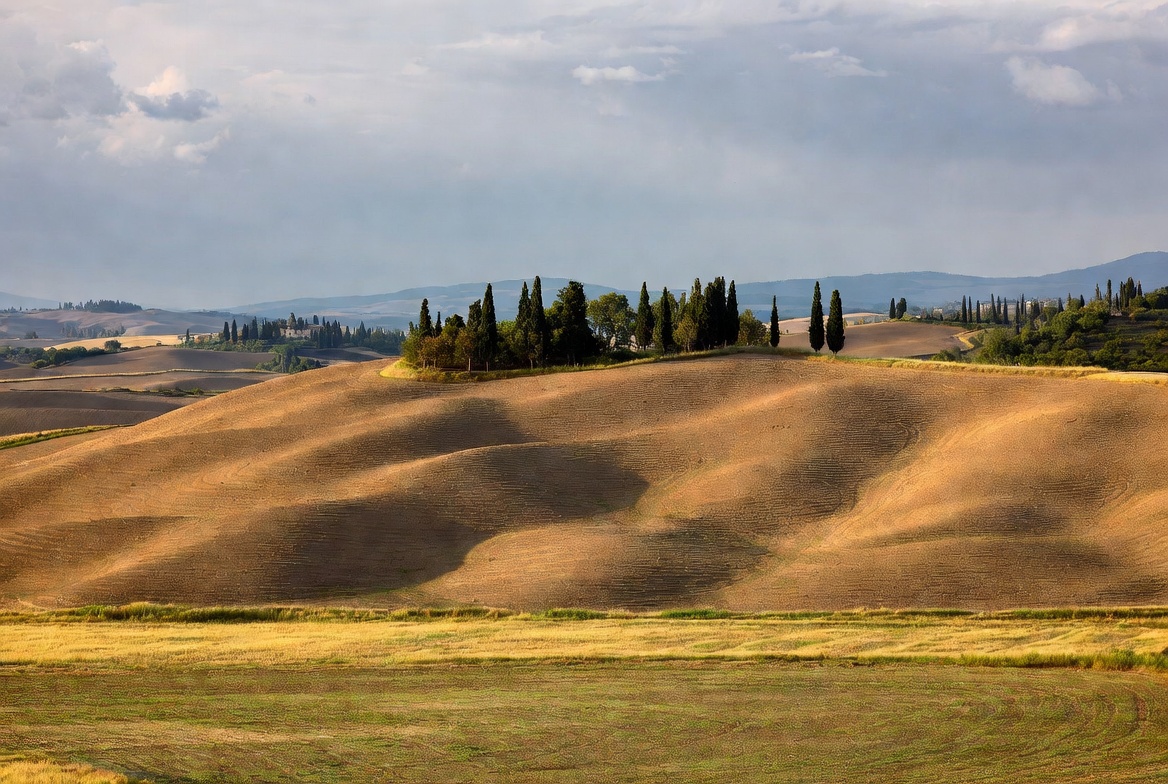
Colle di Val d’Elsa: The Crystal Town Between San Gimignano and Siena That Everyone Skips
Colle di Val d’Elsa: the town that makes most of Italy’s crystal, its €6 museum in the old furnaces, Arnolfo’s birthplace, the upper town and the lift.
In this guide
- Quick answer
- The crystal: a museum inside the furnaces
- Colle Alta: the ridge, the lift and Arnolfo’s tower-house
- Colle Alta gate to gate: what the ridge actually holds
- The Francigena variant: the sensible way to split the longest stage
- Getting there and fitting it in
- How we checked these details
- Final thoughts
- FAQ
Quick answer
Colle di Val d'Elsa sits on the road every San Gimignano day-tripper drives, halfway between the towers and Monteriggioni, and almost nobody stops — which is why it is worth stopping. It is Italy's crystal town: by the industry's own figures it produces around 15% of the world's crystal and more than 95% of Italy's, and it keeps the only Crystal Museum in the country, rebuilt in 2023 inside the furnaces of an old glassworks. It is also the birthplace of Arnolfo di Cambio, the sculptor-architect who designed Florence's cathedral and Palazzo Vecchio, and it is two towns in one: a medieval ridge — Colle Alta — above a working lower town — Colle Bassa — joined by a lift.
Practically: two hours covers the museum, the lift, the upper town's single long street and the Baluardo's view over the Elsa valley; the town sits on the Siena–Florence 131 bus corridor (Siena–Colle–Poggibonsi–Florence), which makes it the easiest car-free stop on that road; and it carries the official Colle variant of the Via Francigena, the two-day alternative to the route's longest stage. This guide covers the crystal, the upper town, Arnolfo, the walk, and how to fold Colle into a San Gimignano or Monteriggioni day.
The crystal: a museum inside the furnaces
Colle's glass story is old and its crystal story is precise. The town has blown glass since at least the nineteenth century — the museum's chronology begins there — and it became Italy's crystal capital when local glassworks perfected the lead-crystal mixture in 1963; from that date the town's furnaces have supplied the Italian table, and by the sector's own account they now make around 15% of all the crystal in the world and more than 95% of Italy's. A town of this size producing that share of anything is unusual; producing something as fragile and luxurious as lead crystal, in a valley between two of Tuscany's most visited hill towns, is close to unique.
The Museo del Cristallo — the only museum of its kind in Italy — was first opened in 2001 and rebuilt in 2023 inside the old furnaces of the Schmidt glassworks, formerly the Boschi works, at Via dei Fossi 8 in the lower town. The route runs on two levels beneath the works' chimney and traces the industry from the early 1800s to the 1963 crystal formula and the design decades since: the tools, the moulds, the finished pieces, and the reason a glass rings when you flick it. It is a small, well-made industrial museum, and the right first stop, because it explains why the town is here at all.
Hours and tickets, as published at our check — and the hours decide your day. The museum opens afternoons only: 14:00–19:00, Tuesday to Sunday, closed Monday and Wednesday. A single ticket is €6 (reduced €4); a combined ticket for the town's three museums — the Crystal Museum, the Museo San Pietro and the Palazzo Pretorio — is €12 (reduced €8), valid 48 hours; residents go free. The practical consequence is that Colle is an afternoon town: do San Gimignano or Monteriggioni in the morning, arrive here after lunch, and take the museum at two before the lift and the ridge. Arrive at eleven on a Wednesday and you will see the chimney from outside.
After the museum, the town's crystal is on sale in the shops of the lower town and the upper street — glasses, decanters, the heavy cut pieces that made the name and the thin modern ones that keep it. Our shopping guide's rule applies: buy from the maker's outlet, ask what is blown here, and let the shop pack it.
Colle Alta: the ridge, the lift and Arnolfo’s tower-house
Colle's two halves are honest about their functions. Colle Bassa, on the valley floor around Piazza Arnolfo di Cambio, is the working town — the furnaces, the shops, the bus stops, the market square that is "the beating heart of the lower part". Colle Alta, on the ridge above, is the medieval town: one long street of stone and brick palazzi along the crest, gates at either end, and the valley falling away on both sides. A lift joins them, which spares the climb and makes the visit a loop rather than a slog: museum and square below, lift up, the ridge end to end, and down again.
Arnolfo di Cambio is the ridge's famous son. Born here in the thirteenth century, he trained under Nicola Pisano — the sculptor of Siena's cathedral pulpit — and went on to design the buildings that define Florence: the cathedral of Santa Maria del Fiore, the Palazzo Vecchio, Santa Croce. His tower-house stands on the upper street, with a bust of Arnolfo in the little square by the church of Santa Maria in Canonica beside it — a modest memorial for the man who drew the Florentine skyline. It is a good place to notice how much of Tuscany's greatest architecture came from its smallest towns.
Along the same street: the Museo San Pietro, the civic and diocesan museum of sacred art, with the paintings and objects that document the town and its valley; and at the ridge's end, the Baluardo — the surviving bastion of the old defences, with the best view in town, over the lower town's roofs and chimneys to the Chianti hills. The whole ridge is twenty minutes' walk and an hour's linger.
Colle Alta gate to gate: what the ridge actually holds
Walked from the west, the ridge reads in order. You enter through the Porta Nova — a Medici fortification of 1479 with two great round towers, the textbook piece of early Renaissance military architecture that tells you the town was worth defending. The alternative name is the Porta Volterrana. Inside it, Via del Castello runs the length of the crest, and the first thing that stops you is the Palazzo Campana: a late-Renaissance palace of 1539–1550 whose monumental arch spans the street, so that the road passes through the building — the ridge's one theatrical gesture.
Beyond the arch the street is lined with the fifteenth- and sixteenth-century houses of the town's families — the Luci, Morozzi, Giusti and Dini palaces among them — and the older tower-houses the palaces replaced, of which Arnolfo's is the famous one. Piazza del Duomo opens halfway along: the cathedral, rebuilt in the early 1600s on the site of a Romanesque church, and beside it the Palazzo Pretorio, the fourteenth-century seat of the podestà, which now houses the archaeological museum with the valley's Etruscan antiquarium — the third museum on the €12 combined ticket, and the reminder that the Elsa valley was settled long before the pilgrims or the furnaces. Then the last stretch of the street, the church of Santa Maria in Canonica with Arnolfo's bust, and the Baluardo at the end.
And the river below. The Sentierelsa is the town's other walk: a nature trail of more than five kilometres along the Elsa river that crosses the town itself and takes under two hours. On a hot day it is the best thing Colle offers, and it costs nothing; on a wet one, the ridge is drier. Together with the museum and the lift it turns the two-hour stop into a proper half-day, which is where the town's afternoon-only museum hours push you anyway.
The Francigena variant: the sensible way to split the longest stage
Colle earns a paragraph in every Via Francigena guide for one practical reason. The route's Tuscan stage from San Gimignano to Monteriggioni is one of the longest on the entire Canterbury–Rome road — our stage-by-stage guide puts it at 31 km and about seven hours, and calls it a trap for anyone who reads "one day" — and the official Colle Val d'Elsa variant is the escape: a slightly shorter alternative that passes through the town and lets walkers split the stage sensibly into two days, with Colle as the overnight and Abbadia a Isola as the classic final approach the next morning.
For a walker that makes Colle a bed, a meal and a museum halfway through the hardest part of the northern route. For a non-walker it is the reminder that the town was always on the road: the Francigena's pilgrims came down the Elsa valley long before the crystal furnaces did, and the town's position between San Gimignano and Siena is the reason both its industries — hospitality and glass — took root here.
Getting there and fitting it in
By bus — the easy one. Colle sits on the Siena–Colle–Poggibonsi–Florence corridor served by Autolinee Toscane's 131 line, which makes it one of the few small towns on the Siena network reachable without timetable roulette; our car-free guide covers the line's rules, and the bus stops in the lower town near the museum. It is also the change point for the thin onward connection to Volterra, which has no direct service from Siena.
By car. Colle is just off the Siena–Florence road and the San Gimignano turn-off; park in the lower town and use the lift.
The day it fits. Three honest pairings, all with Colle in the afternoon because of the museum's hours: San Gimignano + Colle, with Colle as the quiet afternoon after the towers' crowds; Monteriggioni + Colle, the two small stops of the Siena road in one relaxed day; or Colle as the stop on the way to Volterra, an hour further west — in which case Volterra goes first and Colle catches the museum on the way back. Our San Gimignano comparison already lists Colle as the drivers' add-on; this page is the argument for giving it the two hours rather than the glance.
Eating. The lower town feeds its own workers, which is the recommendation: the two-streets-away rule from our restaurants guide applies, and lunch here is cheaper and calmer than in San Gimignano at the same hour.
How we checked these details
Checked 21 September 2026, by web research; direct page fetches are blocked in our environment, so this rests on search-surfaced material — the regional tourism board, the Fondazione Musei Senesi, the town's own visitor site, the comune's Francigena page and reference works on Arnolfo di Cambio — rather than pages we opened.
Verified: the industry's figures of about 15% of world crystal and over 95% of Italian crystal produced in Colle; the Museo del Cristallo as Italy's only crystal museum, first opened in 2001, renovated in 2023, housed in the former Schmidt/Boschi glassworks furnaces at Via dei Fossi 8, with a two-level route beneath the chimney tracing the industry from the early nineteenth century to the 1963 lead-crystal formula; Arnolfo di Cambio's birth in Colle, his training under Nicola Pisano, his tower-house and the bust by Santa Maria in Canonica; the division into Colle Alta and Colle Bassa joined by a lift, with Piazza Arnolfo as the lower town's centre; the Crystal Museum's published hours (14:00–19:00 Tuesday to Sunday, closed Monday and Wednesday) and tariff (€6/€4 single; €12/€8 combined three-museum ticket valid 48 hours; residents free); the Porta Nova as a Medici fortification of 1479 with two round towers; the Palazzo Campana of 1539–1550 with its arch over Via del Castello; the cathedral's early-1600s rebuilding on a Romanesque site; the fourteenth-century Palazzo Pretorio housing the archaeological museum and Etruscan antiquarium; the Sentierelsa as a five-kilometre river trail walkable in under two hours; the Museo San Pietro civic and diocesan collection and the Baluardo's panorama over the lower town toward the Chianti hills; the Colle variant of the Via Francigena as a slightly shorter alternative to the San Gimignano–Monteriggioni stage, from the comune's page and our Francigena guide's verification; and the Siena–Colle–Poggibonsi–Florence bus corridor from the operator's line listing.
Not established, and flagged: whether the Crystal Museum's afternoon-only pattern changes seasonally — the listing we found gives one timetable, and the museum's own page is the place to confirm it for your date; the Museo San Pietro's and Palazzo Pretorio's hours; Arnolfo's exact birth year, which sources give only approximately; and the onward bus to Volterra's timetable, which we do not print. Confirm on the day.
We have no commercial relationship with the museum, any glassworks, shop or operator named. Nothing on this page is bookable through us.
Final thoughts
Colle is the town on the road, in every sense: on the pilgrims' road, on the San Gimignano road, on the bus corridor, and permanently on the way to somewhere more famous. Its two industries — putting people up and making things that ring when struck — both come from that position, and its two towns, one working and one medieval, are the honest shape of the result.
Stop for the two hours. Flick a glass in the museum, ride the lift, walk the ridge past the house of the man who drew Florence, look out from the bastion, and buy the decanter from the people who blew it. Then carry on to the towers, which will still be crowded, and understand why the locals are here instead.
Helpful summary
The short version
Colle di Val d’Elsa: the town that makes most of Italy’s crystal, its €6 museum in the old furnaces, Arnolfo’s birthplace, the upper town and the lift.
Frequently asked
FAQ
Keep reading
San Quirico d’Orcia: The Town Everyone Drives Through, and Almost Everyone Gets Wrong
The elegant Via Francigena town at the centre of the UNESCO Val d’Orcia: Sigeric’s Collegiata, a free Renaissance garden and the lunch the coaches skip.
12 min read · Updated 2026-09-12
Siena or San Gimignano: Which Day Trip Should You Choose in 2026?
Siena or San Gimignano for your spare Tuscan day? An honest comparison of the two classic day trips — and whether combining both actually works.
13 min read · Updated 2026-08-05
San Gimignano Day Trip from Siena: Bus, Tickets & One-Day Plan (2026)
San Gimignano on bus 130 from Siena: 2026 ticket and parking prices, and a one-day plan built around the hours the coaches are gone.
13 min read · Updated 2026-07-31