Val d’Orcia Day Trip from Siena: Pienza, Montalcino & Montepulciano (2026 Guide)
The Val d’Orcia from Siena: a realistic route through Pienza, Montalcino and Montepulciano, by car or on the thin weekday bus.
In this guide
Quick answer
Val d’Orcia is the single most rewarding day trip from Siena for landscape lovers. The UNESCO-listed valley of cypress-lined ridges, golden fields, and hilltop towns begins roughly 40 minutes south of the city. With a car you can comfortably combine Pienza, Montalcino, and Montepulciano in one day; by public bus, pick one or two towns and enjoy them slowly rather than rushing all three.
Why Val d’Orcia deserves a full day
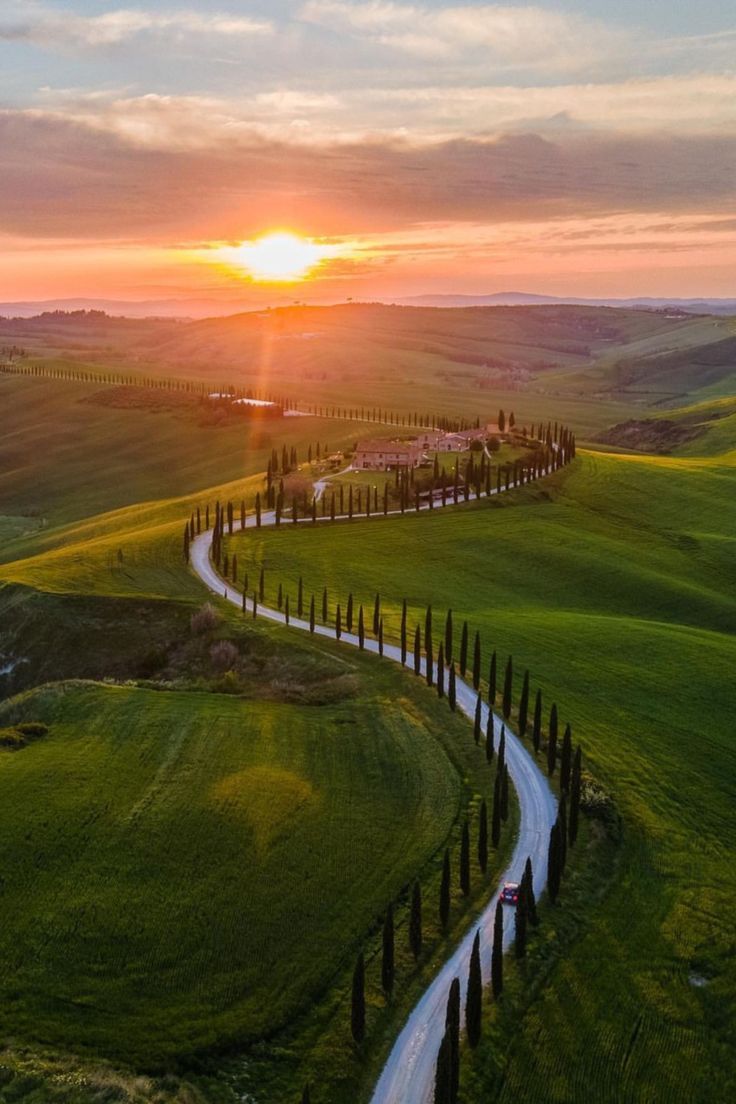
Most of the classic photographs people associate with Tuscany — a lone farmhouse on a ridge, a winding cypress avenue, hills that turn from green to gold through the year — were taken in Val d’Orcia. The valley was inscribed by UNESCO precisely because its Renaissance-era agricultural landscape is still intact and still worked.
Unlike Chianti, which is threaded with woodland, Val d’Orcia is open and sweeping. Views change every few kilometres, and the towns are compact enough that even a short stop feels complete. Basing yourself in Siena puts you closer to the valley than Florence-based travellers, which is a genuine advantage: you can leave after breakfast and still catch the best late-afternoon light on the way back.
If you have only one countryside day and are still weighing the two landscapes against each other, we argue that choice out in full — the short version being that your base city usually casts the deciding vote.
*The open ridgelines of Val d’Orcia, less than an hour south of Siena.*
The three towns, and how to choose
Pienza is the smallest and the easiest to love. Pope Pius II rebuilt his home village as an "ideal Renaissance city," and the result is a perfect miniature: a cathedral, a piazza, a palace, and lanes with names like Via dell’Amore. It is also the home of pecorino di Pienza — plan a cheese tasting. Allow 1.5–2 hours.
Montalcino is wine first, everything else second. The town sits high above the valley behind its fortress, and nearly every doorway leads to an enoteca pouring Brunello di Montalcino, one of Italy’s most celebrated reds. If wine is your priority, make this your anchor stop. Allow 2–3 hours with a tasting.
Montepulciano is the largest and most dramatic of the three, a long climb of palazzi rising to Piazza Grande. Its Vino Nobile cellars — some carved deep into the rock beneath the town — can be visited on the spot. Allow 2–3 hours; expect more visitors here than in Pienza.
If you only have time for two: pair Pienza + Montalcino and keep Montepulciano for a future trip.
By car: the classic loop
A rental car turns Val d’Orcia into a flexible loop of roughly 130–150 km round-trip from Siena. A proven route:
- Leave Siena on the Via Cassia (SR2) heading south past Buonconvento — worth the lunch stop on the way back.
- Detour up to Montalcino for the morning and an early tasting.
- Continue to [San Quirico d’Orcia](/blog/san-quirico-dorcia-guide/) — a good, quick lunch stop that most tour buses skip.
- Follow the ridge road to [Pienza](/blog/pienza-guide/) for the afternoon — the pecorino capital, with its own cheese festival in early September: cheese shops, cathedral, and the panoramic walkway behind the town.
- If energy allows, end in Montepulciano, then return to Siena via the SS146 and SR2 in time for dinner.
Two practical warnings. First, every one of these towns has a ZTL (restricted traffic zone) — park in the signed lots outside the walls and walk in. The ZTL in Siena works the same way and is enforced around the clock, so the same discipline applies on the drive home — see how to avoid a Siena ZTL fine. Second, the most photographed spots (the cypress circle near San Quirico, the Vitaleta chapel viewpoint) have small pull-offs that fill quickly in summer; go early or late for photographs. And if the day has room for one more stop, the valley's thermal springs at Bagno Vignoni and Bagni San Filippo sit just off the same road south.
Not booked a car yet? Compare rental prices for Italy on DiscoverCars — and compare on the insurance excess, not only the daily rate. The excess is the figure that decides what a scrape actually costs you, it is set per booking rather than per company, and Tuscan hill roads with blind bends, narrow town gates and farm traffic are exactly where it stops being theoretical. Read it on the checkout screen before you pay.
By bus: doable, with discipline
Regional buses run by Autolinee Toscane connect Siena with the main Val d’Orcia towns. Montalcino and Montepulciano each have direct or one-change connections; Pienza is usually reached on the Montepulciano line.
The honest advice: check the current timetable the day before, screenshot it, and treat the last return bus as non-negotiable. Sunday and holiday service is thin, and some runs are school-calendar dependent. A realistic bus plan is one town done well — for example, a full relaxed day in Pienza or Montalcino — rather than a three-town sprint.
If the timetable does not cooperate, a middle path is taking a small-group tour from Siena for the valley itself and saving your bus day for a simpler trip like Monteriggioni. See our guide to day trips from Siena without a car.
Wine tasting without the guesswork
Brunello (Montalcino) and Vino Nobile (Montepulciano) are the valley’s headline wines, and tasting culture in 2026 has become more structured: the better cellars now prefer reservations, even for small tastings, especially May–October.
A simple approach that works: book one proper cellar visit in advance for the town you care most about, and leave the rest to walk-in enotecas, where a flight of two or three pours with local salumi is easy to find. If you are driving, share tastings or use the spittoons — Tuscan hill roads and generous pours do not mix.
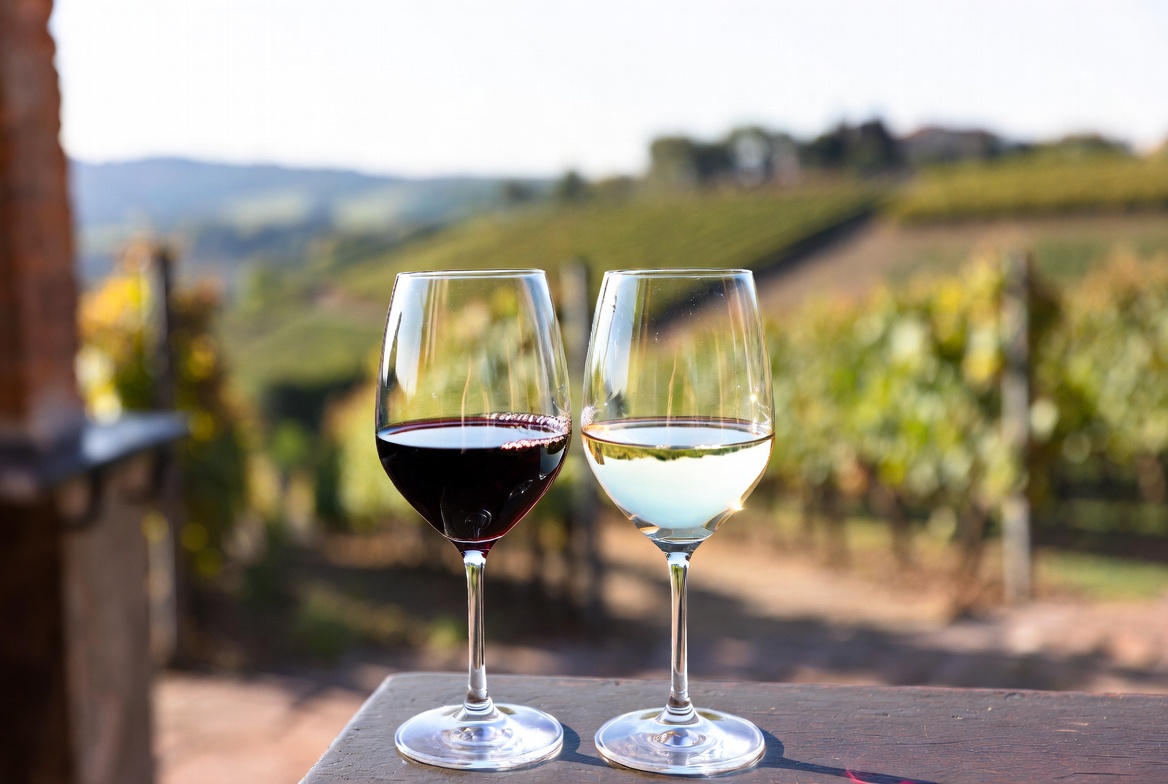
*Book one structured tasting, then keep the rest of the day spontaneous.*
A realistic one-day itinerary
08:30 — Leave Siena (car) or catch the morning bus.
09:30–12:00 — Montalcino: fortress walls, backstreets, one booked tasting or a relaxed enoteca flight.
12:15–13:30 — Lunch in San Quirico d’Orcia or a countryside osteria; pici with wild-boar ragù is the local order.
14:00–16:00 — Pienza: cathedral and piazza, pecorino tasting, and the valley panorama from the walls.
16:30–17:30 — Golden-hour photo stops along the ridge roads (drivers) or the walk back to the bus stop with a gelato (bus travellers).
18:30–19:00 — Back in Siena for an aperitivo on the Campo.
Travellers without a car should cut this to one town plus lunch. Slower is better here: Val d’Orcia rewards sitting still — on a wall, in a piazza, at a table — more than almost anywhere in Tuscany.
When to go in 2026
May and June bring green hills, poppies, and long days — the classic look. July and August are hot and hazier; start early, plan shade at lunch, and expect the fields to turn gold after the grain harvest. September and October add harvest energy and softer light, with wine towns at their liveliest. Winter is quiet, but check reduced opening hours for cellars and museums, and be aware that bus schedules thin out.
Whatever the month, the valley is at its best in the first and last two hours of daylight — one more argument for basing yourself in nearby Siena rather than day-tripping from Florence. If you are still planning your base, compare options in Where to stay in Siena.
Final thoughts
Val d’Orcia is not a checklist destination, and it punishes rushed plans gently: you simply spend your day parking and driving instead of tasting and looking. Choose fewer towns than you think you want, book one tasting, keep the camera ready between stops, and let the landscape do the rest. Done this way, it is the day most travellers name afterwards as the best of their Tuscan trip.
*Bus timetables, cellar opening hours and tasting-reservation policies change through the season — confirm your specific journey on the Autolinee Toscane planner and the cellar’s own booking page before you set out. Disclosure: the DiscoverCars link on this page is an affiliate link — if you book through it we may earn a commission, at no extra cost to you; whether to drive at all, and which towns deserve your day, are editorial judgements it does not touch. Platform links use our internal /go/ shortcuts.*
Helpful summary
The short version
The Val d’Orcia from Siena: a realistic route through Pienza, Montalcino and Montepulciano, by car or on the thin weekday bus.
Frequently asked
FAQ
Keep reading
Colle di Val d’Elsa: The Crystal Town Between San Gimignano and Siena That Everyone Skips
Colle di Val d’Elsa: the town that makes most of Italy’s crystal, its €6 museum in the old furnaces, Arnolfo’s birthplace, the upper town and the lift.
11 min read · Updated 2026-09-24
Montalcino or Montepulciano? Two Wine Towns, One Honest Comparison
Montalcino or Montepulciano? The wines, the towns, walk-in tastings versus appointments, and how to reach each from Siena — compared honestly.
12 min read · Updated 2026-08-24
Val d’Orcia or Chianti: Which Tuscan Wine Country Should You Visit in 2026?
Val d’Orcia or Chianti for your Tuscan wine-country day? An honest comparison of landscapes, wines, towns, seasons and car-free logistics for 2026.
13 min read · Updated 2026-08-07