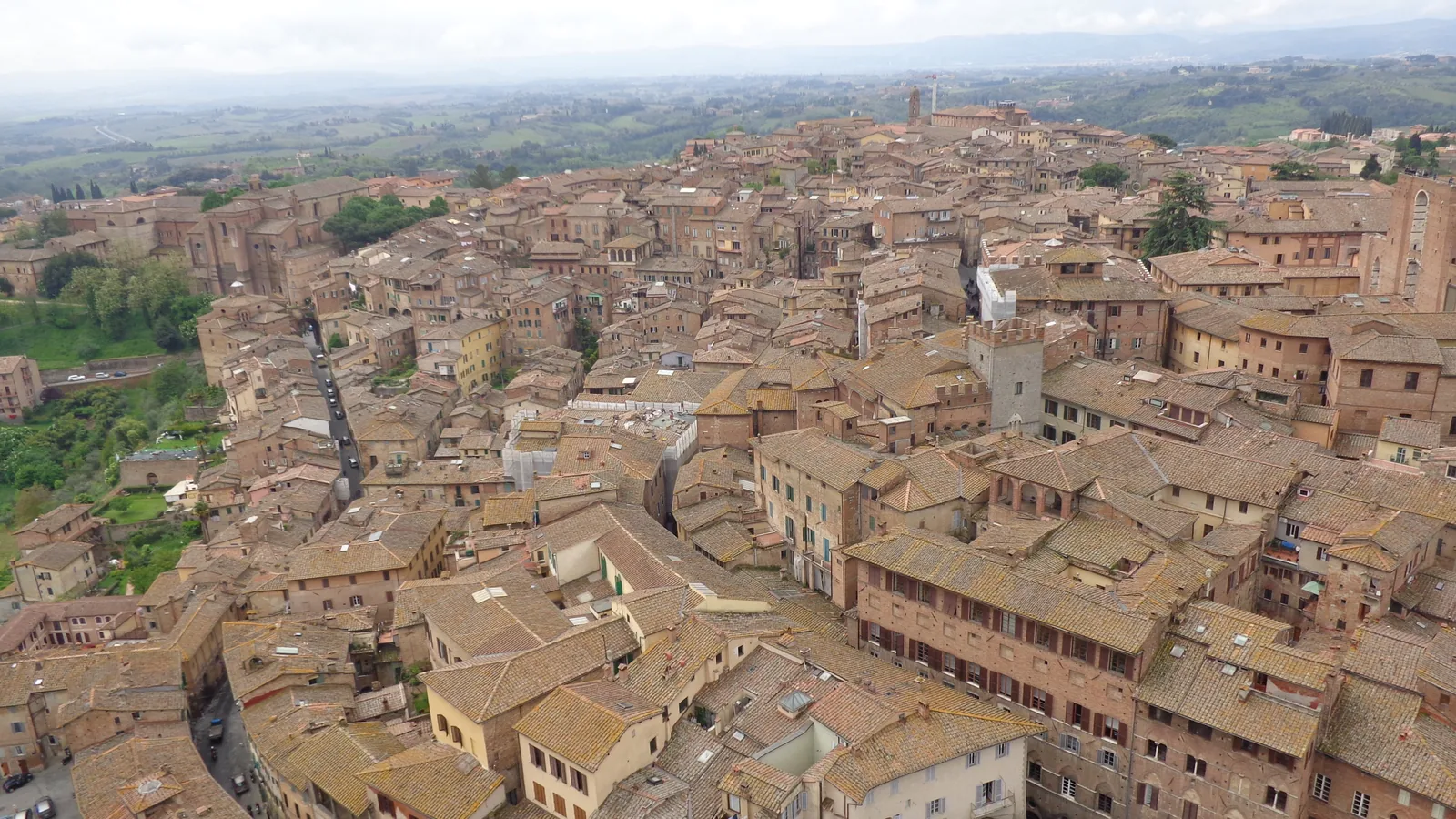
The Oldest Bank in the World Is a Sienese Charity That Refused to Die
Siena invented big banking, lost it in Europe’s first crash, then founded a 1472 charity that became the world’s oldest bank. It is still on its square.
In this guide
Quick answer
Walk north from the Campo along Banchi di Sopra and within three minutes you reach a Gothic palace on its own quiet square. There is no queue, no ticket office and no plaque a visitor would notice. It is Palazzo Salimbeni, working headquarters of Banca Monte dei Paschi di Siena — founded in 1472, the oldest bank in the world still operating — and it is the third pillar of the city, standing with the Campo and the Duomo.
The story is better than the superlative. Siena had already invented big banking once: in the thirteenth century its Gran Tavola was the most powerful bank in Europe, banker to the popes — and its collapse in 1298 ruined the city in Europe's first great financial crash. The institution Siena built afterwards, a charity lending to the poor at minimal interest, is the one that lasted five and a half centuries.
As a visit this is fifteen minutes, free, and best taken as part of a walk: the palace and piazza are the point, because the bank's art collection is mostly not open to the public. But as a *story* it reframes half the city — because money, not just faith, built the Siena you are photographing, and this square is where the money lived. This article gives you the story, then the walk.
The first age: bankers to the popes
Before Florence was Europe's banker, Siena was.
In 1255 the Sienese merchant Orlando Bonsignori formed a consortium called the Gran Tavola — the "Great Table" — which grew into what historians have called the greatest bank of the thirteenth century and the most powerful in Europe. Its decisive asset was a relationship: the Bonsignori became the papacy's bankers, holding the deposits of the Papal States and channelling the ecclesiastical tithes raised for the Holy Land. In an age when the Church was Europe's largest financial network, Siena sat at the till.
This is the money behind the marble. The century of the Gran Tavola is the century of the cathedral's expansion, the Campo's paving and the rise of the Nine — the great building age that still defines the city was funded by a town of bankers at the height of their reach.
Then it ended, fast. The firm declined after Orlando's death in 1273, and two external blows finished it: Philip IV of France confiscated the assets of Sienese merchants in his kingdom, and Pope Boniface VIII moved the papal business to Florentine banks. In 1298 the Gran Tavola went bankrupt, dragging other Sienese banks down with it and opening a period of sustained economic ruin. Europe's first great banking collapse happened here — and the papal account, once lost to Florence, never came back. If you want a one-line financial history of Tuscany: Siena built the table, Florence took the chairs.
1472: the charity that outlived everything
What Siena founded next could hardly have been more different from the Gran Tavola, and the difference is why it survived.
On 27 February 1472, by resolution of the General Council of the Republic, the city established a Monte di Pietà — a civic pawn bank created expressly, in the founding language, to lend to "poor or miserable or needy persons" at minimal interest. This was not a merchant venture chasing papal deposits; it was an anti-usury institution of civic Catholicism, born of the same religious-civic culture that had given the city to the Virgin and canonised its dyer's daughter eleven years earlier.
Consider what 1472 means. The bank is older than the discovery of the Americas, older than the Medici grand duchy, older than every nation-state in Europe in its current form. It was founded by a Republic that had eighty-three years left to live — and when the siege of 1554–55 ended Sienese independence, the Republic's bank simply carried on under new management, and has now outlived its founder by nearly five centuries.
The name came in 1624, with a reform under which the bank's depositors were guaranteed against the income of the state-owned grazing lands — the *paschi* — of the Sienese countryside. A bank named after pastures: even at its most financial, Siena secured money against grass.
The third pillar of the city
For generations of Sienese, "il Monte" has been less a company than a fact of civic life — employer, patron and purse, standing in the city's self-image alongside the commune and the cathedral. Its patronage of Sienese institutions and events is part of the city's modern fabric, widely reported and locally taken for granted; we state it generally here because the particulars shift year to year.
Its twenty-first century has been the hardest since 1298. The world's oldest bank spent the 2010s in crisis — scandal, losses and rescue made global financial news, and for a while its survival was genuinely in question. It survived; the details belong to the business pages rather than a travel article, but a visitor should know that the quiet palace on the square has recently lived through its second near-death in seven hundred years. Sienese feeling about the bank runs correspondingly deep, in both directions — pride and grievance together. It is a good subject to ask about and a poor one to joke about, roughly like the contrade.
Visiting: the square, the palace, the walk
Be honest about what this visit is: an exterior, a square and a story. Palazzo Salimbeni is a working bank headquarters, and its accumulated art collection — five centuries of Sienese painting and documents — is mostly not open to the public. There is no ticket to buy, which is either a disappointment or a relief depending on how your museum budget is doing.
What you get, free:
- Piazza Salimbeni itself, one of the most composed small squares in the city — the Gothic palace at its head, flanked by Renaissance neighbours, usually near-empty because nothing on it is ticketed.
- The setting on Banchi di Sopra, the Via Francigena's course through the city and Siena's smart street then and now. The bank sits on the pilgrim-and-money road it grew from: the same street carried both kinds of traffic, which is the whole medieval banking story in one line of paving.
- The walk north, continuing along Banchi di Sopra toward Camollia — the direction our walking route flags as the city at its least performed.
Time it for the passeggiata if you can. Banchi di Sopra is the spine of Siena's evening walk, and in the hour before dinner the street fills with the city doing its slowest, most sociable lap — which puts the bank's palace in its proper context better than any morning visit: not a monument on a route, but the fixed backdrop of Sienese daily life, seven centuries running.
And note what it combines with. Salimbeni sits naturally between the Campo and the Catherine walk — her sanctuary and San Domenico lie just west of this street — which means the bank, the saint's house and the basilica chain into a half-day of the city's best free things, in a town where the ticketed half prices itself confidently.
Give it fifteen unhurried minutes on the way to somewhere else, and spend them on the one thought the square is built for: everything else you have seen today — the Duomo, the Campo, the palazzi — was paid for, and this unticketed square is where the paying was arranged, across seven and a half centuries, twice nearly to death and twice back.
The Sienese talent nobody names: keeping things alive
Put the bank beside the city's other survivors and a pattern appears that no other European city quite matches.
The [contrade](/siena-contrade-guide) have held their present boundaries since a 1730 edict and their identities for far longer. The Palio has been run for the Virgin across centuries under rules that change glacially and by consensus. The [university](/blog/siena-1348-the-year-the-city-stopped/)'s city kept a plague-vow chapel in continuous meaning for six hundred years. And il Monte has kept a charity's charter working since 1472 — through the fall of the Republic it was founded by, the Medici, Napoleon, unification, two world wars and its own twenty-first-century near-death.
The pattern is not conservatism, exactly. It is that Siena treats institutions the way other cities treat monuments: as things you maintain rather than replace. Florence, thirty miles away, has rebuilt itself intellectually every century — that is its genius. Siena's genius is duration, and it is a genuinely strange talent: easy to mistake for stagnation, until you notice that everyone else's fifteenth-century banks, brotherhoods and boundary systems are museum labels now, and Siena's still answer the phone, run the race and fly the flags.
Which is the real reason to stand in Piazza Salimbeni for a quarter of an hour. The palace is handsome; the institution is astonishing. You are looking at the world's longest continuously running answer to the question every civilisation faces — how do you make something last? — and the Sienese answer, on the evidence, is: found it as a duty rather than a venture, bind it to the city's identity, and never, ever wind it up merely because the world has changed.
One street-level footnote as you walk on. The street is Banchi di Sopra — the "upper benches" — and the received etymology runs through the *banchi*, the merchants' and money-changers' counters that lined it; the same bench, *banco*, that gave European languages the word bank itself. Whether or not the derivation is airtight, the street sign says what the city was.
How we checked these details
Checked 16 August 2026, by web research; direct page fetches are blocked in our environment, so this rests on search-surfaced material rather than pages we opened.
Verified: the founding of the Monte di Pietà on 27 February 1472 by resolution of the General Council of the Republic of Siena, for charitable lending to "poor or miserable or needy persons" at minimal interest; its standing as the oldest bank in the world in continuous operation; the 1624 reform under which depositors were guaranteed against the income of the state-owned pastures — the *paschi* — giving the bank its name; the headquarters' continuous presence in Palazzo Salimbeni; the art collection's existence and the fact that it is mostly not publicly accessible; the Gran Tavola — formed by Orlando Bonsignori in 1255, the most powerful bank of thirteenth-century Europe and banker to the papacy, holding Papal State deposits and Holy Land tithes; its decline after Orlando's death in 1273 and its bankruptcy in 1298 under the twin blows of Philip IV's confiscations and Boniface VIII's transfer of papal business to Florentine banks, followed by sustained economic ruin in Siena.
Stated generally rather than in particulars, and flagged as such: the bank's and its foundation's patronage of Sienese civic life, which is widely reported but whose specifics change year to year; and the twenty-first-century crisis and rescue, which made global news across the 2010s and which we deliberately summarise without figures — the corporate history is still moving, and a travel article is the wrong place to freeze it. Not established: whether the *paschi* of the 1624 guarantee were specifically the Maremma pastures, as often stated — our source says state-owned pastures without naming the district; and any current arrangements for public access to the art collection beyond "mostly not accessible" — if occasional openings exist, the bank announces them, not us.
We have no commercial relationship with Banca Monte dei Paschi di Siena or any entity named. Nothing on this page can be booked at all.
Final thoughts
Every city tells you what it values by what it puts on its best squares. Siena put government on the Campo, God on the hilltop, and money on Banchi di Sopra — and of the three, the money has the strangest story: a European superpower that died in 1298, reborn in 1472 as a charity for the poor, still doing business in the same palace while empires, republics and its own near-bankruptcies came and went.
Stand in Piazza Salimbeni for a quarter of an hour on your way north. It costs nothing, which — for an institution founded to lend to those who had nothing — is somehow the correct price of admission.
Helpful summary
The short version
Siena invented big banking, lost it in Europe’s first crash, then founded a 1472 charity that became the world’s oldest bank. It is still on its square.
Frequently asked
FAQ
Keep reading
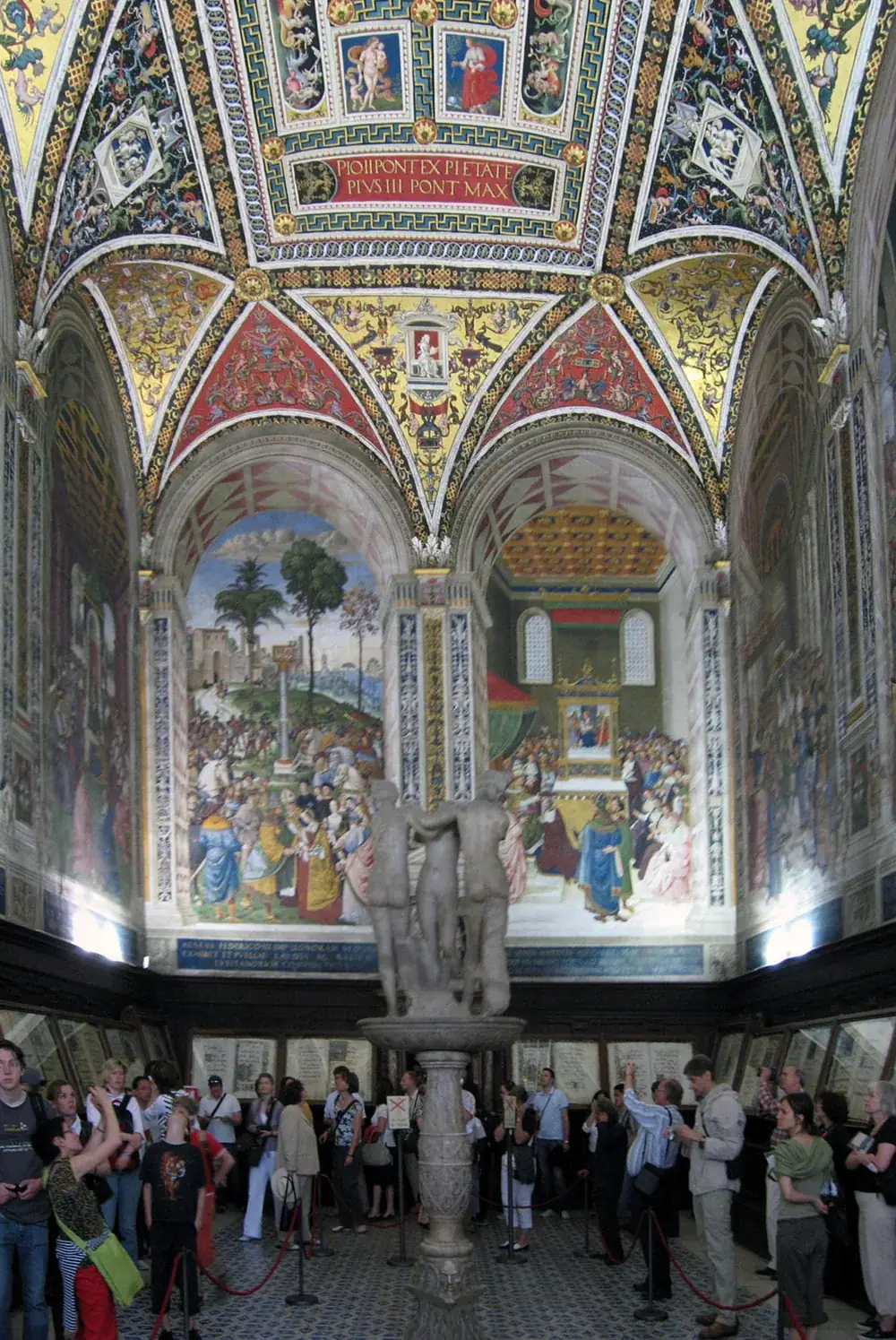
Sienese Painting: Why It Looks Like That, and Where to See It
Florence invented depth; Siena kept heaven. What the gold-ground Sienese school was, why it ended in 1348, and the three-museum route that shows it best.
10 min read · Updated 2026-09-08
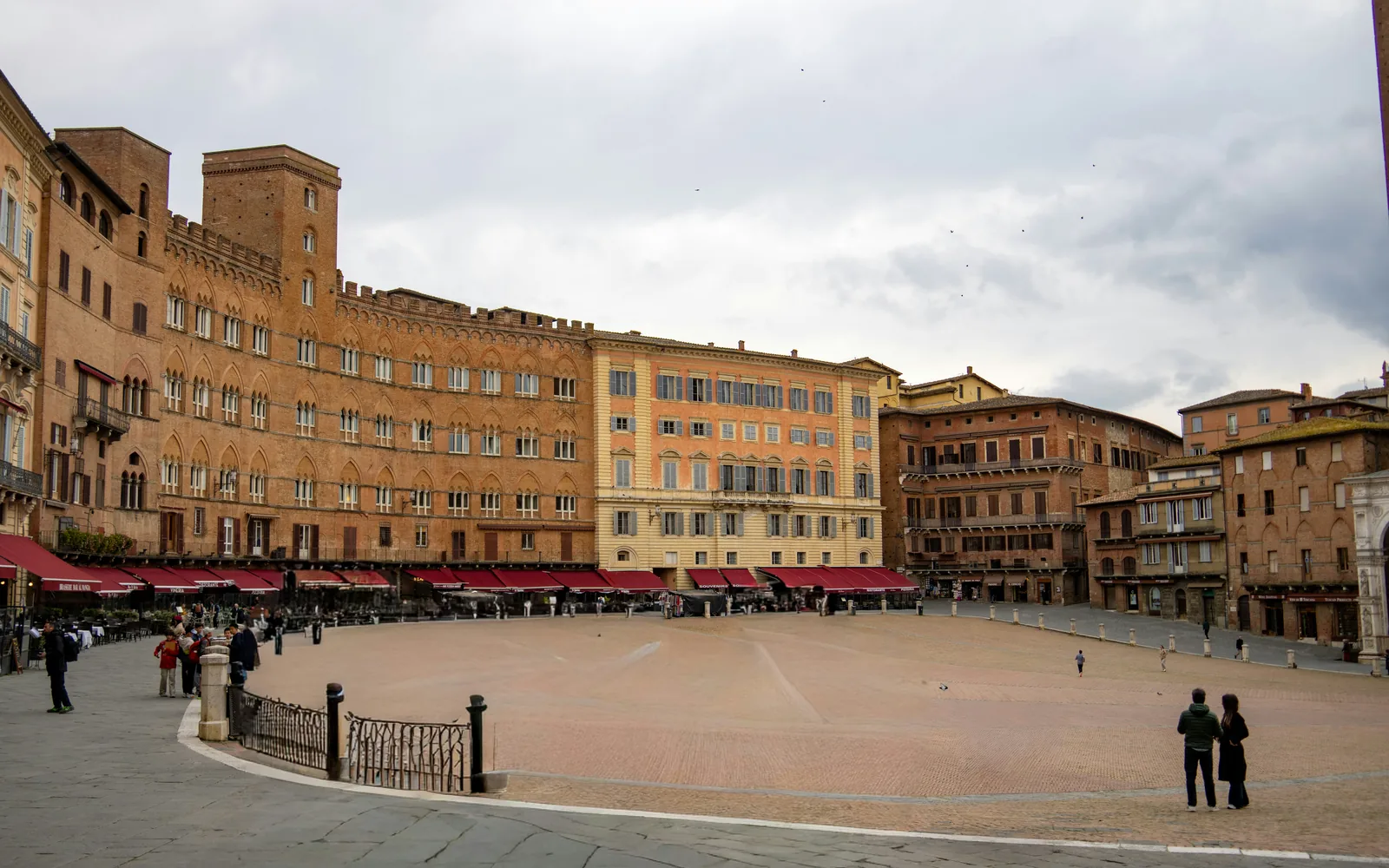
The Bottini: Siena’s Underground Aqueduct and the River That Never Was
Siena’s bottini: the 25km medieval aqueduct under the city — what it is, the phantom river it replaced, and how visits actually work.
6 min read · Updated 2026-08-18
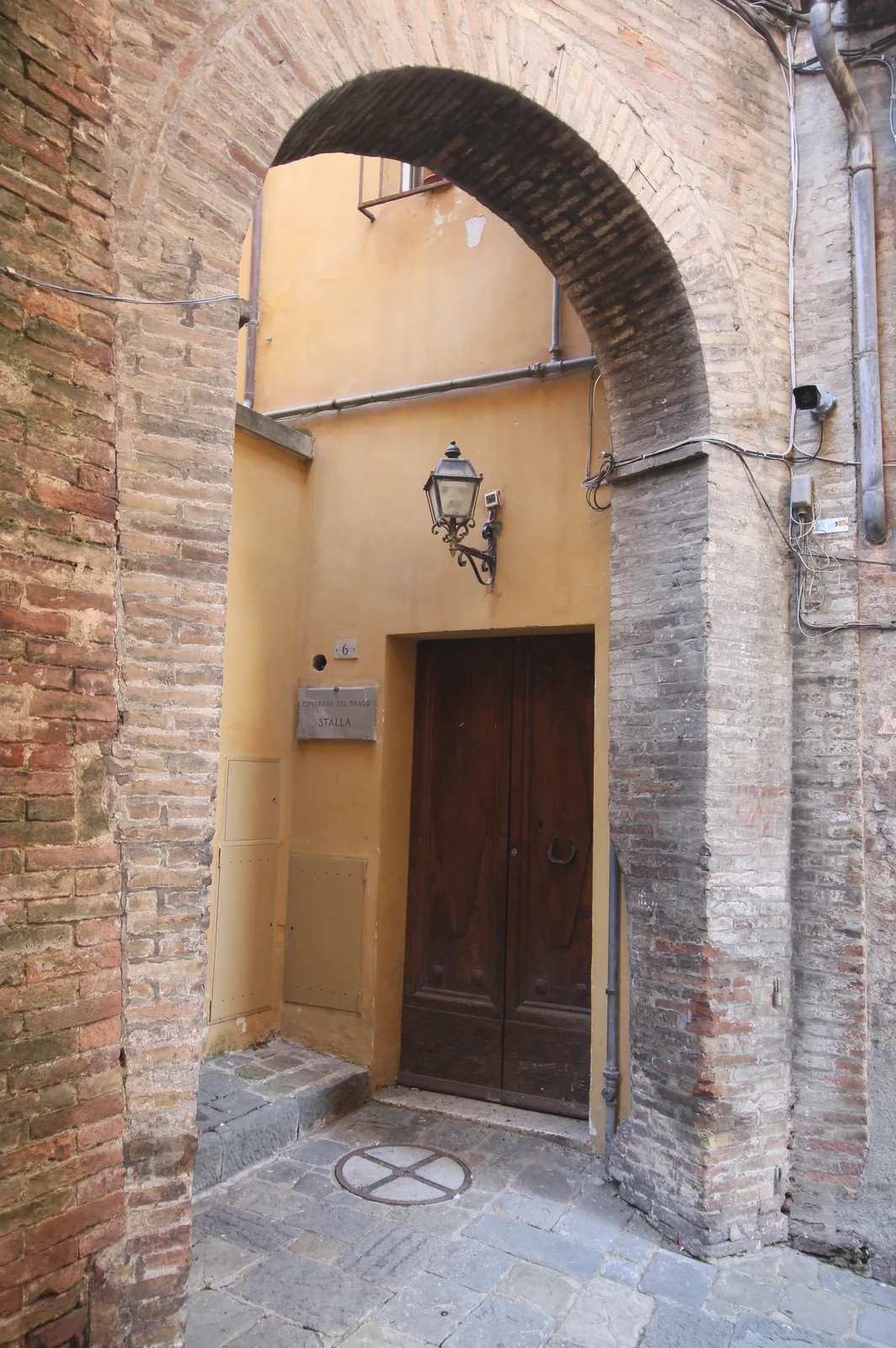
Catherine of Siena: The Dyer’s Daughter Who Moved the Papacy
A dyer’s daughter from Siena talked the papacy into leaving Avignon. Her house, her church and her head are all still here — and all free to visit.
10 min read · Updated 2026-09-06