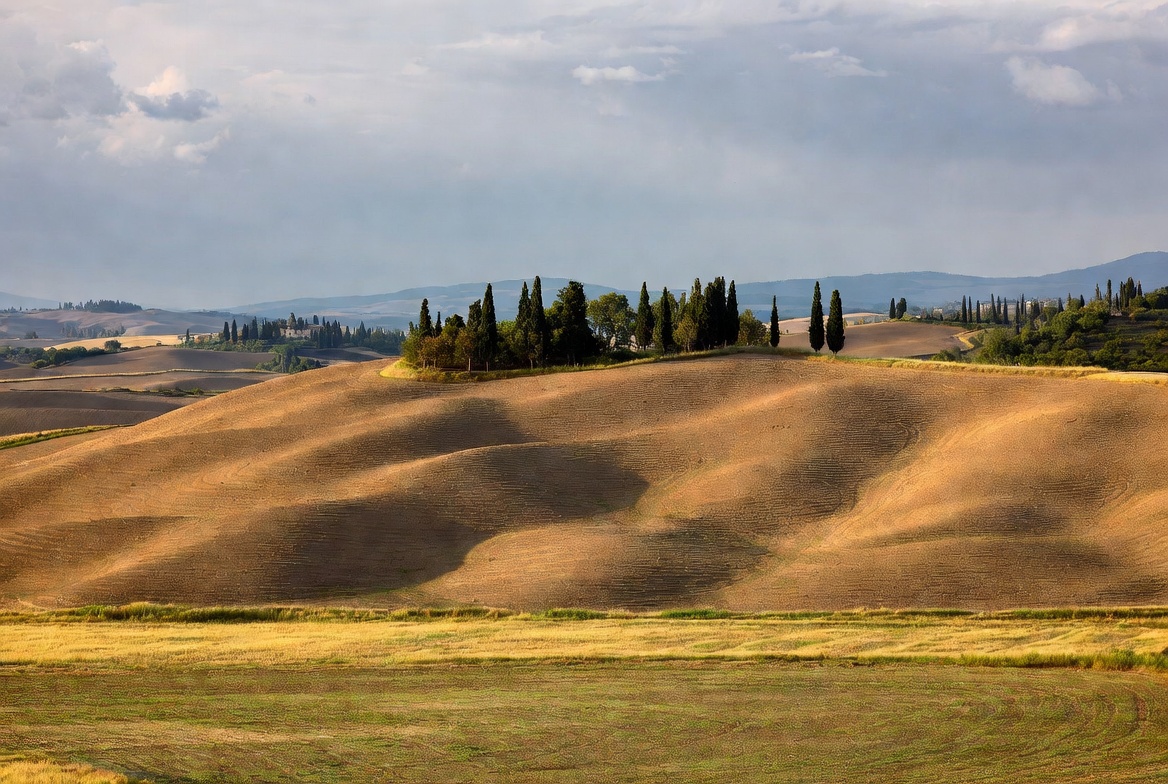
Asciano: The Crete Senesi Town With a Train Station and a Lorenzetti Masterpiece
The Crete Senesi’s main town is under half an hour from Siena by train, and its quiet museum holds an Ambrogio Lorenzetti masterpiece. How to do it right.
In this guide
Quick answer
Our Crete Senesi guide is honest about the clay country's one big problem: the landscape wants a car. This article is about the exception. Asciano — the crete's main town — sits on the Siena–Chiusi railway, under half an hour from Siena on the fastest services, at a station whose full name announces the whole day out: Asciano-Monte Oliveto Maggiore. No other town in the clay country offers that.
And Asciano is not merely the accessible option. It is a walled Sienese market town with three thousand years of history in about three streets: an Etruscan necropolis territory, a Romanesque collegiate church, and — the reason art lovers should come even if they never look at a biancana — the Museo di Palazzo Corboli, where Ambrogio Lorenzetti's great St Michael polyptych hangs in a frescoed medieval palace that you will very likely have to yourself. One of the supreme painters of the Sienese school, in a museum without queues, half an hour from a city where his work draws crowds: that is the quiet bargain Asciano offers.
Give the town two to three hours — museum, church, a slow street — and let it anchor a crete day however you travel: by train alone, by train plus the abbey, or as the first stop of the driving loop. This guide covers the history, the museum room by room where it matters, the second museum almost nobody enters, and the practical mechanics of the region's only honest car-free base.
Three thousand years in three streets
Asciano's setting explains its depth. The town sits where fertile valley ground meets the clay hills, on land that has been worth holding since deep antiquity — and each holder left a layer.
The Etruscans first. This territory belonged to important Etruscan families — the Hepni and the Marcni — whose burial grounds survive a few kilometres from town: the necropolis of Poggio Pinci and the Tumulo del Molinello, with material reaching back to the fifth century BC. The finds feed the archaeological floor of the town museum, and remains of Roman baths carry the story forward — this was settled, productive country when Siena was nothing much.
Then the medieval tug-of-war. Through the thirteenth century Asciano was contested between Siena and Florence — this is Montaperti country; the 1260 battlefield lies on the road in from Siena — until the town passed definitively to Siena in 1285. The Republic secured its prize the way it secured everything: with brick and stone, walling the town in 1351. Stretches of the circuit still frame the centre, and the town's long main street — Corso Matteotti — still runs through it with the unhurried, unperformed character of a place that works for its own valley first, much like Buonconvento one valley west.
The through-line is worth noticing: Etruscan tombs, Roman baths, a Sienese wall — three civilisations, all drawn by the same thing, the improbably rich farmland hiding inside the moon-country. The clay that looks barren made this town; Asciano is where the crete's paradox — desert views, granary wealth — has its market square.
Palazzo Corboli: a Lorenzetti with no queue
On Corso Matteotti stands a genuine rarity: a thirteenth-century medieval palatium, built by the Sienese Bandinelli family, with its fourteenth-century painted rooms still intact. This is the Museo Civico Archeologico e d'Arte Sacra di Palazzo Corboli, and it is the single strongest reason to stop in Asciano.
The building first. Two of its rooms carry allegorical fresco cycles from the 1300s attributed to Cristoforo di Bindoccio and Meo di Pero: the Sala di Aristotele and the Sala delle Stagioni — Aristotle and the Seasons, secular medieval painting in a private palace, which is far rarer than church frescoes and gives the museum an atmosphere no purpose-built gallery can fake.
Then the altarpiece. The collection's summit is Ambrogio Lorenzetti's polyptych from Badia a Rofeno (c. 1330–1335), with its extraordinary central panel of St Michael the Archangel killing the dragon — the archangel's sword arm raised, the dragon coiling under him, painted by the same hand that made the *Good and Bad Government* frescoes in Siena's Palazzo Pubblico. In Siena you see Lorenzetti across a crowded hall. Here, most days, it is you and the archangel.
Around them: sacred art gathered from the churches of the crete — Taddeo di Bartolo, Matteo di Giovanni, Bernardino Mei, Francesco Nasini, sculpture by Giovanni Pisano and Francesco di Valdambrino — and, downstairs, the Etruscan material from Poggio Pinci and the Molinello tumulus. A provincial museum with a metropolitan spine.
The practical caveat, stated plainly: this is a civic museum with short, seasonal hours — recent winters have seen it open weekends only, other seasons on a limited weekly pattern — and printed schedules go stale fast. The combined ticket with the Museo Cassioli runs €7 (reduced €5) at our check. Verify the current days and hours on the Crete Senesi tourism site or with the Asciano tourist office before building a trip around it; arriving to a locked door is the one way this town disappoints.
Sant’Agata, and the museum almost nobody enters
Two more stops complete the town, both minutes from the palazzo.
The Collegiata di Sant'Agata is Asciano's mother church and its finest building: Romanesque, its dating genuinely debated — one tradition roots it in the eleventh century as successor to the area's ancient pieve, which held the role of Asciano's main church from 1029; another reads the fabric as built around 1168, in the years of Siena's tightening grip. Either way you are standing in the town's thousand-year constant: dynasties and republics changed, the church on this spot did not.
The Museo Cassioli is the stop for travellers who think they have seen every kind of Tuscan museum. Amos Cassioli (1832–1891), painter of grand historical canvases and portraits, was born in Asciano; a family bequest in 1991 turned his work into the province of Siena's only collection devoted entirely to nineteenth-century Sienese painting. After days of gold-ground Madonnas, walking into a room of Risorgimento battle scenes is a genuinely refreshing whiplash — the Sienese tradition still going, five centuries after its famous chapter closed. It stands on Via Fiume; tickets are handled at Palazzo Corboli on the combined entry, and its hours are civic like the palazzo's — same rule: check first.
Between the three sights, give the town itself its due: Corso Matteotti end to end, a coffee among people speaking only Italian, the wall fragments, and the crete beginning immediately beyond the rooftops. The pleasures are Buonconvento-shaped — cumulative, local, unperformed — with the art collection neither Buonconvento nor most towns five times Asciano's size can match.
The gateway: trains, the abbey, and the white roads
Asciano's second job is logistical: it is the crete's only workable car-free base, and the natural first stop of every driving loop.
By train. The Siena–Chiusi line serves Asciano with a healthy weekday service — our car-free guide counts roughly nineteen trains a day on the line — and the fastest runs make it in around 27 minutes from Siena. The station's full name, Asciano-Monte Oliveto Maggiore, signals the pairing the timetable was built for. The honest caveat from that same guide still applies: the train delivers you to the town, not to the lunar panoramas between towns — for those you still need wheels, a bike or the seasonal heritage railway.
The abbey. Monte Oliveto Maggiore — the red-brick monastic city whose Great Cloister carries the thirty-five-fresco Benedict cycle by Signorelli and Sodoma — lies south of town, and our Crete Senesi guide covers the visit in full. Drivers pair town and abbey effortlessly. Without a car, ask at the Asciano tourist office about the day's options rather than assuming a connection; the distance is short but the public links are thin, and we could not verify a current timetable worth printing.
By road. Drivers arrive on the SP438 Lauretana from Siena — the ridge road whose bends produce the classic crete photographs — making Asciano the coffee-and-museum stop that the driving loop hinges on before the Accona country opens.
On the calendar. The Treno Natura heritage railway runs its excursion dates through Asciano's own station — the yearly calendar is the thing to check — and on the first weekend of October the strade bianche around the crete fill with L'Eroica's vintage cyclists: a spectacle worth planning toward, and a reason to book beds early that weekend. In the vendemmia weeks either side of it, the clay country is at its photogenic best.
Three ways to shape the day
The train-only art day (no car, no compromise). Morning train from Siena — the fastest runs take around 27 minutes — then the town at walking pace: Palazzo Corboli first and slowly, Sant'Agata, the Cassioli if the combined ticket tempts you, and a long local lunch on or near the Corso (named pick here). An afternoon train returns you to Siena with the whole evening intact. This is the rare Tuscan day trip that involves no timetable anxiety at all — misjudge it and the next train is simply later, not tomorrow. Confirm the museum's open days first; on a closed day the town alone is a pleasant hour, not a day.
The classic driving loop. Our Crete Senesi guide builds it in full: out of Siena on the SP438 Lauretana with the Montaperti memorial as a first stop, coffee and the museum in Asciano, Monte Oliveto Maggiore given its ninety minutes, San Giovanni d'Asso and the truffle country beyond, and the return through walled Buonconvento. Asciano's role in that day is the anchor at the top of the loop — the one stop with art, food and streets rather than views alone.
The event day. Twice a year the calendar does the planning for you: a Treno Natura excursion date (the November truffle-fair service above all), when the heritage railway makes the journey itself the destination — check the current calendar rather than assuming — and **L'Eroica** weekend at the start of October, when the white roads of the crete carry their vintage-cycling pageant and every town in the clay country, Asciano included, fills with wool jerseys and steel bicycles. Book beds well ahead for that one, and treat it as a spectacle to join rather than a quiet visit.
How we checked these details
Checked 30 August 2026, by web research; direct page fetches are blocked in our environment, so this rests on search-surfaced material — led by the Fondazione Musei Senesi, the Crete Senesi tourism office and the regional tourism board — rather than pages we opened.
Verified: the Etruscan Hepni and Marcni families and their sites — the necropolis of Poggio Pinci and the Tumulo del Molinello, with material from the fifth century BC — plus remains of Roman baths; the thirteenth-century contest between Siena and Florence, Asciano's definitive passage to Siena in 1285, and the town walls of 1351; Palazzo Corboli as a thirteenth-century palatium of the Bandinelli family, its trecento Sala di Aristotele and Sala delle Stagioni fresco cycles attributed to Cristoforo di Bindoccio and Meo di Pero; Ambrogio Lorenzetti's Badia a Rofeno polyptych (c. 1330–1335) with the St Michael central panel, and the museum's holdings of Taddeo di Bartolo, Matteo di Giovanni, Bernardino Mei, Francesco Nasini, Giovanni Pisano and Francesco di Valdambrino; the combined Corboli+Cassioli ticket at €7 full / €5 reduced; the Collegiata di Sant'Agata's debated Romanesque dating (an eleventh-century origin succeeding the pieve that was Asciano's main church from 1029, against a reading of c. 1168); Amos Cassioli (born Asciano 1832, died 1891), the 1991 family bequest, and the Cassioli museum's standing as the province's only collection devoted to nineteenth-century Sienese painting; and the rail connection — the Siena–Chiusi line with the fastest Siena–Asciano runs around 27 minutes, serving the station named Asciano-Monte Oliveto Maggiore. Line frequency (~19 trains daily) and the Lauretana, abbey, Treno Natura and L'Eroica framing follow the verification in our car-free and Crete Senesi guides.
Not established, and flagged in the text: the museums' current seasonal days and hours — the published patterns are short, civic and changeable (recent winters weekend-only), so confirm on the Crete Senesi tourism channels before travelling; any current public transport between the town and Monte Oliveto Maggiore, which we deliberately do not print; current Treno Natura dates; and restaurant particulars, which we do not list. Train times shift — verify the day's services on Trenitalia before committing.
We have no commercial relationship with any museum, railway or body named. Nothing on this page is bookable through us.
Final thoughts
Every region keeps one town that does the quiet administrative work of being its capital without ever being its postcard. The crete's is Asciano — and it happens to be the only place in the clay country where the practicalities line up for everyone: a real railway from Siena, a real street to eat on, and a museum that would anchor a town ten times the size.
The Lorenzetti is the point to hold onto. Siena will show you the Sienese school behind glass and shoulders; Asciano hands you one of its masterpieces in a frescoed room with the sound of the Corso drifting up from below. Half an hour on a train, a few euros at the door, three thousand years in three streets — and the moon-country starting at the edge of town, ready whenever you are.
Helpful summary
The short version
The Crete Senesi’s main town is under half an hour from Siena by train, and its quiet museum holds an Ambrogio Lorenzetti masterpiece. How to do it right.
Frequently asked
FAQ
Keep reading
The Crete Senesi: Tuscany’s Clay Moonscape, and How to Do It Right
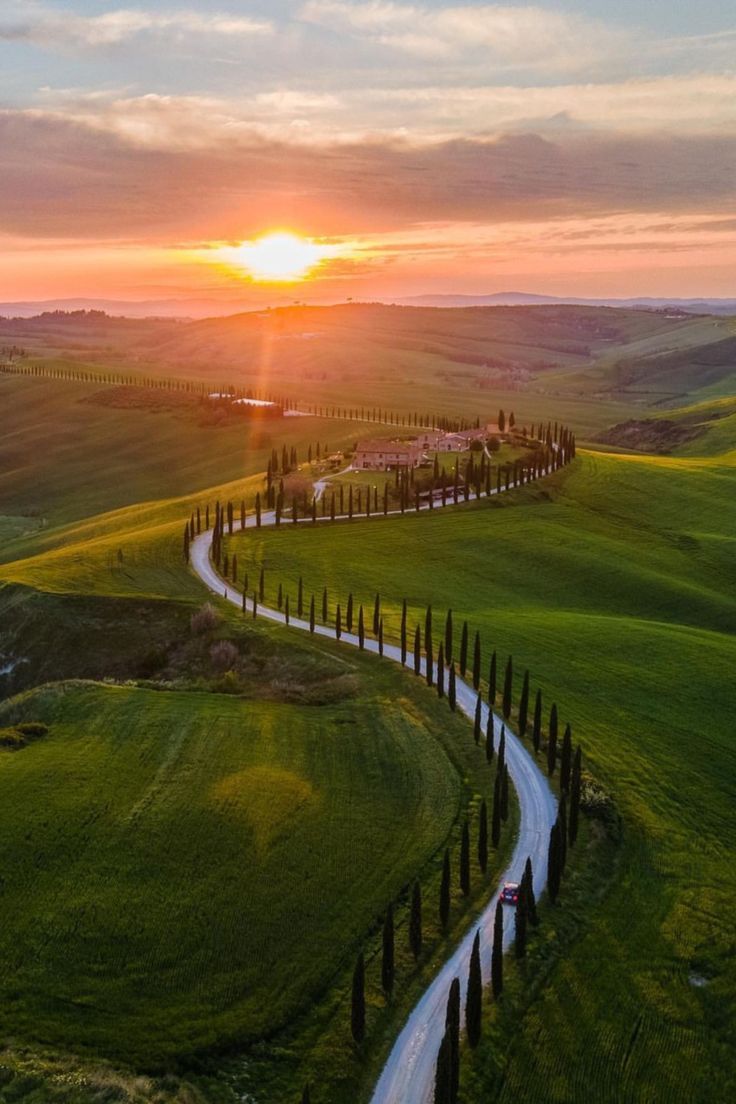
South-east of Siena the postcards stop and a clay moonscape begins. What the Crete Senesi are, the loop to drive, and the frescoed abbey at its heart.
12 min read · Updated 2026-09-09
Colle di Val d’Elsa: The Crystal Town Between San Gimignano and Siena That Everyone Skips
Colle di Val d’Elsa: the town that makes most of Italy’s crystal, its €6 museum in the old furnaces, Arnolfo’s birthplace, the upper town and the lift.
11 min read · Updated 2026-09-24
Montalcino: The Fortress Town Where Every Doorway Pours Brunello
Montalcino in full: the 1361 Fortezza and its enoteca, the Sant’Agostino museums, the early 2026 Brunello harvest, Sant’Antimo and the 114 bus.
11 min read · Updated 2026-09-21