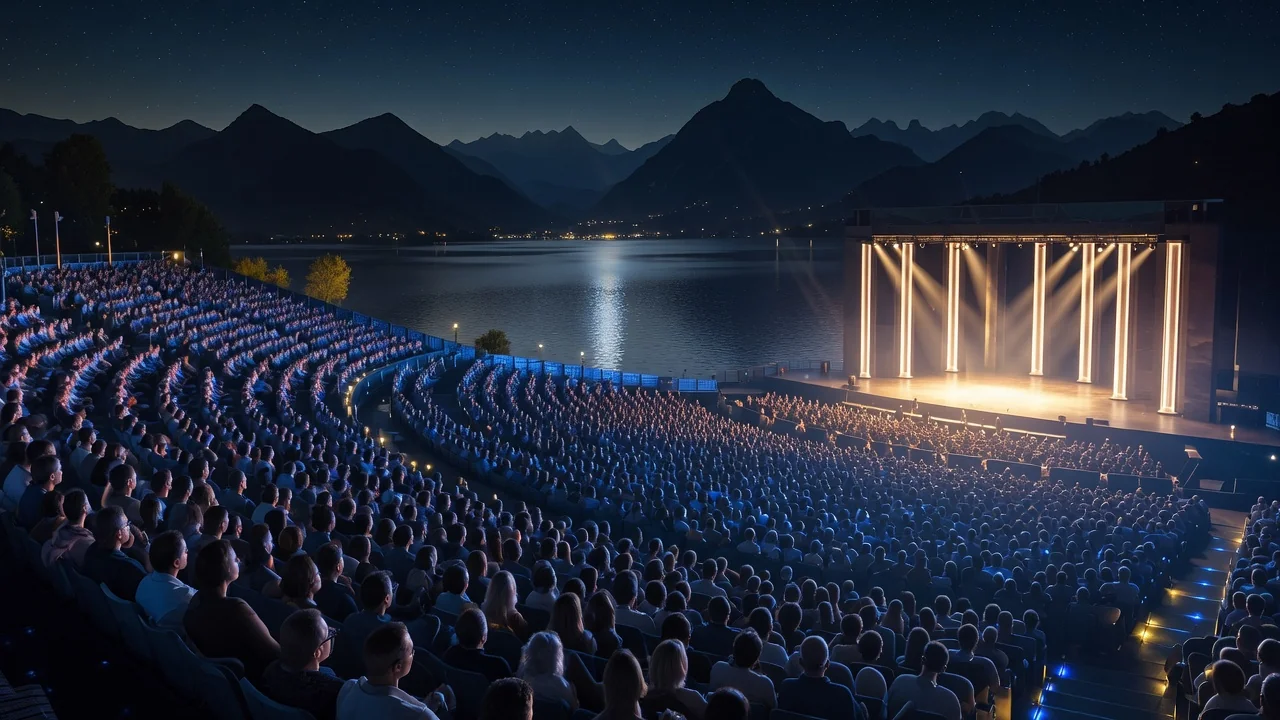
Lucca Comics & Games 2026: Lucca Is Already Full — Here Is How to Go Anyway
Lucca Comics & Games 2026 runs 28 Oct–1 Nov, the 60th edition. Tickets, the 99%-booked centre, and the Pisa, Viareggio and Florence bases that still work.
In this guide
Quick answer
Lucca Comics & Games 2026 runs Wednesday 28 October to Sunday 1 November — five days, the festival's 60th-anniversary "Legacy" edition, and by every measure Europe's biggest comics, games and pop-culture gathering. If you are reading this in September, two facts govern everything else. Tickets are on general sale now (since 1 September, via TicketOne; the early-bird phase has closed): day tickets run €26.50–€34.50 depending on the day, the five-day pass is €95. And Lucca itself is essentially gone: at the end of July, local reporting put the historic centre at 99% booked for the night of 31 October–1 November, with single nights listed at close to €2,000.
That is not a reason to skip it. It is a reason to do what the regulars do: sleep somewhere else and ride the train in. Pisa, Viareggio, Torre del Lago, Altopascio and Montecatini Terme all sit 20–30 minutes from Lucca station, the railway runs extra "Comics Special" services for the festival, and even the busiest of those towns still had rooms at ordinary prices when Lucca had none. This guide is the Tuscany-side plan: how tickets work, which base to choose, how the trains and car parks behave, and how to fold the festival into an autumn trip that also includes the golden month around it.
One honest framing before the detail: we are a Siena- and Tuscany-focused travel site, not a comics site. We will not tell you which panels to queue for. We will tell you how to get a bed, a ticket and a train — which, for this event, is the harder half.
What you are signing up for
Lucca Comics & Games is not a convention hall with a city attached; it is a walled Renaissance city taken over entirely — pavilions in the squares, exhibitions in the palaces, cosplay on the ramparts, and a crowd that outnumbers the town's residents many times over. For four or five days the entire historic centre inside the walls becomes the venue, which is why it is unlike any comparable event elsewhere: you are not in a convention centre, you are in a sixteenth-century fortification full of people dressed as their favourite characters.
The 2026 edition is the sixtieth, branded "Legacy", and the anniversary framing is real: the organisers have built the programme around the festival's own history, and demand has been correspondingly high — the ticket phases and the accommodation figures below are both signs of a peak year.
Two calendar collisions make 2026 sharper still. The festival's final day, 1 November, is a Sunday and Italy's All Saints holiday (Ognissanti — the whole weekend is planned here), so domestic travel is at holiday pitch across the whole weekend — trains fuller, roads busier, hotels pricier well beyond Lucca. And 1 November is also the first Sunday of the month, when Italy's state museums open free — a fact worth noting only because it means Florence and Pisa, your likely bases, will be busy with their own Sunday crowds while you are busy with yours.
Tickets: how they work in 2026
Where and when. General sale opened on 1 September 2026 on TicketOne, after an early-bird phase that has now closed. As at our check there was no sold-out announcement, but the pattern of past peak years is that the big days — the Saturday and the Sunday, and in 2026 the holiday Sunday above all — go first. If your dates are fixed, buy now rather than later.
What it costs. Published prices at our check: day tickets from €26.50 to €34.50 depending on the day, and a five-day pass at €95 for the full festival. Multi-day options sit between. Prices are the organisers' figures as reported at sale opening — confirm the current tariff on TicketOne when you buy.
Ticket to wristband. Entry is by wristband, and there are two routes to it. With the standard print@home ticket (downloaded from your TicketOne account or emailed), you collect the wristband at a welcome desk in Lucca — which means queuing on arrival, and on the busy days that queue is real. The alternative sold at purchase, "skip the welcome desk", has the ticket and wristband posted to your home in advance. If you are travelling from abroad, weigh the postal timing against the queue: for a Saturday arrival the mailed wristband is worth a great deal.
One rule from the practical side: buy the day you will actually be in Lucca, and match it to your base's train timetable before you commit — the two decisions belong together, and the section on bases explains why.
Where to stay when Lucca is full
The accommodation picture, as reported by the regional press on 25 July 2026 for the peak night of 31 October–1 November, is the single most useful set of numbers in this article:
| Base | Occupancy (peak night) | Price range reported | From Lucca station |
|---|---|---|---|
| Lucca, historic centre | 99% | up to ~€2,000/night | — |
| Viareggio | 89% | €100–€1,323 | 20–30 min by train |
| Pisa | 77% | €86–€798 | 20–30 min by train |
| Montecatini Terme | 72% | €87–€1,338 | 20–30 min by train |
Those were July figures; by the time you read this, every number is worse. But the shape holds, and it tells you how to think.
Pisa is the sensible default. The lowest occupancy of the three big alternatives, the lowest floor price, an airport, and direct trains to Lucca. It also has its own things to do for a non-festival travelling companion, and it connects onward to Florence and the coast. For most international visitors, Pisa is the answer.
Viareggio and Torre del Lago for the coast. Viareggio is the beach-resort base — close, well served, but the first to fill after Lucca because it is the traditional overflow. Torre del Lago, Puccini's lakeside village between the two, is the quieter option on the same line — our Puccini Festival guide covers the village out of season, and its railway logic applies here.
Montecatini Terme for value. The spa town's hotel stock keeps rooms at ordinary prices when the coast is gone, and it sits on the Florence–Lucca railway.
Altopascio is the wildcard — a small town on the same line, rarely full; if you find a room there, take it.
Florence works, with a caveat. Direct trains from Santa Maria Novella reach Lucca, and Florence has the region's deepest bed stock — but it is a longer daily commute than the bases above, and on the Ognissanti weekend Florence is busy on its own account, with the tourist tax and hotel arithmetic to match. It is the right base for someone combining the festival with a Florence trip, not for a five-day festival regular.
And Siena? Honestly, no: there is no direct rail link, and the journey involves changes that make the festival a single long day trip rather than a base. Do Lucca from the north and come south to Siena afterwards, when the festival crowds are gone and the Duomo floor is still uncovered until 15 November.
Getting in and out: trains, buses, cars
Train is the answer. Direct regional trains run to Lucca station from both Pisa Centrale and Florence Santa Maria Novella, on cheap regional fares, and for the festival Trenitalia runs extra "Comics Special" services on top of the timetable. The station is close to the walls, an easy walk to the gates. The habits that matter: buy and validate your regional ticket (the rules in our car-free guide apply across Tuscany), travel early on the big days because the morning trains toward Lucca fill, and check the last train back to your base before you commit to the evening, since the crowd leaving Lucca at closing time is the day's one real bottleneck. Note that timetables published for autumn may change with the seasonal revision; verify your specific day on Trenitalia close to the date.
Coaches from across Italy. An organised coach network — *Eventi in Bus* — sells day return trips to the festival from well over a hundred Italian towns, either bus-only or combined with a skip-the-line entry. If you are coming from a city the trains serve poorly, this is the route the Italian regulars use.
Car, if you must. The historic centre is walled and pedestrianised; you do not drive into Lucca during the festival. The organisers run dedicated festival car parks on the edge of town — Polo Fiere is the main one — pre-booked online, with a free shuttle to the centre. Book the parking slot when you book the tickets; on peak days the car parks are as finite as the beds. Everything our Tuscany driving guide says about ZTL cameras applies with extra force here.
Strike awareness. Autumn is Italy's strike season, and our strike guide explains the mechanics. At our check the published autumn calendar had no rail strike on the festival dates, but proclamations are added weekly; check the official calendar in the week before you travel.
A plan that works: the festival inside an autumn trip
The regulars' pattern, adapted for a visitor who wants Tuscany as well as the festival:
Choose your days by crowd, not by programme. The weekdays are the festival's quieter days, and for a first-timer they are the ones where you actually see the city under the costumes; the weekend is the spectacle at full pitch, with the queues to match; the holiday Sunday is the peak. Two weekdays plus one weekend day is a good first visit; the five-day pass is for people who already know they are that person.
Base in Pisa, arrive Tuesday. Settle in before the festival, ride the early train in each morning, and give one evening to Pisa itself — it is a real city with a real riverside, not just a tower.
Dress for October, not for the pictures. Lucca's late-October days are mild and its nights are cold; rain is genuinely possible. The autumn packing logic shifts a layer warmer by the end of the month, and cosplayers in particular need a plan for evening temperatures on the walls.
Then go south. When the festival ends on the Sunday, Tuscany's best week begins: the olive harvest under way, the wine harvest just finished, the crowds dropping daily, and the Siena Duomo floor still uncovered for two more weeks. Tuscany in November is the plan for the days after the festival — the white truffle fairs, new oil, and cities handed back to their residents. Comics and pop culture for five days, then the most local fortnight of the Tuscan year: as autumn itineraries go, it is hard to beat.
How we checked these details
Checked 9 September 2026, by web research; direct page fetches are blocked in our environment, so this rests on search-surfaced material — the festival's official site and ticket pages, TicketOne, the regional press and specialist reporting on the ticket launch — rather than pages we opened.
Verified: the 2026 dates (28 October–1 November) and the 60th-anniversary "Legacy" edition; general ticket sale from 1 September 2026 on TicketOne after a closed early-bird phase; published prices of €26.50–€34.50 for day tickets and €95 for the five-day pass; the print@home ticket with wristband collection at a Lucca welcome desk, and the "skip the welcome desk" option with the wristband posted home; the accommodation figures reported by the regional press on 25 July 2026 — Lucca's historic centre at 99% occupancy for the night of 31 October–1 November with nights listed near €2,000, Viareggio 89% (€100–€1,323), Pisa 77% (€86–€798), Montecatini Terme 72% (€87–€1,338), and Pisa, Viareggio, Torre del Lago, Altopascio and Montecatini as bases 20–30 minutes from Lucca station; direct trains from Pisa Centrale and Florence SMN with Trenitalia's extra "Comics Special" services; the *Eventi in Bus* coach network with bus-only and bus-plus-entry combinations; and the pre-booked festival car parks (Polo Fiere) with free shuttle. That 1 November 2026 is a Sunday and the Ognissanti public holiday follows the fixed calendar.
Not established, and flagged in the text: whether any day has sold out since sale opening; current accommodation availability, which has certainly tightened since the July figures; exact train frequencies and the Comics Special timetable, which we deliberately do not print — check Trenitalia close to your date; parking tariffs; and the festival programme itself, which is outside our remit.
We have no commercial relationship with the festival, TicketOne, any transport operator or any accommodation named. Nothing on this page is bookable through us.
Final thoughts
Every year the same story runs in the Tuscan press: Lucca is full, the prices are absurd, and tens of thousands of people come anyway and have the time of their lives — because they worked out, years ago, that the festival is in Lucca but the bed does not have to be. The 2026 edition is the biggest version of that story yet: a sixtieth anniversary, a holiday-weekend finale, and a historic centre booked to the last room before the summer was out.
So do the regulars' thing. Buy the ticket now, take the room in Pisa or Montecatini, learn the train, arrive on the quiet Wednesday, and let the walled city do what it does for five days a year. Then, when the costumes go home, stay: the Tuscany that begins on 2 November is the one the rest of this site is about.
Helpful summary
The short version
Lucca Comics & Games 2026 runs 28 Oct–1 Nov, the 60th edition. Tickets, the 99%-booked centre, and the Pisa, Viareggio and Florence bases that still work.
Frequently asked
FAQ
Keep reading
San Galgano: The Roofless Abbey and the Real Sword in the Stone, an Hour from Siena
San Galgano: the roofless Cistercian abbey (€6), the real twelfth-century sword in the rock (free), the 27 September closure and how to get there.
11 min read · Updated 2026-09-27
Sant’Antimo: The Romanesque Abbey That Still Sings, Nine Kilometres from Montalcino
Sant’Antimo below Montalcino: the Charlemagne legend, the 1118 travertine church, onyx capitals, the monks’ chant times, free entry and hours.
11 min read · Updated 2026-09-22
L’Eroica Gaiole 2026: Sold Out to Ride, Wide Open to Watch
L’Eroica returns to Gaiole in Chianti on 3–4 October 2026. Entries are gone — but the weekend never needed a race number. How to be there properly.
20 min read · Updated 2026-09-02