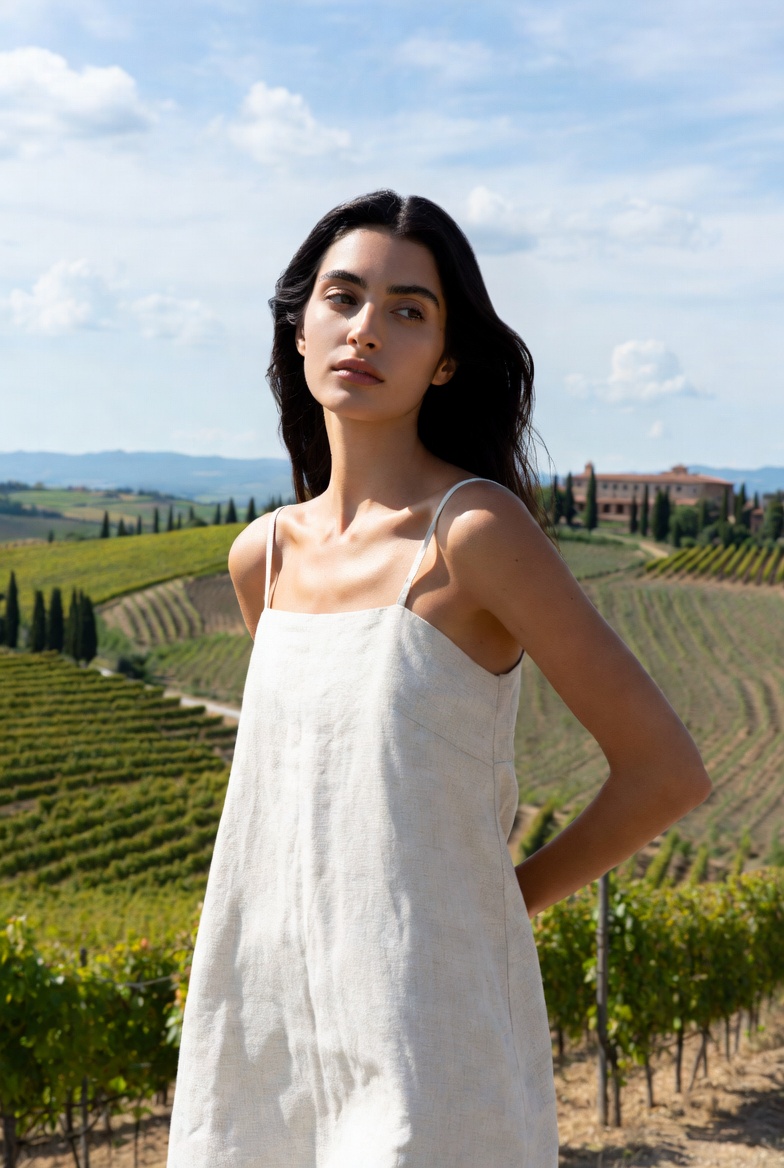
What to Wear in Tuscany in September: The Two-Season Month, Solved
What to wear in Tuscany in September — the month that starts in summer and ends in autumn. The layering system, by activity and by half-month.
In this guide
- Quick answer
- The weather you are actually dressing for
- The layering system: three thin things
- Dressing by activity: cities, cellars, coast and evenings
- The month in halves
- The dress codes that actually get enforced
- The September capsule, itemised
- The capsule, adjusted by traveller
- Packing light: the laundry maths
- How we checked these details
- Final thoughts
- FAQ
Quick answer
September in Tuscany is two seasons wearing one name: the first half still runs summer afternoons around 27–28°C, while the final week can open with 15°C mornings and a jacket mood. Pack for both and the month cannot touch you.
The capsule that works, in one paragraph: light summer clothes as the base layer — breathable shirts, one or two dresses or linen trousers — plus one real mid-layer (a light knit or overshirt) and one packable rain layer or umbrella, because September averages nine or so rain days in Florence with totals that vary by dataset. Add the two non-negotiables: genuinely comfortable walking shoes for cobbles and gradients, and a modest-coverage option (shoulders and knees) for every church you did not plan to enter but will. Swimmers: bring the suit — the sea holds low-twenties temperatures into the month, beach rules and booking caps permitting.
The one-line version by half-month: before the 15th, dress for summer and carry the layer; after the 15th, dress in layers and carry the summer. Everything below is that sentence, expanded with the numbers and the activity-by-activity detail.
The weather you are actually dressing for
The dataset picture, checked against multiple climate sources in August 2026 and honestly hedged where they diverge:
Temperatures. Florence's September averages sit around a 25°C daytime maximum and 14°C night; Siena runs a near-identical 26/15. But averages hide the month's real character, which is the slide: early September typically delivers 28°C afternoons from 16°C mornings — high summer with better manners — while the closing week settles toward daytime averages in the low twenties and evenings that genuinely require sleeves. A twelve-degree daily swing is normal all month, which is why this article is really about layers, not garments.
Rain. Around nine rain days is the standard Florence figure, with monthly totals quoted anywhere from about 60mm to the mid-70s depending on the dataset — September is when the first proper autumn fronts arrive, usually as short, decisive showers rather than washed-out days. The pattern favours those who carry protection and ignore forecasts more than four days out.
Sun. Still strong, especially in the first half: midday UV on an open piazza or a vineyard track remains a summer-grade consideration, and the heat-survival playbook stays relevant through the first fortnight in the cities' stone canyons.
Microclimates. One more wrinkle worth a sentence each: the hill towns sit higher and cool faster after sunset than the valley cities — a Siena or Montepulciano evening runs a degree or three below Florence's — while the coast holds its warmth longest, and the deep countryside adds morning mists to late-September dawns that burn off by ten. None of it changes the packing list; all of it explains why the mid-layer belongs in the bag even on a day that starts hot.
The takeaway for your suitcase: no single outfit spans a 16°C morning market run, a 28°C piazza afternoon and a 17°C dinner outdoors. Three thin things beat one thick thing, every day of the month.
The layering system: three thin things
Build every day from the same three tiers and the month's swings become a wardrobe feature rather than a problem.
Tier one — the summer base. Breathable shirts and tops (linen and light cotton still earn their keep), one or two dresses or lightweight trousers, shorts if they are your habit — knowing they exile you from churches without a wrap. This tier does all the work before mid-afternoon in the first half of the month.
Tier two — the pivot layer. One light merino or cotton knit, an overshirt or a casual blazer: something that dresses up a dinner and warms a 7am departure equally well. This is the layer September actually tests; make it the best-looking thing in the bag, because it will be in half your photographs from the 15th onward.
Tier three — the shell. A packable rain jacket or a compact umbrella — one of them, always in the daypack, from day one. September's showers are brief but committed, and the traveller sheltering in a doorway bought the wrong kind of light.
Colour and fabric notes from the region's own habits: Tuscans in September wear muted, layered, put-together casual — you will never regret erring slightly smarter than beach-resort defaults, and technical hiking gear reads as costume anywhere that is not actually a trail. Linen transitions out as the month does; the second half favours cotton, light knits and denim.
Dressing by activity: cities, cellars, coast and evenings
Cities and hill towns. The decisive garment is on your feet: Siena, San Gimignano and Montepulciano are cobbles on gradients, and every guide we publish repeats the same law — broken-in, cushioned, flat-soled shoes, with elegance a distant second to grip. A daypack with the rain shell and a water bottle completes the city uniform; fontanelle refills keep it light.
Wine country and harvest visits. September is vendemmia season — running early in 2026 — and estate visits impose their own dress code: closed shoes for cellars and vineyard walks (gravel, machinery, spilled must), layers for the cellar-to-courtyard temperature drop, since ageing rooms hold cool cellar temperatures year-round, and nothing white you love on days that involve red wine and enthusiasm. A sunhat still earns its place on vineyard tracks in the first half of the month.
The coast. The sea stays swimmable — water temperatures hold in the low twenties through the month per the climate datasets — and September beaches are the summer's civilised encore. Pack the suit and a light cover-up; note that beach infrastructure thins as the month ages, with stabilimenti winding down toward the end of September, so late-month swimmers should expect free-beach conditions and pack their own towel logistics.
Evening events. September's calendar is unusually dense, and its best moments happen after dark: Lucca's candlelit Luminara, festival dinners, the passeggiata that rewards an overnight stay. Evenings in stone towns drop fast once the sun goes — the tier-two layer is the difference between staying for the fireworks and retreating before them, exactly as the September events guide warns.
The month in halves
1–15 September: summer, softened. Dress as for August with the edges filed off: base-layer days, the knit riding in the daypack for evenings, sun protection still a working item — hat, sunglasses, and the shade-seeking habits of high summer in the early-afternoon piazzas. Swimming is unambiguous; harvest scenes are at their peak in the warm zones this early-running year; and the first big festivals (the Giostra on the 6th, the wine fairs) run warm into the night.
16–30 September: autumn, arriving. The knit moves from the bag to the body; mornings ask for it, evenings insist. Rain frequency ticks up, the umbrella earns its space, and closed shoes take over from sandals as the default. This is the fortnight when the two-season packing pays out: travellers who brought only summer are buying overpriced jackets near the Duomo, while you rotate three thin layers and look local. The reward for the cooler air: the month's best walking weather, its emptiest trails, and golden light that flatters every photograph.
If your trip straddles the 15th, congratulations — you need exactly the capsule this article describes, used in both directions.
The dress codes that actually get enforced
Tuscany's only strict wardrobe rule is ecclesiastical, and September's warmth makes it the month's most common stumble: shoulders and knees covered to enter working churches — Siena's Duomo and Florence's cathedral complex among them — enforced with varying zeal but never worth gambling a timed ticket on. The fix costs nothing: a light scarf or wrap in the daypack converts any summer outfit to admissible in five seconds, and long shorts or a midi dress dodge the question entirely.
Beyond the churches, codes are social rather than posted: smart-casual carries every restaurant in the region (Tuscans dress for dinner in the low-key way — the tier-two layer again), swimwear belongs only on the sand, and nothing anywhere requires formality beyond a collared shirt. The unspoken rule that matters more than any of these: comfortable shoes are invisible; limping is not.
The September capsule, itemised
For a seven-to-ten-day trip, laundry assumed once:
- 4–5 breathable tops / shirts
- 1–2 dresses or 2 pairs of light trousers (plus shorts, first half of the month)
- 1 quality mid-layer — light knit, overshirt or unstructured blazer
- 1 packable rain shell or compact umbrella
- Broken-in walking shoes (the non-negotiable) + one smarter evening pair if you like
- Light scarf or wrap (church admissibility + evening warmth, one item)
- Swimsuit and cover-up (any coastal or hot-springs ambitions — swim shoes help on travertine)
- Sunhat and sunglasses (working items through mid-month)
- Daypack that fits shell, water bottle, scarf and a wedge of pecorino
- Closed shoes if wine-estate visits are planned (can be the walking pair)
What to leave home: heavy coats (nothing in the forecast justifies one), more than one "just in case" formal outfit (nowhere asks), technical hiking gear unless you are genuinely walking the Francigena, and the second pair of ambitious shoes — cobbles will veto them by day two. The full packing checklist covers the non-clothing kit; this list is the September wardrobe answer.
The capsule, adjusted by traveller
The three-tier system is universal; the proportions shift with the trip.
The city-breaker (Florence–Siena, 4–6 days). Skew the base layer smarter: the trip is piazzas, museums and dinners, so the linen-and-knit end of the wardrobe works harder than the technical end. One pair of shoes can genuinely do everything if chosen well. The scarf is your most-used item — churches by day, evening passeggiata by night.
The wine-country traveller. Closed shoes move from optional to core, the dark-colours rule becomes policy, and the mid-layer earns double duty in cellars that hold cool ageing temperatures on the warmest afternoon. Add nothing formal: estates are working farms, and the harvest weeks are the muddiest, most wonderful version of them.
The walker. The one traveller for whom technical gear stops being costume: proper trail shoes, a genuinely waterproof shell and a sun system for exposed ridgelines — the Via Francigena stages offer little shade and no water, and late-September rain arrives faster in open country than piazza forecasting suggests.
The family. Duplicate the layer logic per child and add one full spare outfit each per two days — gelato and fountain physics are undefeated — plus swim gear even inland, since the thermal springs redeem any itinerary argument.
The festival-goer. September's evening events are the wardrobe's stress test: the calendar guide's advice — dress for two seasons a day — is this entire article in miniature. Pockets or a small crossbody beat any bag in a procession crowd, and the shoes rule triples in a packed, sloping piazza.
Packing light: the laundry maths
The capsule above assumes one laundry stop, and September is the easiest month of the year to keep that promise. Base layers dry overnight in the month's warm, dry first half — a sink wash and a balcony do the work of a second suitcase — and most Tuscan towns keep a self-service lavanderia within a ten-minute walk of the centre, typically a single unhurried hour of your trip.
The deeper reason to pack light is logistical, not virtuous. September itineraries move: buses to hill towns, a night in Siena, cobbles between the bus stop and every hotel — and each of those multiplies the cost of the bag you almost did not bring. The travellers who glide through this month carry a cabin-size case and a daypack; the ones who suffer brought options they never wore. September's forgiving weather is precisely what makes the small bag safe: nothing in the forecast requires bulk, only cleverness.
One deliberate exception to minimalism: leave buying room. This is the month of wine fairs, new-vintage bottles and pecorino wheels, and the souvenir guide's advice works best with empty kilos to spend. The lightest thing you can pack for September is space.
How we checked these details
Checked 9 August 2026, via web research: September temperature averages for Florence and Siena (daytime maxima around 25–26°C, nights around 14–15°C), the early-month 28°C-afternoon versus late-month low-twenties split, and the roughly-nine-rain-days figure from multiple climate datasets — whose monthly rainfall totals disagree (quoted from about 60mm into the mid-70s), which is why we give the range and lean on the rain-days pattern instead; sea temperatures in the low twenties from the same climate sources; and the activity-specific advice (cellar temperatures, church coverage rules, stabilimenti season wind-down) from this site's own verified seasonal and events research, cross-linked above. Climate figures are long-run averages, not forecasts — any given September week can beat or break them, which is precisely why the advice is a layering system rather than a wardrobe. We have no affiliate relationship with any clothing brand, retailer or operator; no products are recommended, only categories.
Final thoughts
September is Tuscany's finest month partly *because* it refuses to be one thing: summer light with autumn air, harvest in the vineyards and swimmers in the sea, festival evenings that start warm and end in sleeves. Dress for the refusal. Three thin layers, serious shoes, a scarf that opens church doors, a shell that laughs at the month's brief rains — and every version of September Tuscany, from a 28-degree piazza to a candlelit procession under a cooling sky, finds you already dressed for it. Pack the small bag, keep the buying room, and let the month do what it does best: change its mind beautifully, twice a day, while you stay comfortable through all of it.
Helpful summary
The short version
What to wear in Tuscany in September — the month that starts in summer and ends in autumn. The layering system, by activity and by half-month.
Frequently asked
FAQ
Keep reading
Tuscany Packing List: What to Wear and Bring in Every Season
What to pack for Tuscany season by season: the shoes the cobbles demand, the church cover-up rule, and what to leave at home.
10 min read · Updated 2026-07-12
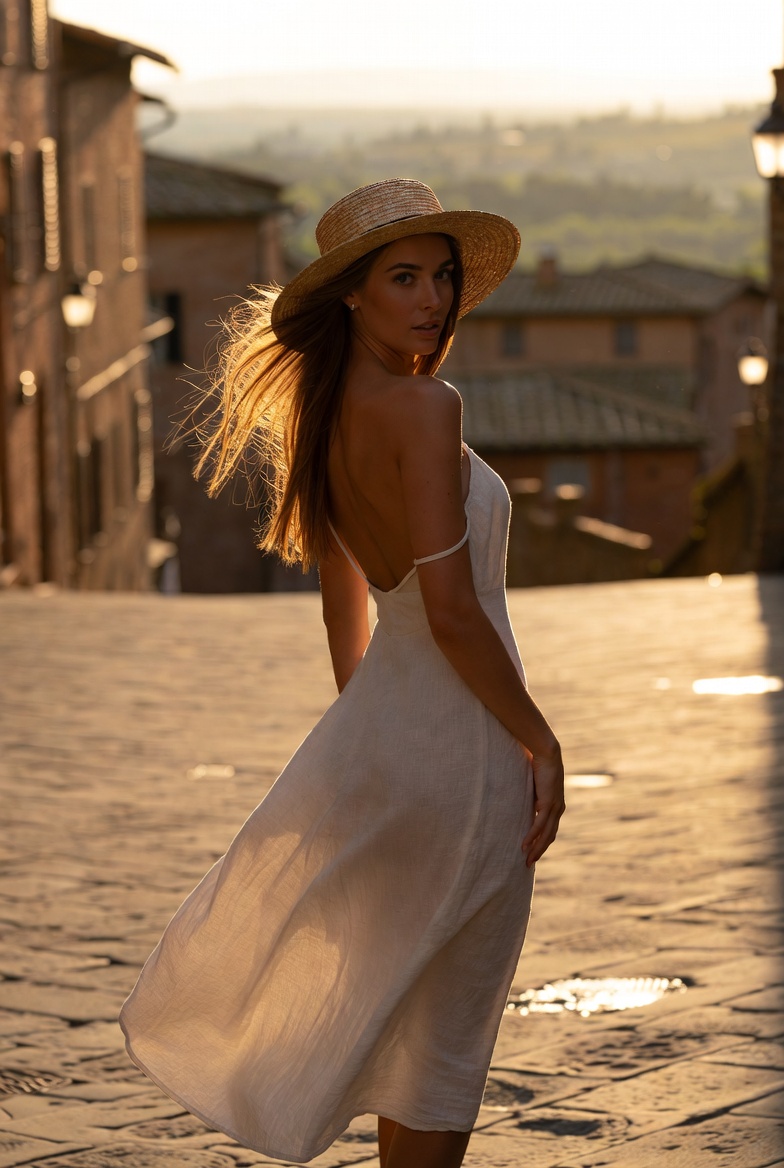
Summer Packing List for Tuscany & Florence 2026: Travel Light & Stay Cool
A summer packing list for Tuscany and Florence 2026: breathable linen, supportive shoes for cobblestones and heat-beating essentials.
4 min read · Updated 2026-07-17
White Truffle Season in Tuscany 2026: Two Fairs, One Legal Window, and the Right Way to Eat It
Tuscany’s 2026 white truffle season: the 1 Oct–15 Jan legal window, San Miniato’s three November weekends, San Giovanni d’Asso’s fair, prices and hunts.
14 min read · Updated 2026-09-16