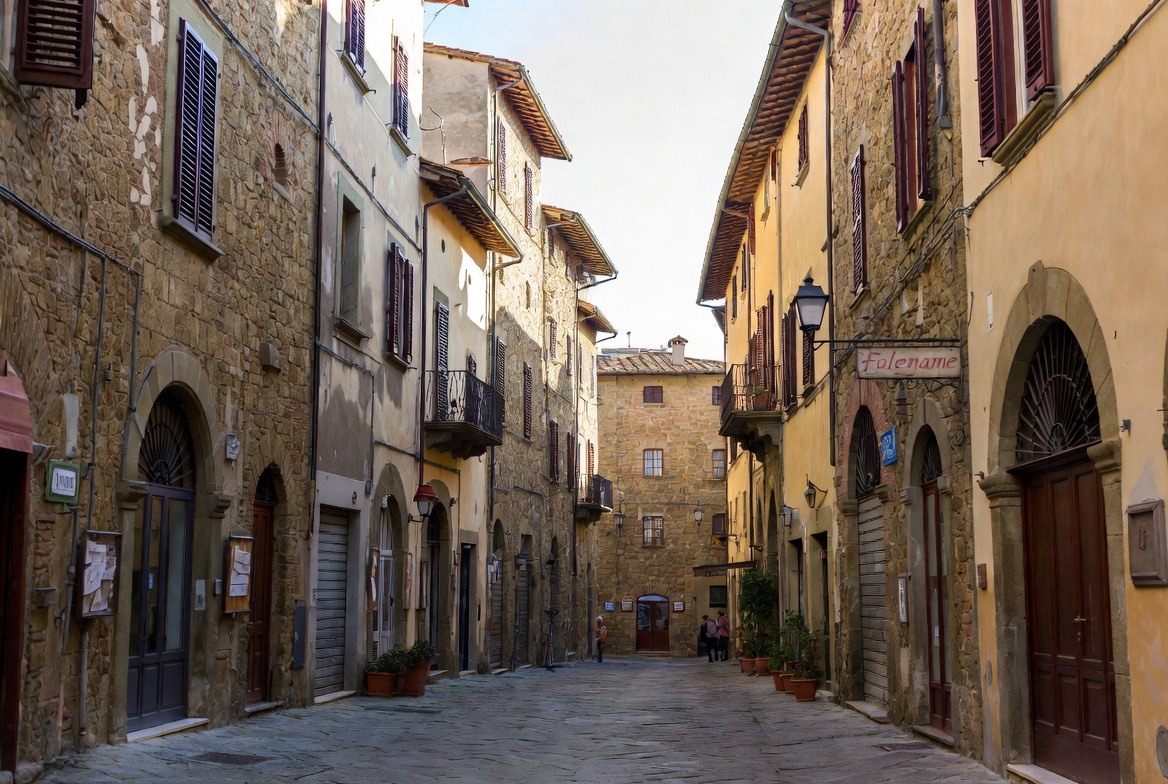
Florence’s New Tourist Rules 2026: What Actually Changed (and What’s Recycled News)
Florence’s real 2026 rules, verified: the outdoor-dining overhaul, the e-scooter rental ban, keybox and rental restrictions — and the recycled myths.
In this guide
- Quick answer
- The headlines vs the rulebook
- The outdoor-dining overhaul: 50 streets cleared, 73 regulated
- The e-scooter rental ban: gone since 1 April 2026
- The famous “sandwich fine”: what the 2018 rule actually says
- Keyboxes and short-term rentals: the rules behind your check-in
- The conduct layer: unwritten Florence, written down
- Why Florence is doing this
- The practical checklist for 2026 visitors
- How we checked these details
- Final thoughts
- FAQ
Quick answer
Florence has genuinely rewritten chunks of its rulebook for 2026 — but not the chunks the viral headlines describe. The real changes, verified against the city’s announcements as of July 2026: a major outdoor-dining overhaul effective 11 February 2026 (structures banned outright on 50 UNESCO-area streets, strictly regulated on 73 more); the end of shared e-scooter rentals from 1 April 2026; a keybox ban for holiday rentals in force since February 2025; and short-term rental restrictions in the UNESCO centre, upheld in court in May 2026 and now being extended outward. Meanwhile the story most outlets keep re-publishing — “Florence will now fine you €500 for eating a sandwich” — is a 2018 ordinance covering four specific streets, recycled annually as news. What each rule actually means for your visit, below.
The headlines vs the rulebook
Florence rule stories follow a pattern worth understanding before any individual rule: a real municipal ordinance — usually aimed at businesses, landlords or operators rather than tourists — passes; international outlets translate it into a “tourists face fines!” headline; and the story then recirculates for years, unmoored from its date. The sandwich-fine story is the genre’s classic: reported breathlessly every summer since 2018, almost never with its street names or trial-period context attached.
The 2026 reality is both calmer and more interesting. The city government has spent the year on its most significant public-space reform in over a decade, driven by UNESCO-heritage obligations and a genuine overtourism problem — and nearly all of it targets the supply side: café terraces, rental operators, scooter companies, landlords. The visitor’s experience changes noticeably; the visitor’s legal exposure barely changes at all.
That distinction is this article’s spine. For each rule: what passed, when it took effect, whom it binds, and what — if anything — you need to do differently. Where a claim circulating online could not be verified against primary announcements, we say so, in line with how we handle every fast-moving story.
The outdoor-dining overhaul: 50 streets cleared, 73 regulated
The biggest genuine change of 2026 arrived on 11 February, when Florence’s new rules for dehors — the outdoor dining structures that colonised the city’s streets after 2020 — took effect, in what the city describes as its largest public-space regulation update in fifteen years, developed with the cultural-heritage authorities.
The shape of it: on 50 streets and squares inside the UNESCO World Heritage area — including Ponte Vecchio, Piazzale degli Uffizi, Via Roma, Via Maggio, Via Romana, Borgo Santa Croce, Via dei Georgofili and Piazza di Santa Maria Nuova — outdoor dining structures are banned outright. On another 73 streets, they remain permitted but strictly regulated across five categories, with bans on plastic sheeting, tarpaulins and awnings, on advertising and branded decor, and on bright-coloured lighting — while plants and seasonal flowers are actively encouraged. Enforcement began immediately: the city issued around thirty fines to businesses in the first weeks.
What it means for you: nothing to comply with — the rules bind the restaurants — but the streetscape is changing. Some famous lanes have lost their tables entirely, so a remembered terrace may now be indoor seating; the aesthetic is swinging from plastic marquee toward open-air tables and greenery; and the competition for the remaining outdoor seats in the centre is real on fine evenings. Book ahead for terrace dinners, or do as the Florentines do and head for the Oltrarno, where the neighbourhood squares carry the evening.

*The 2026 direction of travel: streets handed back to the people walking them.*
The e-scooter rental ban: gone since 1 April 2026
Florence’s shared e-scooter era ended on 1 April 2026, when the city’s decision to terminate rental scooter services took effect — municipal police removed around eighty vehicles from the streets on day one. The council’s stated reasons: road safety, the practical impossibility of enforcing Italy’s helmet requirement on casual renters, and the familiar catalogue of pavement-blocking parking and wrong-way riding. In parallel, the city is expanding its bike-share fleet as the replacement.
The scope matters: this ends the shared rental services — the app-unlocked scooters scattered across the centre. It is not a ban on scooters as a category; privately owned vehicles remain subject to the national rules (helmet, insurance, no pavements).
What it means for you: if your mental map of Florence included grabbing a scooter between sights, replace it. The honest substitutes are the ones the city intends: the expanded bike-share for longer hops, and feet for everything else — a Florence-sized historic centre was never a scooter problem, as anyone who has walked from the Duomo to Piazzale Michelangelo knows. The change lands hardest on nobody: the centre is compact, the buses run, and the pavements are calmer for it.
The famous “sandwich fine”: what the 2018 rule actually says
Now the recycled story. The ordinance behind every “fined for eating in Florence!” headline dates to September 2018 and is precise: it targets stopping to eat on four specific locations — Via de’ Neri, Piazzale degli Uffizi, Piazza del Grano and Via della Ninna, the panino-and-gelato corridor around the Uffizi — during lunch and dinner windows (roughly 12:00–15:00 and 18:00–22:00), with fines of €150–€500 aimed at people eating on doorsteps, pavements and shopfronts. It began as a time-limited trial; its formal status today is not clearly published, and we will not pretend otherwise.
The practical guidance survives regardless of the ordinance’s current legal state, because it reflects how the city actually polices its space: do not turn a doorstep or a monument’s steps into a picnic bench in the densest corridor of the centre. Buy the panino — Via de’ Neri’s fame is deserved — and then carry it somewhere built for lingering: a proper piazza bench, the riverside, the Boboli or Bardini gardens, or the steps and lawns where eating is an accepted part of the scene rather than an obstruction.
The meta-lesson is the article’s thesis in miniature: the rule is narrow, old and sensible; the headline is broad, evergreen and wrong. When a Florence rule story reaches you stripped of street names and dates, assume recycling until a primary source says otherwise — a filter that, once installed, will save you from half the travel journalism written about Italy.
Keyboxes and short-term rentals: the rules behind your check-in
Two connected fronts target the holiday-rental economy rather than travellers — but change how visits begin.
The keybox ban took effect in February 2025: exterior self-check-in keyboxes — the combination lockboxes that had colonised doorways across the centre — had to come off Florence’s buildings. Short-term rental restrictions go further: the city blocks the creation of new tourist rentals in the UNESCO historic centre (existing legal operators from 2024 continue), a regulation upheld by the courts in May 2026, and the city has announced plans to extend limits beyond the centre.
What it means for you: apartments remain bookable — the restrictions bite on *new* supply — but self-check-in by lockbox is no longer the norm. Expect hosted handovers, staffed receptions or managed key exchanges; confirm the check-in procedure and its hours *before* booking, especially for late arrivals, and treat a listing still advertising an exterior keybox in Florence as a question mark over the operator’s attention to the rules. Longer-term, expect the centre’s supply to tilt back toward hotels and B&Bs — a shift already priced into our accommodation advice: the property’s operating reality, not its photographs, is what to interrogate.
The conduct layer: unwritten Florence, written down
Around the headline ordinances runs a quieter layer of conduct enforcement, common to every heritage city drowning in visitors: keep off monuments that are not seating, keep swimwear for the pool, keep amplified noise down, leave no litter, and treat fountains as sculpture rather than plumbing. Florence polices these with patrols and fines like Venice does, and the specifics evolve ordinance by ordinance — which is why we decline to print a definitive fine-schedule table that would be stale within a season.
The reliable compass costs nothing: behave like a guest in a working city rather than a visitor to a theme park, and no conduct rule in Florence will ever apply to you. Eat sitting at tables or in green spaces; photograph without blocking; speak at street volume; dress for a city that goes to church. Travellers who arrive with that posture have never needed to memorise an ordinance — and travellers without it discover that enforcement exists.
The same posture, incidentally, is what the city’s residents notice and reward: the barista’s warmth, the trattoria’s patience and the quality of advice you receive all track the distinction between guest and consumer with remarkable precision.
Why Florence is doing this
The context that makes 2026’s rules coherent rather than random: Florence’s historic centre is a UNESCO World Heritage Site of about five square kilometres absorbing many millions of visitors a year, and the post-2020 rebound stressed it visibly — terraces annexing streets, rental supply hollowing out residential buildings, scooters treating the centre as a racetrack, and the city’s own residents increasingly priced and crowded out of it.
The 2026 programme reads as a single strategy across its fronts: reclaim public space (the dehors rules), calm the streets (the scooter decision), defend the housing stock (the rental and keybox measures), and protect the heritage designation that underwrites the city’s entire visitor economy. Agree or disagree with individual measures, the direction is unmistakable — and it mirrors Venice’s access-fee experiment as part of the decade’s defining question for Italian heritage cities: how to remain places people live, not sets people visit.
For travellers, the strategic takeaway is comfortable: every one of these measures makes Florence better to actually visit — calmer streets, real check-ins, freer pavements, terraces that frame the architecture instead of hiding it. The rules are not aimed at you. They are aimed at making the city worth your trip.
The practical checklist for 2026 visitors
Distilled to actions:
Booking accommodation: confirm the check-in procedure explicitly (no exterior keyboxes; hosted or managed handover is the norm) and its latest hours; prefer operators transparent about their registration status; expect centre apartment supply to keep tightening — book earlier than you used to.
Eating and drinking: reserve outdoor tables in the centre on fine evenings — there are fewer of them by design; carry takeaway food to piazzas, gardens and riverside rather than doorsteps, and skip the picnic entirely on the Uffizi corridor’s four streets at meal hours.
Getting around: no shared scooters — plan on feet for the centre, the expanded bike-share for longer hops, and the buses and trains for everything regional.
General conduct: monuments are not furniture, fountains are not pools, and street volume beats speaker volume. That sentence is the entire compliance burden of a normal visitor.
Staying current: rules evolve — the rental restrictions are mid-extension as we write — so for anything consequential to your booking, check the city’s own announcements near your dates rather than a headline of unknown vintage. It is the same rule this site applies to every moving target.
How we checked these details
Checked in July 2026 against the city’s announcements and contemporaneous primary reporting: the outdoor-dining rules’ 11 February 2026 effective date, the 50-street ban and 73-street regulated tiers with their named locations and material rules, and the initial enforcement; the shared e-scooter rental termination from 1 April 2026 and the bike-share expansion; the exterior keybox ban in force since February 2025; and the UNESCO-centre short-term rental restrictions, their May 2026 court confirmation and the announced extension plans. The street-eating ordinance’s September 2018 origin, four named locations, meal-time windows and €150–€500 fine range are documented in its original reporting; its current formal status is not clearly published, and we flag that honestly rather than asserting it either way. Conduct-rule specifics change ordinance by ordinance — verify anything consequential on official channels near your dates. We have no affiliate relationship with any operator, platform or venue named here; recommendations are editorial.
Final thoughts
Strip away the recycled headlines and Florence’s 2026 rulebook tells a city’s story, not a tourist-trap story: a place of five square kilometres and immeasurable inheritance deciding, measure by measure, that it would rather be lived in than consumed. None of it asks anything of a thoughtful visitor beyond what thoughtfulness already gives — a confirmed check-in, a booked table, a sandwich eaten sitting down somewhere lovely. Come with that much, and every rule in this article is invisible; what you will notice instead is their dividend: pavements you can walk, façades you can see, and a city centre measurably closer to the one the postcards promised. The fine print, it turns out, is on your side.
Helpful summary
The short version
Florence’s real 2026 rules, verified: the outdoor-dining overhaul, the e-scooter rental ban, keybox and rental restrictions — and the recycled myths.
Frequently asked
FAQ
Keep reading

Florence or Siena: Which Should You Visit in 2026? An Honest Comparison
Florence or Siena in 2026? An honest comparison: first trips, bases, art, food, budgets, seasons — and how to combine both in one itinerary.
12 min read · Updated 2026-08-03

All Saints’ Weekend in Tuscany 2026: A Free-Museum Sunday, a Holiday, and the Monday Everything Closes
Ognissanti 2026 falls on Sunday 1 November — a first Sunday, so state museums are free — then the Uffizi and Pitti close on Monday. The plan that works.
11 min read · Updated 2026-09-23
What to Buy in Tuscany: Souvenirs Worth Suitcase Space (and Where)
What to buy in Tuscany, honestly: the oil, saffron, sweets, wine and crafts that are really from here, where to buy each — and the traps to skip.
12 min read · Updated 2026-08-16