Rome to Siena: Train, Bus & the Route That’s Actually Fastest (2026)
Rome to Siena in 2026: why the direct bus beats the train, the Chiusi and Florence rail routes compared, FCO airport options and honest advice.
In this guide
- Quick answer
- First, the fact that shapes everything: no direct train
- Route 1 — the direct bus: fastest and cheapest
- Route 2 — rail via Chiusi: the scenic budget classic
- Route 3 — high-speed via Florence: comfort and frequency
- Landing at Fiumicino: the airport version
- Driving it: the A1 and the Valdichiana door
- The verdict, traveller by traveller
- Tickets, validation and the pricing games
- Arriving in Siena: the last kilometre
- How we checked these details
- Final thoughts
- FAQ
Quick answer
The surprise of this route, verified in July 2026: the humble direct bus wins. There is no direct train from Rome to Siena, and the coach — FlixBus and Itabus from Roma Tiburtina, with the fastest services around 1 hour 49 minutes and most under 2 hours 40, from roughly €5–6 booked ahead, at around seventeen departures a day — beats every rail combination on both time and price, without a single transfer. The rail alternatives both work and both have their use: the regional route via Chiusi (~2h40–3h, ~€18 total, one easy change) is the budget-scenic option with an Orvieto stopover built in, and the high-speed route via Florence (~3h, from ~€15 plus the €8.40 onward bus) is the most comfortable and most frequent. Drivers take the A1 to Valdichiana and the Siena connection in about 2¾ hours. The full arithmetic, route by route, below.
First, the fact that shapes everything: no direct train
Siena’s railway runs on Tuscany’s regional network, not the national high-speed spine — the Rome–Florence direttissima passes forty-odd kilometres to the east, through the Valdichiana, without touching it. The practical consequence: every rail journey from Rome to Siena involves at least one change, either at little Chiusi on the classic line or at Florence on the fast one.
This single fact rearranges the usual Italian transport hierarchy. On most intercity pairs the train wins effortlessly; on Rome–Siena, the connection penalty hands the direct coach a genuine advantage that surprises travellers who assume rail-first as a rule. It also explains a pattern you will see in forums and comment sections — people who booked “Rome to Siena by train” expecting a Frecciarossa experience and met a two-leg regional reality.
None of the options is bad. But they serve different travellers, and choosing well means knowing what each one actually is — which is the business of the next three sections.
Route 1 — the direct bus: fastest and cheapest
FlixBus and Itabus run direct coaches from Roma Tiburtina (some services also calling near Termini) to Siena, and the numbers as checked in July 2026 are unambiguous: the quickest services advertise around 1h49, typical runs sit between two and two-and-three-quarter hours depending on stops and traffic, fares open at roughly €5–6 when booked ahead, and combined frequency runs to around seventeen departures a day.
The strengths: no transfers, no connection risk, luggage in the hold beside you, and a price that undercuts even the regional trains. The honest weaknesses: Rome’s Friday and Sunday traffic can stretch the schedule; Tiburtina is a functional rather than charming departure point; and seats on the cheap fares are finite — the €5 headline becomes €15–20 if you book late on a busy day.
Two practical notes. First, check which Siena stop your specific service uses when you book — arrival points vary by operator and service, and it shapes your first walk in the city. Second, book directly with the operator and keep the QR ticket offline; intercity coaches board by reservation, not by queueing hopefully. For travellers whose priority is simply *getting to Siena quickly and cheaply*, this route is the answer and the rest of this article is context.
Route 2 — rail via Chiusi: the scenic budget classic
The traditional rail route pairs two regional trains with one unhurried change. Leg one: Roma Termini to Chiusi-Chianciano Terme, around 1h30–1h45 and roughly €11, on the old main line up the Tiber valley calling at Orte and Orvieto. Leg two, after a platform change of typically 10–25 minutes: Chiusi to Siena, an hour to 1h15 through the Valdichiana’s farmland, around €7. Total: about 2h40–3h and ~€18, as checked in July 2026.
What the bus cannot offer, this route can. Regional fares are fixed-price — no booking-ahead game, valid on any train that day. The scenery earns its keep, Orvieto’s cliff-top profile above all. And therein lies the route’s best trick: break the journey at Orvieto, one of central Italy’s great hill towns, store the bag, spend three hours on the rock, and continue on a later train for the same fare structure. As a travel *day* rather than a transfer, Rome–Orvieto–Siena is quietly excellent.
The cautions are regional-rail standard: validate paper tickets before boarding (or use the app’s digital tickets), Sunday frequencies thin noticeably, and Chiusi’s connection — while genuinely easy — is still a connection, with the occasional longer wait if the timetables misalign. Check the day’s actual pattern before committing; on a good alignment this route is barely slower than the bus and considerably prettier.
Route 3 — high-speed via Florence: comfort and frequency
The third route runs counterintuitively north past Siena’s latitude and doubles back: Frecciarossa or Italo from Roma Termini to Firenze S.M.N. in about 1h32–1h42 (advance fares from roughly €15, walk-up fares much higher), then the standard Florence–Siena connection — the 131R bus at €8.40 and about 74 minutes, or the regional train at around 1h30. Realistic total with a sane connection buffer: about three hours, at €25–40 depending on how far ahead the fast leg is booked.
Why choose the longest-listed route? Frequency and quality. The Rome–Florence spine runs several trains an hour from early to late — miss one, catch the next — which makes this the resilient choice for tight schedules, late arrivals and travellers who value the high-speed experience: assigned seats, luggage racks, café car, and the fastest escape from Rome itself. It is also the natural route for anyone building a Florence-plus-Siena trip anyway — the “transfer” is simply the trip’s next chapter, and the whole Florence–Siena decision is one we cover in depth.
The trade-offs: it is usually the dearest option, the S.M.N.-to-bus-station walk with luggage is short but real, and booking the fast train’s cheap fares means committing to a departure time — the one un-Italian rigidity in the system.
Landing at Fiumicino: the airport version
Many “Rome to Siena” journeys actually start at FCO, and the airport reshuffles the rankings. The rail chain — Leonardo Express into Termini, then either rail route above — works but stacks transfers; route planners price the all-train version at nearly five hours with two changes, which no arriving long-haul passenger should volunteer for.
The two answers that work, as checked in July 2026: direct airport coaches — FlixBus and partners run FCO–Siena services averaging around 3h20 — turning the journey into a single seat after customs, the arriving traveller’s best friend; or the Leonardo Express plus direct bus combination via Termini/Tiburtina, which adds a transfer but opens up the full seventeen-a-day coach frequency. Between them, choose by timing: if a direct airport coach leaves within ninety minutes of your realistic exit-from-baggage time, take it; otherwise the Termini route’s frequency wins.
One warning transplanted from our Florence-airport guide: budget the buffer honestly. Immigration queues at FCO in the EES era reward generous connection maths, and an evening arrival plus a three-hour transfer argues for a Rome overnight and a fresh morning departure — Siena deserves better than a midnight arrival with dead legs.
Driving it: the A1 and the Valdichiana door
The drive is straightforward and pleasant in its second half: A1 north from Rome to the Valdichiana exit — about two hours of workmanlike autostrada up the Tiber and into the Chiana valley — then west on the Siena–Bettolle superstrada (SS715/E78), 59 free-flowing kilometres into the city. Total: roughly 270 km and about 2¾ hours in normal traffic, with A1 tolls around €18–20, as checked in July 2026.
The car makes sense in exactly one scenario: Siena as gateway to a countryside itinerary — the Val d’Orcia conveniently flanks the final approach, and a first-day detour through Pienza or Montepulciano converts the transfer into the holiday’s opening scene. For a city-to-city hop with an urban stay at both ends, the bus beats the car on cost, effort and arrival stress.
Arrival stress meaning, of course, the ZTL: Siena’s restricted zone fines improvised driving around the clock, so the drive ends at a legal car park outside the walls, chosen before departure rather than negotiated at the gates. Park once, correctly, and the car then sits idle for exactly as many days as you spend inside the city — the honest arithmetic every Siena driver should run before renting.
The verdict, traveller by traveller
Fastest and cheapest, no ceremony: the direct bus from Tiburtina. Book a couple of days ahead and the whole transfer costs less than a Roman lunch.
Rail loyalist on a budget: via Chiusi — fixed regional fares, no booking games, and the best scenery of the three.
Making a day of it: via Chiusi with the Orvieto stopover — the single best value-add on the whole route map.
Tight schedule, late start, or luggage-heavy comfort: high-speed via Florence, riding the spine’s frequency and connecting onto the 131R.
Combining Florence and Siena anyway: via Florence, obviously — the order-of-cities question matters more than the transport one.
Landing at FCO: direct airport coach if one aligns with your arrival; otherwise Leonardo Express plus the Tiburtina bus. Never the all-rail chain, however tidy it looks in a journey planner.
Starting a countryside road trip: drive it, enter via the Valdichiana, and let the Val d’Orcia turn the transfer into day one.
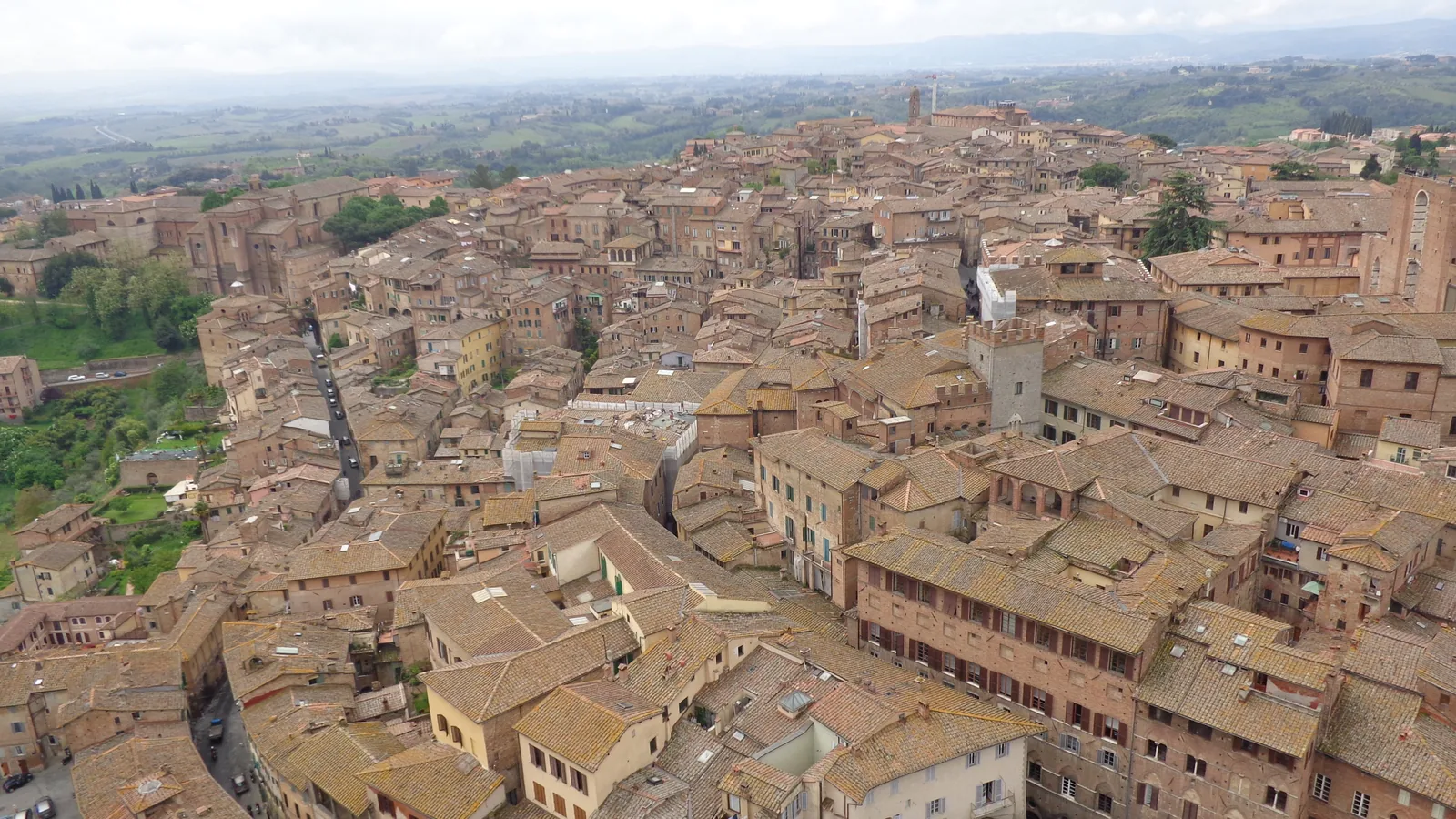
*The destination that justifies every route: Siena, two to three hours from Rome whichever way you play it.*
Tickets, validation and the pricing games
Three systems, three sets of rules.
Coaches price dynamically and board by reservation: book direct with the operator, earlier is cheaper, and the ticket is the QR on your phone — screenshot it against dead batteries and dead signal.
Regional trains (both Chiusi legs, and the Florence–Siena regional) are fixed-price and flexible within the day — but paper tickets must be validated in the green machines before boarding, and the app’s digital tickets self-activate; the fine for an unvalidated ticket is charged onboard and argues with nobody. This is the single most common transport fine Italian visitors collect, as our airport-transfer guide explains at length.
High-speed trains work like flights: seat-assigned, price rising toward departure, cheapest weeks ahead, refund rules by fare class. An aggregator such as Omio or Trainline earns its place at one moment only — when you are still choosing a route and want trains and coaches across operators in a single search. Once you know your service, buy through the operators’ own apps and sites; the schedule data is identical everywhere, the mark-ups are not.
And one cross-system rule from the strikes guide: check the national strike calendar when you book and again the week you travel — though within the 27 July–5 September franchigia, the peak-summer weeks are strike-protected by law.
Arriving in Siena: the last kilometre
The route choice decides your arrival geography, and Siena’s topography makes it matter. The railway station sits below the historic centre — the onward move is a city bus, a taxi, or the escalator route up to the Camollia side, manageable but real with luggage. The intercity coaches arrive on the city side — typically far closer to the walls, which is one more quiet argument for the bus among travellers with bags (confirm your service’s stop when booking, as they vary).
Either way, the final approach obeys the accommodation logic our where-to-stay guide maps: know your quarter before you arrive, aim your arrival at the correct gate, and treat the last three hundred metres — cobbles, gradients, stairs — as part of the journey plan rather than a surprise. Travellers connecting onward the same day should note the day-trips-without-a-car playbook starts from exactly these arrival points.
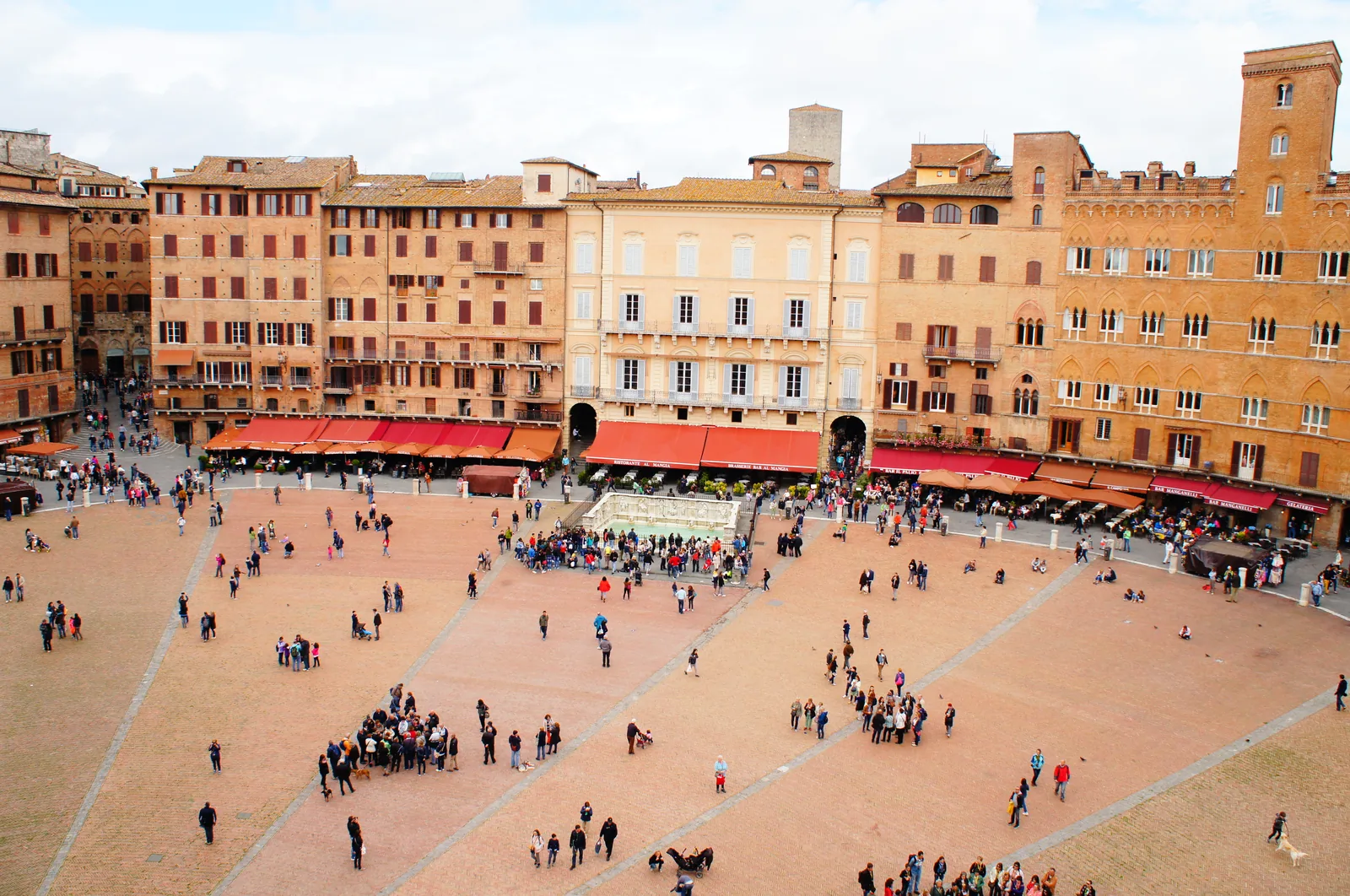
Then drop the bags and walk to the Campo, which forgives every routing decision ever made about reaching it.
One scheduling grace note: whichever route you ride, aim to arrive by late afternoon. Siena’s best hour — the golden emptying of the Campo as the day-trippers drain toward their coaches — belongs to the people who are staying, and it is a poor thing to spend in a taxi queue. Build the transfer around being on that square, drink in hand, by seven.
How we checked these details
Checked in July 2026 against operator and route information: the absence of direct Rome–Siena trains; the direct coach picture (FlixBus and Itabus from Roma Tiburtina, fastest services around 1h49, opening fares around €5–6, combined frequency around seventeen daily departures); the Chiusi route’s legs (~1h30–45 and ~€11 Roma–Chiusi via Orte and Orvieto; ~1h–1h15 and ~€7 Chiusi–Siena; 10–25-minute typical connections); the high-speed leg (Roma–Firenze around 1h32–42, advance fares from ~€15) paired with our own documented 131R figures; the FCO options (direct airport coaches averaging ~3h20; the ~4h46 two-change all-rail chain we advise against); and the drive (A1 to Valdichiana, SS715 59km, ~270km, ~2¾ hours, ~€18–20 tolls). Coach and high-speed fares are dynamic — treat prices as booked-ahead openings, and confirm your service’s Siena stop at booking. We have no affiliate relationship with any operator or booking platform; recommendations are editorial. Platform links on this page use our internal /go/ shortcuts and currently point to the platforms’ official sites.
Final thoughts
Rome-to-Siena is the rare Italian route where the guidebook instinct — take the train, always the train — deserves a second look at the departures board. The coach does the job faster and cheaper; the Chiusi line does it more beautifully, with a hill town thrown in; the Florence spine does it more comfortably, with the next departure never far. Pick by temperament, book the cheap seats early, validate what needs validating — and remember that whichever way you travel, you are performing one of tourism’s better magic tricks: leaving one of the world’s great cities after breakfast and standing in a completely different one, shell-shaped square underfoot, before the afternoon light goes gold.
Helpful summary
The short version
Rome to Siena in 2026: why the direct bus beats the train, the Chiusi and Florence rail routes compared, FCO airport options and honest advice.
Frequently asked
FAQ
Keep reading

Florence to Siena by Train or Bus: Complete Travel Guide
Compare train, bus, and guided tour options from Florence to Siena, including travel times, ticket rules, arrival points, and practical tips.
4 min read · Updated 2026-08-05T12:00:00+07:00
Where to Park in Siena: Car Parks, Real Rates and the ZTL
Every Siena car park with official 2026 rates, which ones have escalators, the €25 hotel rate, and the Wednesday closure that catches drivers out.
11 min read · Updated 2026-07-23T12:00:00+07:00
How to Avoid a ZTL Fine in Siena: A Driver's Guide for 2026
Siena's ZTL cameras run 24/7 and fine you automatically — often months later through your car rental. Here's how the zone works and how to avoid it.
13 min read · Updated 2026-07-22T09:00:00+07:00